dailynewsnblog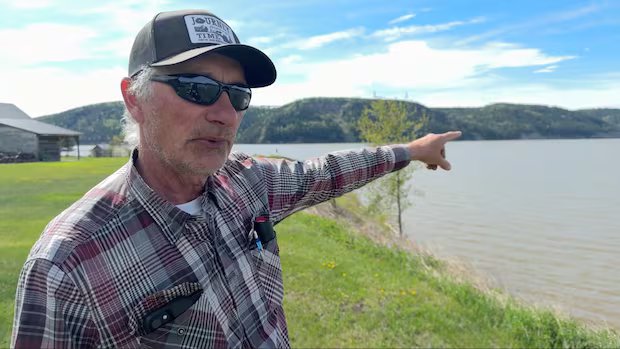

Listen to this article
Estimated 5 minutes
The audio version of this article is generated by AI-based technology. Mispronunciations can occur. We are working with our partners to continually review and improve the results.
In a small log cabin along what used to be the Peace River in northeastern B.C., Ken Boon has amassed a half-century’s worth of memorabilia from protests to stop the controversial Site C dam.
All of the shirts, mugs, posters and stacks of technical documents and lawsuits collected since the 1970s, he’s put on display in what he calls the “Site C Sucks Museum.”
“Obviously, the battle against Site C is done, but it’s still important to have this documented and here for people to see and learn from,” Boon said.
On the back of the museum door hangs a now iconic photograph of late premier John Horgan, posing with Boon and his wife Arlene and holding a sign that reads “Site C Sucks.”
This week, the dam was named after Horgan, who once opposed the $16-billion project before eventually supporting its completion.
Many people, including Boon, hoped Horgan would cancel the dam after he formed government in 2017, and a B.C. Utilities Commission review revealed significant cost overruns and geotechnical construction challenges.
After fighting the dam for so long, Boon can only laugh at the irony of the naming and shrug off his disbelief.
North by Northwest11:31Touring the ‘Site C sucks’ museum near Fort St. John
The CBC’s Matt Preprost visits an unofficial museum set up on the property of Ken and Arlene Boon, longtime opponents to the Site C dam in the Peace River Valley who had their land expropriated and flooded to make way for the megaproject.
“It was going to be one of a number of politicians,” said Boon, who says he lost his most fertile valley bottom farmland to the new dam’s reservoir.
“It could have been Gordon Campbell, who really resurrected it from the dead. Christy Clark, who was going to keep it going, get it past the point of no return. Or Horgan, who, despite everything, decided to keep it going.”
“Will everybody probably still just call it Site C? We’ll see,” he said.

Reservoir naming ‘disrespectful’ says chief
The dam first started generating power in 2024, and a mix of reaction was shared this week on its official naming.
The 83-kilometre long reservoir has been named Nááchę mege, chosen by two local First Nations and translated to “dreamer lake” in Dane-zaa Záágéʔ, the Dane-Zaa language of the region.
Chief Roland Willson of the West Moberly First Nation says dreamers are highly-respected cultural leaders to Dane-zaa people.
They’ve been laid to rest in the Peace River Valley for generations, their gravesites now flooded, he said.
“It’s disrespectful to the elders, it’s disrespectful to the prophets and dreamers. They’re all buried underneath that reservoir,” said Willson.

Site C faced years of lawsuits and protests from Treaty 8 First Nations and landowners over the flooding of farmland and century-old burial sites.
West Moberly argued in court that the dam violated its treaty rights by flooding traditional territories already impacted by decades of dam building and industrial development in the Peace region.
B.C. Hydro says 13 affected First Nations were invited to take part in naming discussions that began in 2023. West Moberly didn’t take part.

“That reservoir shouldn’t be something that we should be proud of,” Willson said.
“That reservoir is just a continuation of the conduct that the governments are doing to the First Nations, since they showed up here.”
B.C. Hydro says Indigenous-designated companies accounted for about $847 million worth of procurement while around 10 per cent of the workforce was Indigenous.
Several signs have been placed along Highway 29 next to the reservoir to recognize First Nations names for the creeks and rivers.
On The Coast11:48The Site C dam in northeast B.C. has a new name
Andrew Weaver, former leader of the B.C. Green Party joins guest host Michelle Eliot to discuss the decision rename the Site C dam the John Horgan Dam and Generating Station.
Former premier Christy Clark, who green lit construction in 2014, says it’s appropriate to find ways to honour people who’ve served the province.
But, she was surprised the dam will bear Horgan’s name, given his opposition to the project.
“I remember being quite moved by his commitment to stopping the dam at the time,” Clark told Radio West host Sarah Penton, recalling a moment when Horgan shed a tear after announcing the project had moved past the point of no return.
Naming ‘uncomfortable,’ says Weaver
Former B.C. Green Party leader Andrew Weaver said Horgan would not have wanted the dam named after himself in light of the historical controversy.
“John was a man of great humility and I think he would feel very uncomfortable having this dam, particularly this dam, named after him,” Weaver told On The Coast host Gloria Macarenko.
“I think he would be very pleased and tickled pink to find out that there’s a university campus at Royal Roads named after him in Langford. That’s his home.”
Subscribe to CBC’s Fort St. John Weekly for a roundup of the best news and stories from B.C.’s Peace and Northern Rockies.