dailynewsnblog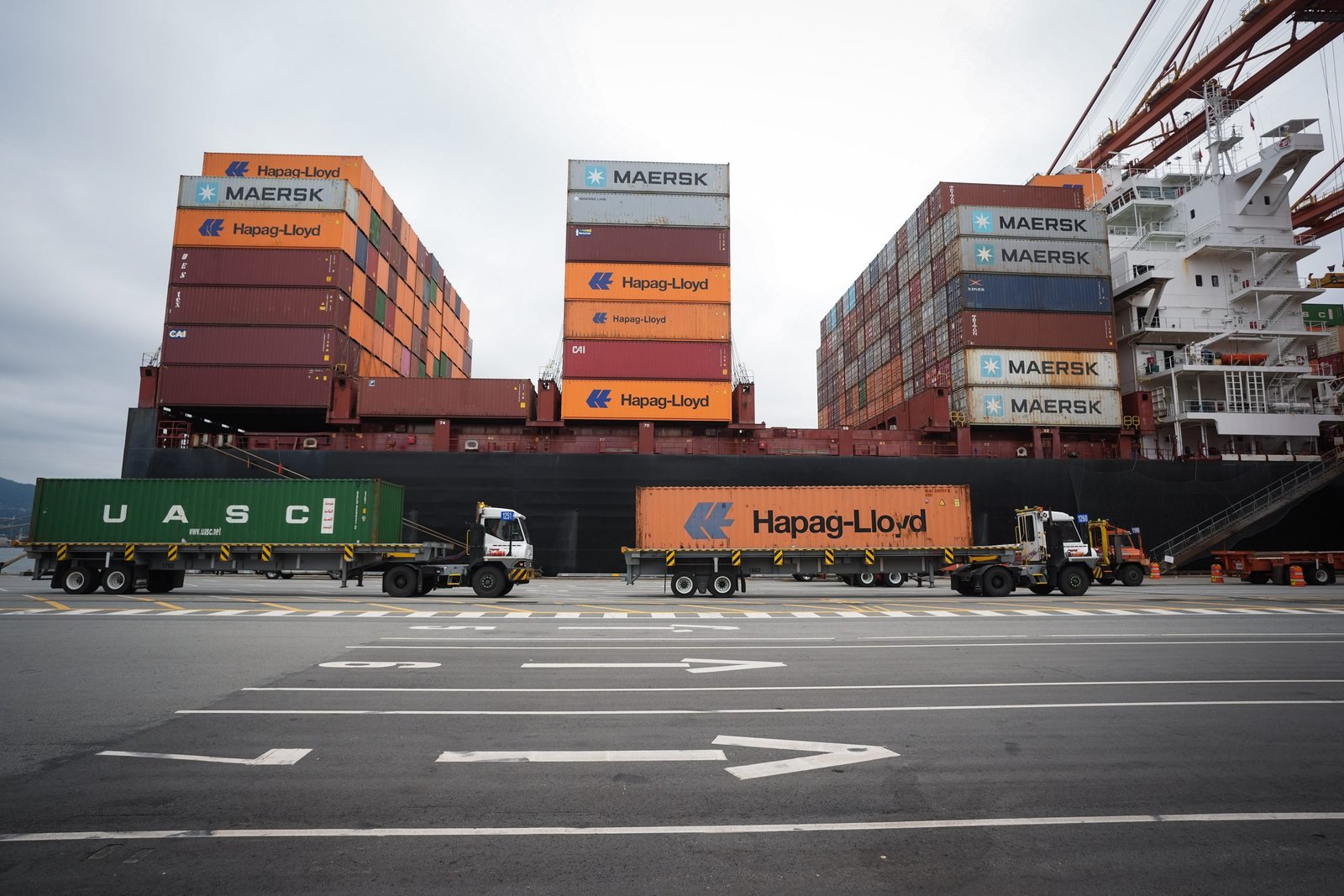
Sources familiar with the discussions said Ottawa is clearly anxious about the prospect of a strike or lockout and what even a temporary closure of the ports would mean for the Carney government’s ambitious trade diversification agenda.
Two senior federal officials met with industry and union leaders at the West Coast ports on Tuesday in anticipation of the start of high-stake talks on a new labour deal.
Sources familiar with the discussions said Ottawa is clearly anxious about the prospect of a strike or lockout and what even a temporary closure of the ports would mean for the Carney government’s ambitious trade diversification agenda.
The sources, who asked not to be identified because they’re not authorized to speak publicly, said deputy labour minister Rob Wright and Peter Simpson, the head of the government’s mediation and conciliation service, met with both sides in-person and signalled that Ottawa was paying close attention to the talks.
The current labour deal between the port employers and longshore workers expires in early 2027. Formal negotiations are expected to start this fall.
The workers are represented by the International Longshore and Warehouse Union Canada (ILWU), whose president Rob Ashton ran unsuccessfully for the federal NDP leadership earlier this year. The B.C. Maritime Employers Association (BCMEA) represents the port employers in talks.
In a statement to iPolitics, Jobs and Families Minister Patty Hajdu’s office confirmed the meetings and said federal mediators were holding early talks to help support “positive labour relations and free and fair collective bargaining in federally regulated sectors.”
The office said mediators would “continue to be available to assist parties before and during the bargaining process,”
Labour disputes are common occurrences at B.C.’s ports.
The current labour deal for longshore workers was only reached in the summer of 2023 after a tumultuous strike that prompted then-prime minister Justin Trudeau to convene a special cabinet meeting typically reserved for natural disasters or global conflicts.
The strike closed all ports in B.C. for two weeks and uncertainty about the possible resumption forced layoffs at one of the major railways.
A deal was finally reached nearly a month after the strike started, but the two sides are still arguing about the fallout in the courts.
READ MORE: B.C. port employers lose appeal to have arbitrator rule on damages from 2023 strike
As iPolitics reported earlier this week, the BCMEA recently lost an appeal to appear before an arbitrator to seek damages from the strike. This doesn’t prevent the group from seeking other avenues to bring a case against the union.
The frequency of labour disputes at the West Coast ports prompted then labour minister Seamus O’Regan to order an industrial inquiry commission in the fall of 2023. A subsequent report was filed in the spring of 2025 and called the system “broken but not beyond repair.”
An agreement with the longshore foremen’s union was only reached in the fall of 2024 after the federal Liberal government used section 107 of the Labour Code to disband the lockout and order binding arbitration.
The 2025 report recommended the creation of a special mediator role to support negotiations and give Ottawa insight into challenging labour disputes, as well as having all B.C. longshore workers and foremen take part in the same bargaining process. But it supported keeping in place a separate process for two coal terminal operators it dubbed “historically excluded employers.”
In the spring, Hajdu ordered consultations on the report’s recommendations and other labour issues in federally-regulated sectors. She started a second wave of consultations this summer and it’s widely expected it will inform government legislation that will be tabled in the fall.
Industry sources frequently expressed frustration in the government’s slow pace in responding to the commission’s report, warning that delays would prevent necessary changes from coming into force before the start of the next round of bargaining.
The Port of Vancouver is Canada’s largest and acts as the major shipping channel for goods destined for the populous Asia-Pacific region.
Prime Minister Mark Carney said last fall that he wanted Canada to double non-U.S. exports by 2035. He’s spent the better part of the past year seeking to improve trade ties with countries like China and India, warning that Canada’s over-reliance on the U.S. market has become a source of weakness.
Transport Canada’s latest annual report said reaching this target would “require expanded capacity and improved performance at major gateways, as well as reliable rail and trucking connectivity linking inland producers with export infrastructure.”
The department said recent strikes and lockouts “showed how vulnerable supply chains can be to labour actions” and praised the government’s use of s. 107 to impose binding arbitration to end the 2024 rail lockouts for improving “labour stability in other critical parts of the network.”
Canada is currently locked in high-stakes negotiations with the Americans on a trade deal to avoid the next wave of U.S. tariffs. Without a new deal, those will go into effect on Aug. 19.
*This story has been updated with comment from the office of the minister of jobs and families.