dailynewsnblog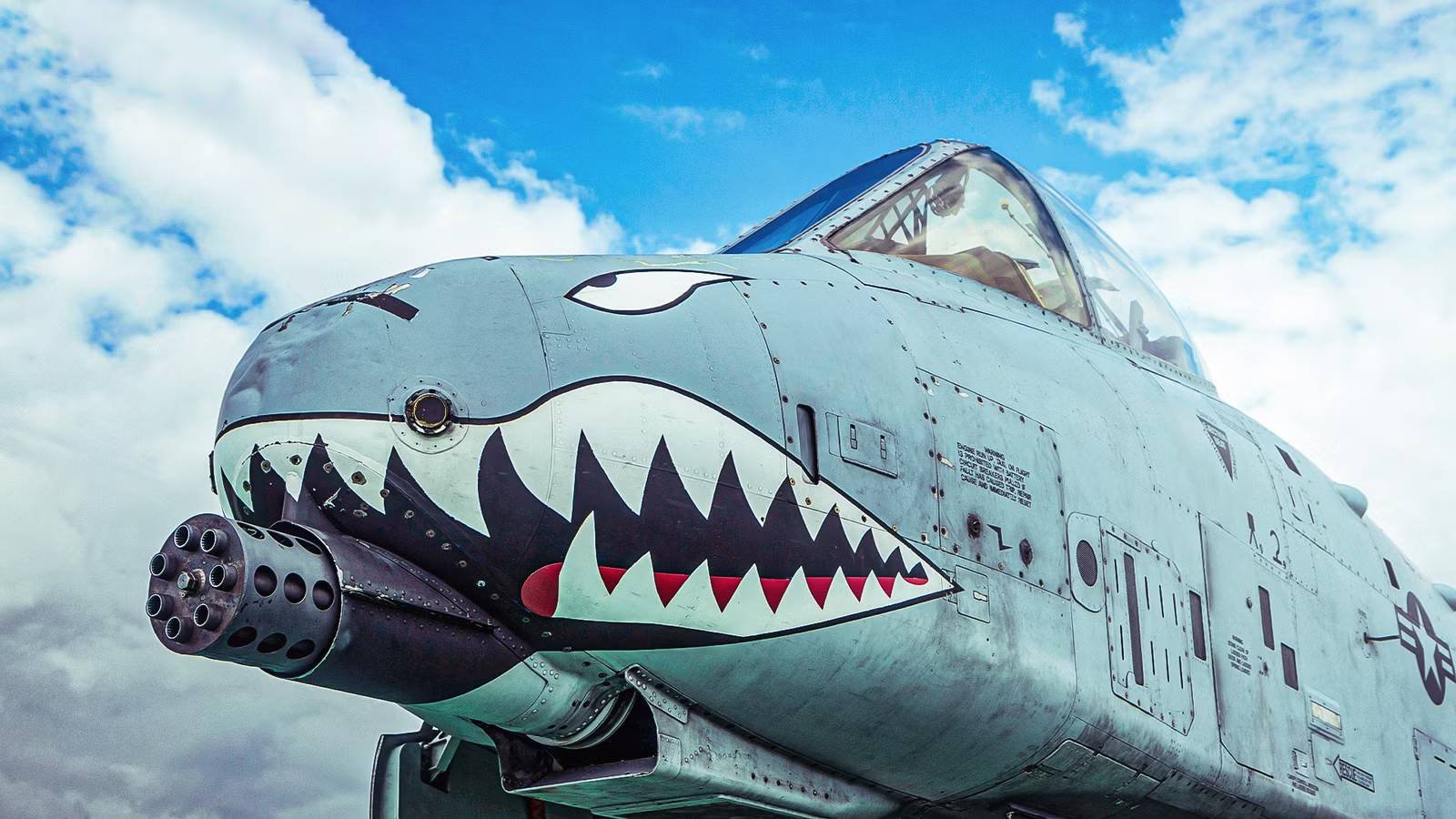
Following its continued excellence on the battlefield in Operation Epic Fury, the Fairchild Republic A-10 Thunderbolt II is not going to be retired quite as quickly as expected. The US Air Force is extending one squadron of the Warthogs to 2029 and two more until 2030. The A-10 has proven to be a superior asset fighting the low-tech threats deployed by Iran’s Armed Forces against American and Israeli troops since hostilities began this year.
One way, suicide drones, like the Shahed, have proven to be the weapon of choice for America’s adversaries in a contest like the current battle against Iran. And the value of these inexpensive weapon systems has been shown clearly in Ukraine to other nations around the world. This asymmetrical warfare that allows actors like Iran with far less resources to inflict costly damage against a superior foe like the US is increasingly desirable to militaries everywhere, even America itself.
The A-10 is dramatically less expensive to operate than a fifth-generation fighter jet like the Lockheed Martin F-35 Lightning II, but it is also proven that its design is better suited to the task of hunting drones and providing close air support. The Warthog has a very high readiness level thanks to its rugged design and simple maintenance, which the Joint Strike Fighter has not been able to match. These qualities, combined with new weapons specifically for drone hunting, have made the A-10 a very valuable asset despite its increasingly advanced age, once again staving off the Warthog’s sunset.

The A-10’s survival is directly tied to its ability to adapt to modern threats that more advanced jets struggle to address cost-effectively. The new advanced Precision Kill Weapon System II is a low-cost, laser-guidance kit that converts unguided 2.75-inch Hydra 70 rockets into precision-guided munitions.
The system was also developed to be used on the Boeing F-15E Eagle and Lockheed Martin F-16 Fighting Falcon. The A-10 is the lowest and slowest flyer of the three, which makes it a uniquely well-suited platform to take down propeller-driven drones like the Iranian Shahed. Because the A-10 lacks an internal radar, it relies on its targeting pod or external data links to find the drones for the APKWS seeker to target, but it is expected to get IR and laser sensor upgrades soon.
A rocket pod with seven projectiles can be mounted on the same hard point that a single missile occupies. A single rocket costs between $25,000 and $40,000, compared to the $1 million+ price tag of an AIM-120 AMRAAM. There is even a plan to upgrade the system: the capability of ‘fire and forget’ simultaneous targeting. Any combined financial incentive and timely mission suitability have convinced lawmakers and the Air Force that the A-10 is still an airframe that very much needs to remain in the USAF inventory.
The A-10 Fleet Today

The year 2025 was slated to see a large divestment of Warthogs despite its enduring popularity, with the USAF scheduled to decommission 56 of the type. The new fleet structure would leave 54 aircraft to support two operational squadrons through 2030, according to Air & Space Forces Magazine. This comes as welcome news to analysts who consider the F-35 as a kind of ‘glass cannon’ compared to the Warthog.
Since the United States launched a joint attack on Iran in support of Israel, the A-10 fleet has seen markedly increased demand. It has reportedly flown a wide range of missions, including drone hunting, maritime strikes, and combat search and rescue. By using the APKWS on the A-10 to counter low-speed drone threats, the US can conserve its limited stocks of AIM-9X and AIM-120 missiles for high-end threats such as manned fighters and cruise missiles.
Because of the continued combat value shown by the Warthog, Congress has instituted conditions for the USAF budget that at least 103 be retained this year. The newly projected fleet numbers are shown in the table below:
|
Fiscal Year |
A-10 Inventory |
Mission Ready Airframes |
|---|---|---|
|
2025 |
162 |
140 |
|
2026 |
103 |
93 |
|
2027 |
54 |
45 |
Despite being the heir-apparent to the USAF close air support mission, analysts and defense critics have criticized the F-35 as a high-maintenance hangar queen compared to the rugged Warthog. During recent operations over Iran and the Strait of Hormuz, the A-10 also proved uniquely effective at destroying naval targets like fast-attack boats and providing badly needed CAS with quick response times and reliable results.
How The Fairchild Republic A-10 Warthog’s Titanium Bathtub Protects Pilots From Ground-Level Ballistics
The story behind America’s flying tank buster.
New Toys For The Warthog

Rather than leaving the A-10 in its standard configuration, which relies on visual tracking, the Air Force has systematically retrofitted the A-10 to excel in the counter-unmanned aerial systems mission. Pairing the A-10’s iconic 30mm GAU-8/A Avenger Rotary Cannon with APKWS and modernized fire-control software, it acts as a short-range air defense system capable of shredding low-altitude drone swarms or fast attack watercraft.
The FALCO Counter-UAS Software Suite is integrated directly into the platform’s central computer. This software package enables pilots to rapidly target air-to-air drone threats. It coordinates with the weapons array to automatically calculate lead angles for low-speed propeller-driven targets. Newly updated operational software introduces an automated laser-to-infrared handoff. Once the pilot designates an enemy Shahed 136 drone, the rocket locks onto the target independently. This frees the pilot to immediately engage additional incoming targets.
The latest round of Suite 11 cockpit upgrades has also featured high-resolution display systems, 3D audio, jam-resistant GPS, and improved communication, according to SOFREP. The Air Force has also reportedly upgraded the A-10’s data-network capability to integrate with 4th and 5th-Gen assets, ensuring it remains relevant through at least 2030. This allows jets like the F-35 to feed real-time coordinates down to low-flying A-10s hunting boat and drone swarms.
How The Dassault Rafale Stacks Up Against The F-16, Gripen, & Typhoon In 2026
Comparing France’s exquisite omnirole jet to the leading fighters.
The American Missile Dilemma

During the initial air campaign of Operation Epic Fury, the US and its allies depleted nearly $30 billion worth of munitions in just three weeks. In seven weeks of fighting, America used roughly 45% of its Precision Strike Missiles, 50% of THAAD interceptors, and 50% of the Patriot missiles. Replacement of these complex missiles can take three to eight years due to slow production lines. Unlike specialized interceptors, APKWS kits use munitions available in large quantities and replaceable at low cost.
Rather than firing a million-dollar missile, the A-10 relies on the APKWS II laser-guided rocket, which costs between $25,000 and $40,000 per shot. The A-10 shifts the intercept economics from an unsustainable deficit to a massive financial advantage. The strategic missile depletion directly threatened the defense industrial base’s ability to sustain a high-end conflict.
For ultra-short-range engagements, pilots can also use the 30mm GAU-8 cannon. A brief burst of armor-piercing incendiary rounds destroys a drone for a couple of thousand dollars, preserving the rocket payload and giving the A-10 a longer mission time on station before it has to return to base for ammunition, aka ‘Winchester.’
The rapid expenditure of premium weapons in localized Middle Eastern conflicts leaves the US military dangerously undersupplied for potential large-scale deterrence elsewhere. By tasking the ‘dirty, messy, and boring’ missions like drone hunting entirely to the A-10, advanced interceptors like the F-35 can keep their sophisticated air-to-air missiles safely in reserve.

From 76 F-22 Raptors To 200 Next-Gen Fighters: How Much Larger America’s Air Superiority Fleet Could Get
A closer look at the future of air power in the US Armed Forces.
Ready for the Low and Slow Fight: America’s Flying Tank

The A-10 was specifically engineered to operate out of austere environments, a necessity highlighted by the 2026 Iranian missile strikes that damaged 15 US air installations across the region. The Warthog has proven to be a superior agile combat employment platform compared to the F-35 currently, due to the shortcomings of the newer stealth fighter, which have yet to be resolved due to the technology refresh 3 block 4 being stuck in testing.
In an active theater with continuous waves of incoming targets, the speed at which an aircraft can refuel, rearm, and launch is crucial to its defensive value. Ground crews can service an A-10 at a forward arming and refueling point without specialized diagnostic equipment to reload weapons or pump fuel. Countering slow-moving drones over a wide area also demands persistence more than speed, which the Warthog once again excels at.
The A-10’s high-bypass turbofans function efficiently at low altitudes. It burns approximately 2,500 pounds of fuel per hour, giving it an unrefueled loiter time of three to five hours directly over the front line. The JSF burns 5,000 to 6,000 pounds of fuel per hour. This limits its station time to under two hours. And while the F-35 is better at evading radar, the Warthog is far more durable in an environment where the main threat is shoulder-fired rockets, anti-aircraft artillery, or heavy machine guns.
Why America’s Oldest Strategic Bombers Are More Valuable Than Ever
The weary warbirds that continue to defend the skies.
Rough and Ready: The Warthog’s Thick Skin

For low-altitude, slow-speed missions over high-threat environments, the armor and structural strength of the A-10 make it uniquely resilient against ground-based threats. The A-10 cockpit is enclosed in a 1,200-pound titanium armor bathtub. It is between 0.5 and 1.5 inches in thickness and is designed to take direct hits from 23mm anti-aircraft explosive shells, and small-arms fire up to .50 caliber, without injuring the pilot.
The Warthog was engineered to survive substantial structural loss. It features large, redundant straight wings, dual vertical stabilizers, and fuel tanks lined with self-sealing reticulated foam. The A-10’s twin TF34 engines are mounted externally, high on the rear fuselage. This placement isolates them from the main fuselage, ensuring that an engine explosion or fire is unlikely to compromise the rest of the airframe. It can lose half of a wing, one entire tail fin, and one engine, yet keep on flying.
The F-35 is a tightly packed, highly integrated electronic system. If its delicate, radar-absorbent stealth skin is scraped or damaged by low-altitude debris, it faces hours of specialized chemical curing before it can fly again. A single shrapnel strike can cause a catastrophic failure. Small-arms fire penetrating its composite skin can rupture internal fuel lines, short-circuit the single engine, or compromise its electronic systems, forcing an immediate pilot ejection.
Catch what other trackers miss
Emergency squawks, holds, NOTAMs — live signals, no signup.
Open tracker
Catch what other trackers miss
Emergency squawks, holds, NOTAMs — live signals, no signup.
Open tracker