dailynewsnblog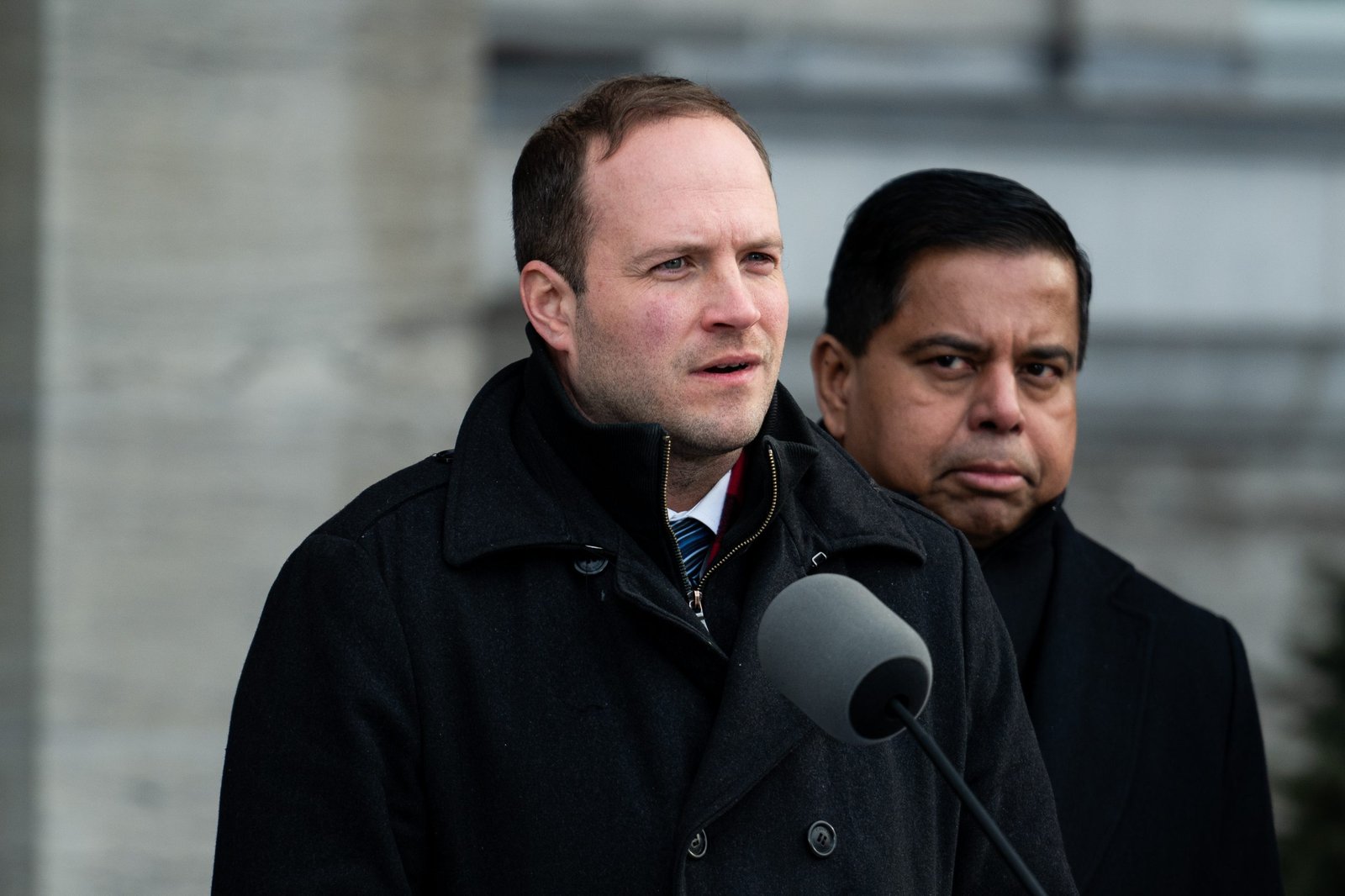
We’re starting the newsletter off with some provincial politics.
Ontario Liberal nomination fallout just deepened this Tuesday as Liberal MP Nate Erskine-Smith formally challenged the results of the party’s contentious Scarborough Southwest nomination race, alleging voting irregularities and calling for the outcome to be overturned.
In a notice of appeal filed with the Ontario Liberal Party’s arbitration board, Erskine-Smith argued the May 9 nomination was marred by what he described as “serious irregularities,” including concerns about voter identification procedures and discrepancies in the ballot count.
The appeal comes after Erskine-Smith lost the nomination to businessman Ahsanul Hafiz by just 19 votes: a razor-thin margin that immediately sparked accusations from the longtime Toronto MP and his campaign team.
According to the filing, the campaign alleges there were more ballots counted than registered voters who cast them. The appeal also raises questions about how identification rules were enforced during the vote, an issue Erskine-Smith publicly referenced in the hours after the results were announced Saturday night.
Our Queen’s Park reporter Barbara Patrocinio has more.

Also, an update to Artificial Intelligence Minister Evan Solomon’s announcement yesterday, the federal government is pledging $66 million to help companies in accessing computing power to support their AI products.
The money will flow from the government’s $300 million AI Compute Access Fund, and help support companies that are developing technologies that can detect wildfires earlier, improve public transit and accelerate drug discovery, among other projects.
This tranche of funding was unveiled during an announcement Tuesday in Vancouver, with $16.6 earmarked for eight projects in B.C.
“AI is not just a technology of the future. It is already helping Canadian companies solve real problems, improve services, create products and compete globally,” Artificial Intelligence and Digital Innovation Minister Evan Solomon said in a statement.
“But to build with AI, companies need access to compute power. Through the AI Compute Access Fund, we are helping Canadian businesses get the processing power they need to scale, create jobs, transform industries and keep more of the value they create here in Canada.”
Marco Vigliotti has more.

Meanwhile, government legislation criminalizing coercive control and sexual explicit deepfakes has cleared committee and now awaits third reading in the House.
After days of procedural fights and dozens of amendments, Bill C-16 passed on division at the justice committee last week.
The government framed the bill —dubbed the Protecting Victims Act — as a necessary update to the Criminal Code to better address modern forms of harm. It particularly targets coercive control in intimate partner relationships, evolving sexual and child-protection offences, and addresses gaps in digital abuse like deepfakes.
The committee debate was foreshadowed months earlier, when Conservative MP Larry Brock cautioned that his party broadly backed the legislation, but viewed the government’s proposed “safety valve” for mandatory minimum penalties as a major sticking point, particularly after recent Supreme Court rulings in Senneville on child sexual abuse material offences.
Read more from Sydney Ko.
In Other Headlines
Internationally
Elsewhere, the risk of some Gulf states becoming embroiled in a direct war with Iran has risen after it was reported the United Arab Emirates had secretly launched a major attack on Iran during the conflict.
In addition, Kuwait has said that at least four members of the Islamic Revolutionary Guard Corps had been captured trying to carry out “terrorist attacks” on the Kuwaiti-owned Bubiyan Island, the largest island in the Kuwaiti coastal chain.
The UAE assault on Iran, which was undertaken as retaliation for Iranian attacks on its facilities, included a strike on Iran’s Lazan Island just before the 7 April ceasefire was announced, the Wall Street Journal reported.
The news is likely to make the UAE an even clearer target for Iran if the ceasefire is abandoned and the US and Iran restart the conflict. Donald Trump said on Monday the ceasefire was hanging by a thread due to Iran’s failure to make the concessions he is seeking over its nuclear programme.
The Guardian has more.
Meanwhile, Israeli Prime Minister Benjamin Netanyahu’s governing coalition may collapse next week, after one of his key ultra-Orthodox coalition partners called for the parliament to be dissolved.
Israeli media are widely reporting that new national elections may be called for early September.
The political crisis comes after Netanyahu told ultra-Orthodox political leaders that he would not advance legislation to exempt ultra-Orthodox Jewish Israelis from military service, and suggested to advance such legislation after elections, according to the Israeli newspaper Haaretz.
“We have no trust in Netanyahu anymore,” Degel HaTorah, an ultra-Orthodox Jewish faction in Netanyahu’s coalition, said in a public statement. “We must move to dissolve the parliament imminently.”
Read more from NPR.
In Other International Headlines
The Kicker
It may be sacrilegious to say “I’m tired of Tim Hortons” but for folks who are quietly feeling that way… Dunkin’ Donut is making its return to Canada – this time under a Canadian ownership.
Have a great evening!