dailynewsnblog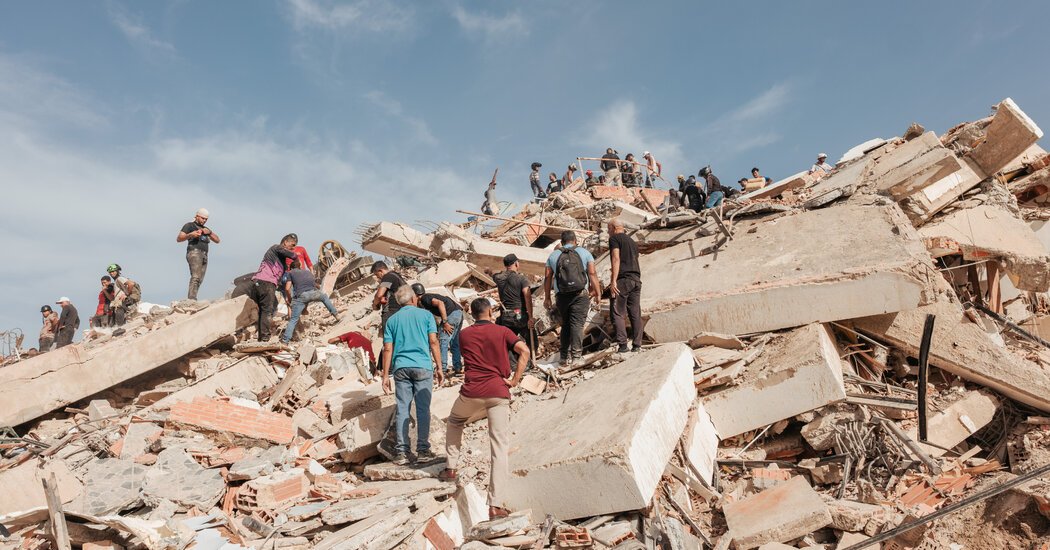
The official death toll after Venezuela’s twin earthquakes on Wednesday has already risen to 1,719 people in the latest tally by local authorities. But this sobering figure could still be a substantial undercount.
According to disaster response experts, it often takes several weeks for a full picture to emerge after disasters of this magnitude, and several signs out of Venezuela indicate that these earthquakes were particularly lethal. “Sadly, we are going to see the death toll continue to rise,” said Ilan Kelman, a professor of disasters and health at University College London, in an interview on Monday.
Emily So, a professor of architectural engineering at the University of Cambridge, also predicted a significant rise in the toll over time, citing the high numbers of people reported missing, the extent of visible damage to buildings and the impeded access to the worst hit areas, which has stymied some responses. “Tragically, until they recover the bodies from underneath the rubble, the count will be low,” she said.
Professor Kelman cautioned that it was difficult to project exactly how high the toll could climb, adding that there was a strong chance the full count would never be known. But a preliminary projection that the final toll could exceed 10,000 — shared by the U.S. Geological Survey based on factors including the magnitude of the earthquake, the population density and local infrastructure — remained grimly feasible, he said.
The expected lengthy delay between the disaster and the final casualty toll is the result of several factors.
The work of recovering bodies is painstakingly slow, and it’s not a priority for most response teams: Their focus in the initial days after a disaster is on rescuing survivors. The time it takes to comb through rubble is also magnified by the number of buildings damaged or destroyed, with estimates of the total ranging from the hundreds to the tens of thousands depending on the research method and criteria used.
In addition, other victims will continue to die from their injuries, in part because of Venezuela’s already overstretched health system, Professor Kelman added. The response has been further snarled by delays to responses as a result of traffic on the main highway into the worst-hit state, La Guaira, as well as by a lack of heavy lifting machinery and inadequate medical supplies.
Even in well-organized response efforts, many survivors end up being rescued by their untrained friends, family and neighbors, said Professor So.
“But the extent of the damage and the complete collapses of heavy reinforced concrete buildings make this difficult without machinery,” she added.
Ultimately, Professor Kelman blamed the scale of the final toll on poor building standards. According to structural engineers, many of the buildings that collapsed were made of brittle concrete without adequate steel reinforcement.
“Not a single building should have collapsed in those earthquakes,” he said, comparing the impact with that of recent earthquakes in other places that resulted in lower death tolls. “We have all the knowledge, science and engineering that we need to build in a seismic zone without having a catastrophic disaster following an earthquake.”