dailynewsnblog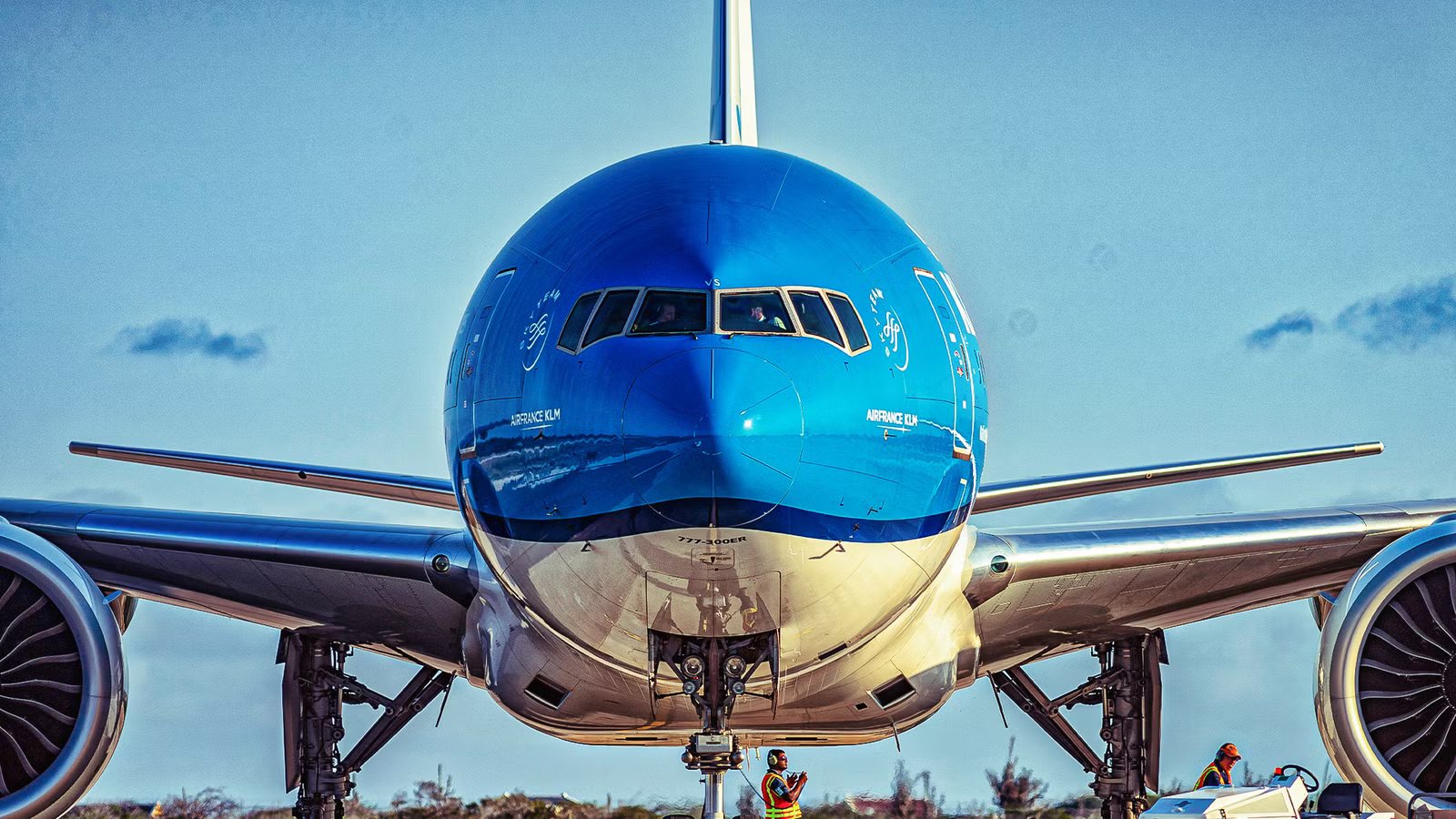
The Boeing 777-300ER entered service in 2004 as what many considered the ultimate evolution of Boeing’s original 777 concept, combining extended range with high passenger capacity, making it quickly indispensable for long-haul routes. At the time, it represented a leap forward in efficiency and performance, powered by what were then the largest aircraft engines ever built and designed to connect cities across continents without compromise.
More than two decades later, the same aircraft type is still flying at the center of global airline networks, but it is no longer quite the same airplane that debuted in the early 2000s. Beneath a familiar silhouette, the Boeing 777-300ER has undergone a steady, almost invisible transformation, shaped by incremental engineering changes, evolving passenger expectations, and the realities of an industry now waiting for its delayed successor.
A Program That Never Stood Still

When  Boeing first introduced the 777-300ER, it was already an advanced aircraft by early 21st-century standards, designed with a strong focus on efficiency, range, and reliability. However, unlike some aircraft programs that remain largely static after entry into service, the 777-300ER became an example of continuous improvement, with updates introduced quietly over the years rather than through headline-grabbing redesigns.
These changes were often subtle, sometimes barely noticeable even to experienced observers, but collectively they reshaped the aircraft’s performance and operating economics. Engineers refined systems, adjusted structural components, and optimized manufacturing techniques, all with the goal of squeezing incremental gains out of an already highly capable aircraft.
This approach reflected a broader philosophy within Boeing’s long-haul programs, where gradual evolution can often deliver more value than radical redesign, particularly for airlines that depend on fleet commonality and predictable operating characteristics. Over time, the result was an aircraft that, while externally familiar, differed in meaningful ways from its earliest examples.

Why The Boeing 777-300ER Is So Reliable
Excellent Boeing engineering, good engines, and sustained investment all played a key role.
Shedding Weight Without Changing Shape

One of the most significant yet least visible transformations came in the form of structural weight reductions. Over the course of production, Boeing managed to trim approximately 1,200 lbs from the aircraft’s baseline weight, a figure that might seem modest but carries substantial implications in the world of aviation. Reducing weight directly translates into improved fuel efficiency, increased payload capability, or extended range, depending on how airlines choose to utilize the savings.
Achieving such reductions without altering the aircraft’s overall design required careful reengineering of internal components, materials, and manufacturing processes. These refinements highlight how mature aircraft programs can still yield efficiency gains long after their initial certification. Rather than introducing a new variant, Boeing effectively enhanced the existing one, allowing airlines to benefit from improved performance without additional pilot training or major operational changes.
Ranking | Airline | Boeing 777-300ER |
|---|---|---|
1 | Emirates | 124 |
2 | Qatar Airways | 57 |
3 | Air France | 43 |
4 | Cathay Pacific | 35 |
5 | Saudia | 35 |
6 | EVA Air | 34 |
7 | Turkish Airlines | 33 |
8 | Air China | 28 |
9 | Korean Air | 25 |
10 | Singapore Airlines | 22 |
For carriers operating large fleets of Boeing 777-300ERs, even marginal improvements per aircraft can scale into significant cost savings across thousands of flights, reinforcing the value of incremental innovation in a highly competitive industry. The latest data from ch-aviation shows that  Emirates is currently by far the largest operator of the 777-300ER, with a staggering 124 in its fleet, followed by
  Qatar Airwayswith 57. The world’s largest operators of the jet are outlined in the table above.
Aerodynamic Refinements & Subtle Design Changes

Beyond structural improvements, the Boeing 777-300ER also saw aerodynamic refinements that contributed to its evolving performance profile. Among the most notable of these were modifications such as divergent trailing edges, which subtly altered the airflow to improve efficiency. These changes were not dramatic enough to redefine the aircraft’s appearance, but they helped reduce drag and improve fuel burn performance over long distances.
In addition, certain physical features present on earlier aircraft, such as elements of the tail skid system, were revised or removed as engineering confidence and operational data allowed for simplification. Such adjustments underscore how aerodynamic optimization does not always require sweeping redesigns. Instead, small, carefully targeted modifications can deliver measurable benefits, particularly when applied across a large production run spanning two decades.
For airlines, these refinements translated into lower operating costs and improved competitiveness, especially on ultra-long-haul routes where even minor efficiency gains can have a meaningful financial impact. At the heart of the Boeing 777-300ER’s performance has always been the General Electric GE90-115B. When it entered service, the engine was already a technological milestone, delivering unprecedented thrust and enabling the aircraft’s long-range capabilities.
However, like the aircraft itself, the GE90-115B did not remain static. Over time, it received performance improvement packages designed to enhance fuel efficiency, reliability, and maintenance characteristics. These updates allowed airlines to extract more value from their existing fleets without requiring entirely new propulsion systems.
Engine improvements are particularly significant in aviation economics, as fuel costs are among the highest operating expenses for airlines. Even incremental gains in efficiency can translate into millions of dollars in savings over the lifespan of an aircraft. The continued evolution of the GE90-115B also reflects the long-term nature of aircraft programs, where engines and aircraft are refined in parallel to ensure that mature platforms remain competitive with newer designs entering the market.
Why The Boeing 777-300ER Is Preferred By Passengers
The 777-300ER is one of the most common widebody airliners currently in the skies.
A Cabin Revolution Hidden Inside A Familiar Shell

While the external evolution of the Boeing 777-300ER has been subtle, the transformation inside the cabin has been far more visible, driven largely by changing passenger expectations and advances in technology. Early versions of the aircraft featured cabin products that, while modern at the time, now appear dated compared to today’s standards. Airlines have responded with extensive retrofit programs, introducing features that were unimaginable when the aircraft first entered service.
These include high-speed satellite connectivity such as Starlink WiFi, USB-C power outlets, and wireless charging capabilities, all aimed at meeting the demands of increasingly connected travelers. Perhaps most striking is the evolution of inflight entertainment, with some carriers installing 4K OLED screens measuring up to 27 inches in premium cabins. These upgrades represent a dramatic shift from the smaller, lower-resolution displays that characterized early Boeing 777 interiors.
Among the carriers embarking on extensive retrofit programs for their 777-300ERs are Emirates,  American Airlines, and Korean Air, with
  Air India soon to follow suit. United has also been at the forefront of these modernization efforts, investing heavily in cabin upgrades to ensure that older aircraft remain competitive with newer aircraft types. The result is that passengers boarding a refurbished 777-300ER today may experience a cabin environment that feels entirely contemporary.
The 777X Delay & Its Ripple Effects

Shutterstock, Simple Flying
The ongoing delay of the Boeing 777X has played a crucial role in extending the life and relevance of the 777-300ER. Originally intended as the successor to the current 777 family, the 777X program has faced multiple setbacks, pushing its entry into service back by as much as seven years. This delay has forced airlines to rethink their fleet strategies, as aircraft they had planned to retire or replace must now remain in service longer than expected.
Instead of phasing out older 777-300ERs, many carriers are investing in upgrades and refurbishments to bridge the gap until the new model arrives. The situation has also influenced the second-hand market, where demand for used Boeing 777-300ERs remains relatively strong due to the limited availability of suitable replacements.
In some cases, aircraft that might have been retired are instead being converted for cargo operations or redeployed on different routes. For airlines, the extended lifespan of the 777-300ER is both a challenge and an opportunity. While it requires additional investment in maintenance and upgrades, it also allows carriers to continue leveraging a proven platform that remains highly capable even decades after its introduction.

Why The Flagship Of The World’s Elite Airlines Is No Longer In Production
Boeing recently made the decision to halt the production of one of its best-selling widebody aircraft.
The Final Delivery & A Long Future Ahead

Production of the Boeing 777-300ER officially came to an end in late 2024, with the final aircraft delivered to Ethiopian Airlines. This marked the close of a manufacturing run that spanned roughly two decades and produced one of the most successful widebody aircraft in aviation history. Despite the end of production, the story of the Boeing 777-300ER is far from over, as the global fleet is expected to remain in service well into the 2030s.
This is thanks to ongoing upgrades, strong operational performance, and the continued delay of its successor. As such, major operators such as Emirates,  Singapore Airlines, and Cathay Pacific continue to rely heavily on the type. Over its lifespan, the Boeing 777-300ER has demonstrated how an aircraft can evolve without losing its identity, adapting to new technologies and market demands while maintaining the core characteristics that made it successful in the first place.