dailynewsnblog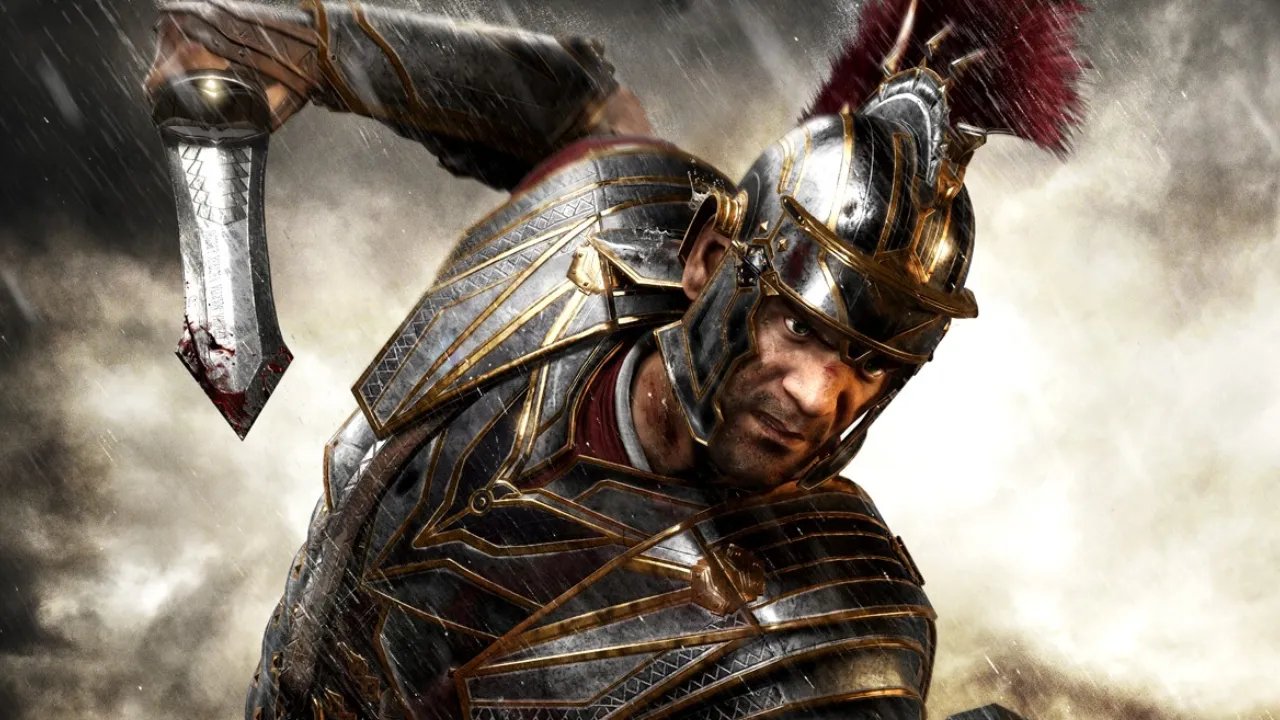
What are some of the best-looking games of all time? Many examples that come to my mind are not from this generation, but rather the early 2010s: Metal Gear Solid 5, The Witcher 3, and Batman: Arkham Knight all looked stunning upon release, and still do today.
To this list I would also add Ryse: Son of Rome, German developer Crytek’s ill-fated Xbox One launch title in which you play as a Roman centurion seeking to avenge his dead family. It is gloriously, mouth-wateringly cinematic, more so than many actual works of cinema.
Unfortunately, it’s also rather short, taking only around 6 hours to complete. Former employees say as much as two thirds of planned content had to be cut in the race to make launch day. The crunch was brutal, but many of the game’s creators took comfort in the knowledge they were laying the foundations for not just a sequel, but an entire franchise – one that would take us far beyond Rome.
How Empires Fall
While work on the original game was wrapping up, four concept artists, a historical researcher, and the key leadership team of Ryse: Son of Rome got together to figure out where they could take things moving forward.
Leading this group was Patrick Hanenberger, a production designer who had previously worked at DreamWorks. He’d initially been brought on board as a visual consultant to help make Ryse feel – as Crytek’s then-CEO Cevat Yerli used to say – like a “playable movie.” Later, he tells IGN, “they offered me a job as the franchise’s art director.”
Also set to be involved in some capacity was Todd Papy of Sony’s Santa Monica Studio. Papy joined Crytek in late 2013 after having directed God of War: Ascension to work on what was then reported to be an “unannounced project.” A former Crytek employee who spoke to IGN under condition of anonymity affirmed what was back then just speculation: that he would apply his experience with games set in ancient Greece to a game set in ancient Rome.
Whether any of the sequels would in fact be set in Rome was, however, the subject of debate. “Part of the conversations that were happening were about what it was that people were liking about Ryse,” Yannick Boucher, who served as one of the original game’s project managers, tells IGN. “Was it the Roman thing specifically, or history more generally? Do we stay in Rome, or go to some other empire?”
“I was super stoked to do a Viking game,” recalls Peter Gornstein, Ryse’s art director and director of cinematics. For one, the opportunities were endless: a game about Vikings could have taken players on raids along the English and French coasts, the shores of Newfoundland, and even the city of Constantinople, where they served as bodyguards to Byzantine emperors. It was also uncharted territory – at least back then. The History Channel’s Vikings TV show was still on its first season, and Assassin’s Creed Valhalla nearly a decade away.
“It would have been great to explore a part of history that a lot of people didn’t yet know about,” says Gornstein.

Other settings that were reportedly considered included feudal Japan – Hanenberger mentions a number of events that interested him, including the failed Mongol invasions led by Kublai Khan, the arrival of European merchants, and the civil wars of the Sengoku period – as well as the Ottoman Empire, which defeated the Byzantines in 1453.
Not everyone was on board with leaving Rome. As Boucher puts it: “Some felt like we had just set the foundations for this IP, and now we were already diverging a bit. A lot of people were super keen on Japan, unsurprisingly. But that’s not like going from Rome to Greece. It would have been a big departure.”
Hanenberger thought of several ways to connect and justify expanding settings. Thematically, for example, the franchise could come to explore the question of “how empires rise and fall – and why.” He also considered tying each installment together narratively, with characters and events in one game linking back to another. Each story could be set in motion by that of the previous installment, like dominos. Or, you know, history itself.
Rhyming With History
Had those planned sequels happened, they would have featured a more open-ended design than the original Ryse. “When we talked about correcting some of that game’s weaknesses,” says Boucher, “changing the levels was among the first things that came up, as most of them were basically just a straight corridor.” The vision at the time was not far off from God of War 2018: not quite open-world, but not completely linear either.
The team also thought about introducing new game mechanics, many of them cut from or left out of the original Ryse due to time constraints, including vehicle navigation and a PVP multiplayer mode (Son of Rome ended up having both solo and co-op PVE where you fought off waves inside the Colosseum).
The anonymous employee tells me they would have liked to have made single-player combat more dynamic. In parts of Ryse, when you venture into Britain to crush the rebellion of Queen Boudica, you advance in testudo formation, raising your shield alongside your fellow soldiers to form an impregnable barrier. In the final game, gameplay is limited to shielding yourself from enemy fire and returning fire of your own – all with the press of a button. “Our original plan was that you’d be able to leave and reenter this formation at will,” they say, “fighting enemies on your own and then returning to position when you feel like doing so.”
The sequels could have played around with other real-world military tactics, like the Parthian shot (where cavalry soldiers feign a full-speed retreat, only to turn around and firing arrows) or Kakuyoku (a Sengoku-era formation where a single defensive line turns into a pincer movement, attacking the enemy from both sides).
One area where the sequels would not diverge from the original Ryse was aesthetics. Son of Rome was not historically accurate, but it did aim for a certain emotional or psychological accuracy. As Gornstein puts it, they did not try to present Rome as it was, but as how it might have appeared to someone “who lived in a village somewhere, five hours away. To someone who visited the city for the first and only time in their life, everything must have seemed completely overwhelming.”
“It’s the same sensation as when, in the game, you go to York and Dover,” Hanenberger adds. “Those cliffs are awe-inspiring. That’s what we were trying to capture, and would have wanted to capture going forward.”
The original game wasn’t just larger-than-life, but also veered into the supernatural, with two seemingly mortal characters – Aquilo and Aestas – revealed to be gods, playing a secret game with people as their pawns. This supernatural element, says Gornstein, would have continued in the sequels, mapped onto different religions and mythologies. As in the original, though, their presence would have remained subtle, pushed into the background.
Ides of March
When Hanenberger and Gornstein pitched their franchise plan to Microsoft, the response was enthusiastic. “They told us it was ‘the most cohesive and well-thought IP pitch they had ever seen,’” Hanenberger recalls. “It all seemed to go very well.”
Until it didn’t.
According to the employees who spoke with IGN, the sequels to Ryse were never formally cancelled. Instead, work on the franchise simply stopped after the original game underperformed both critically and commercially – an outcome that perhaps could have been avoided had the developers not been required to finish the game before the launch of the Xbox One.
Ultimately, the reason the Ryse series ended up in limbo is because Crytek refused to sell the IP to Microsoft. The conglomerate no longer wanted to finance the franchise if they couldn’t buy the rights, while Crytek – to this day a privately owned company – wouldn’t work on something that somebody else owned. As a result of this impasse, the two parted ways, and Crytek switched focus to other projects.
For those who worked on the game, feelings towards Ryse are bittersweet. “The last month, I worked 30 days straight,” Boucher remembers. “Then we breathed a sigh of relief, only to get hit with a 60 on Metacritic.”
At the same time, working on Ryse taught them valuable lessons that they took with them as they went on to work on titles like Hitman, Battlefield 1, and Avatar: Frontiers of Pandora.
While Ryse didn’t make the impact that Crytek had hoped for, it still sold more than a million copies upon release. Over time, the game also grew a dedicated cult following that loves it for everything the developers got right. As someone who counts himself among this following, I think I speak for many when I say that wherever this franchise would have led, I would have followed.
Tim Brinkhof is a freelance writer specializing in art and history. After studying journalism at NYU, he has gone on to write for Vox, Vulture, Slate, Polygon, GQ, Esquire and more.