dailynewsnblog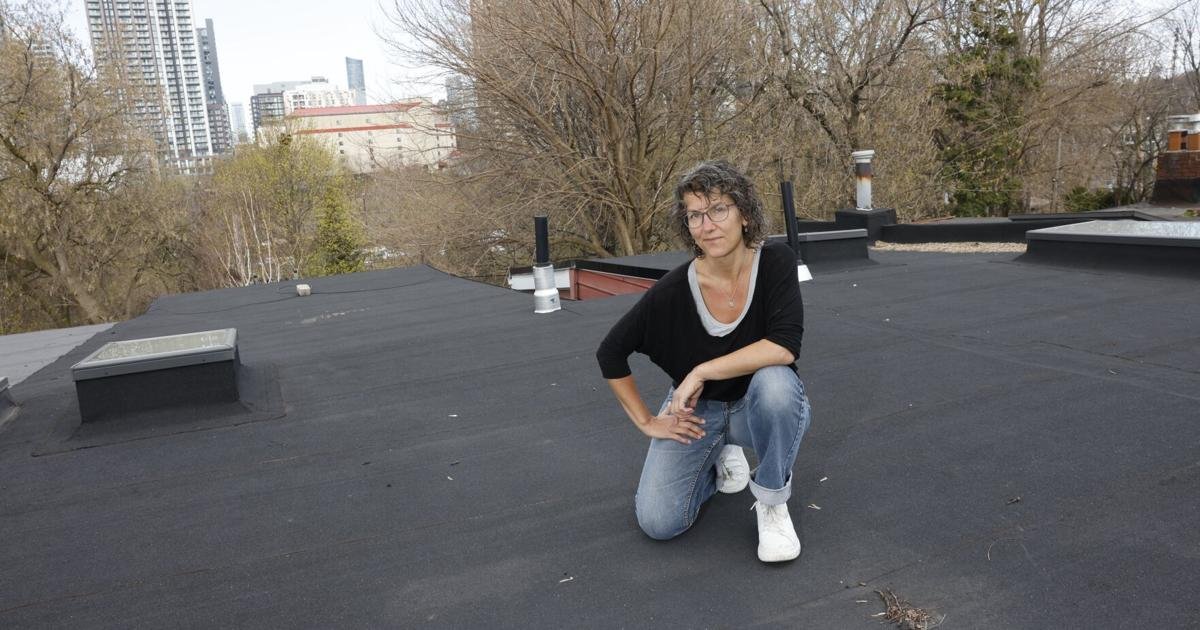
From street level, Cathy Bogaart’s block resembles many others in Toronto, with cars parked along the curb, recycling bins crowding the sidewalk, and bikes locked to poles all competing for valuable space.
But on the roof, her street has vast expanses of empty real estate that could be put to use generating electricity from the sun, powering the houses beneath and providing environmental and economic benefits to everyone, citywide.
“I’ve always wanted to get solar on my roof,” Bogaart said. “I’ve had people by more than once, but I’ve never gone through with it because it’s such a pain.”
Energy experts say rooftop solar can save a household more than $1,000 per year on energy bills, while also providing power to the grid at peak times when it’s most needed, which can lower costs for everyone.
But red tape has been standing in the way of widespread adoption. Permits and inspections can add weeks and thousands of dollars to a solar project, solar installers say, and this scares many homeowners off.
As a result, Toronto has little solar, even as the economics of renewable power have never been better. In a city of three million people, there are currently fewer than 3,000 rooftop solar arrays, according to Toronto Hydro data obtained exclusively by the Star.
City Hall is aware of this lacklustre record and has determined to supercharge solar adoption. A new home solar accelerator program, run by The Atmospheric Fund (TAF) and Toronto Hydro, offers a free “solar coach” to help stickhandle the permits and bureaucracy and provide contacts for vetted contractors to do the work.
“Getting solar is complex and confusing,” said Chris Caners, TAF’s director of education. “So we’re offering a personalized concierge service that will help homeowners understand the type and size of the system, the different incentives that might be available, and we’ll even go out and solicit quotes.”
“We’re trying to make the system work more smoothly for all players — the homeowner, the utilities and the installers, so we can increase the amount of solar across the GTHA.”
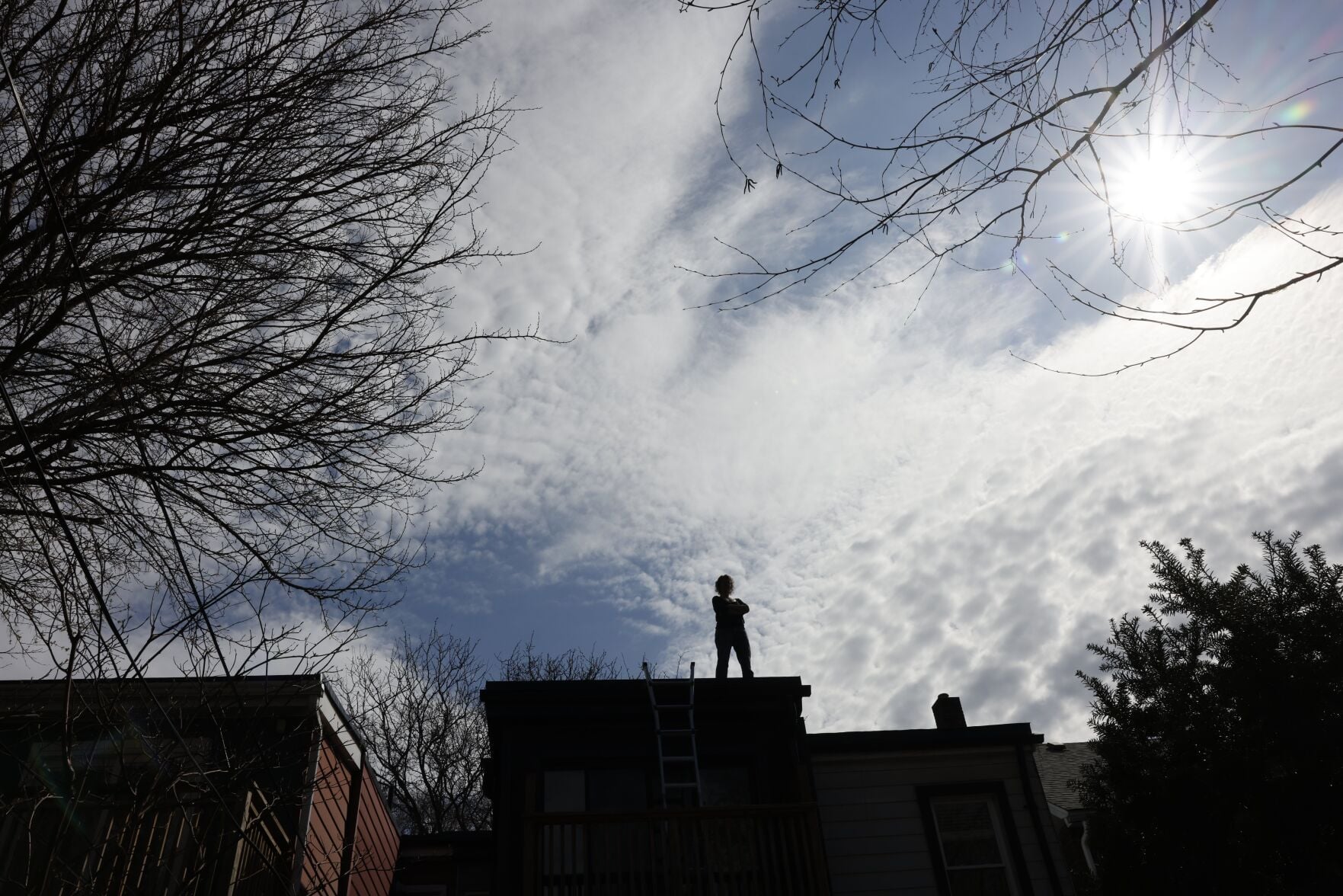
There are currently fewer than 3,000 rooftop solar arrays in Toronto.
Lance McMillan/Toronto Star
Toronto wants rooftop solar to make city more economically resilient
Last month, the city laid out its vision for an electrified city, where cars and heating are no longer powered by imported fossil fuels, but by locally-produced renewable power, saying it’s “not just an environmental choice; it’s an economic strategy.”
“A city that powers itself,” the report states, “positions itself to be a self-sustaining, resilient urban centre that relies less on external jurisdictions, cross-border gas supply chains, or out-of-country infrastructure. A modern, electrified grid helps Toronto decouple from the volatility of global energy markets, reduce exposure to international supply chain disruptions, and take control of its own future.”
Often called “nature’s peaker plant,” solar panels provide electricity when it’s needed most: on hot, sunny days when electricity demand soars. Every kilowatt produced on a rooftop is one less that needs to be generated by burning natural gas, reducing carbon emissions and local air pollution.
As a result, solar is a rare climate solution that both slows the warming of the planet while also helping cope with the extreme weather that’s already baked in — fewer emissions and blackouts.
According to the city’s SolarTO department, there’s potential for more than 10,000 megawatts of rooftop solar in Toronto — the approximate equivalent output of all the gas plants in the province.
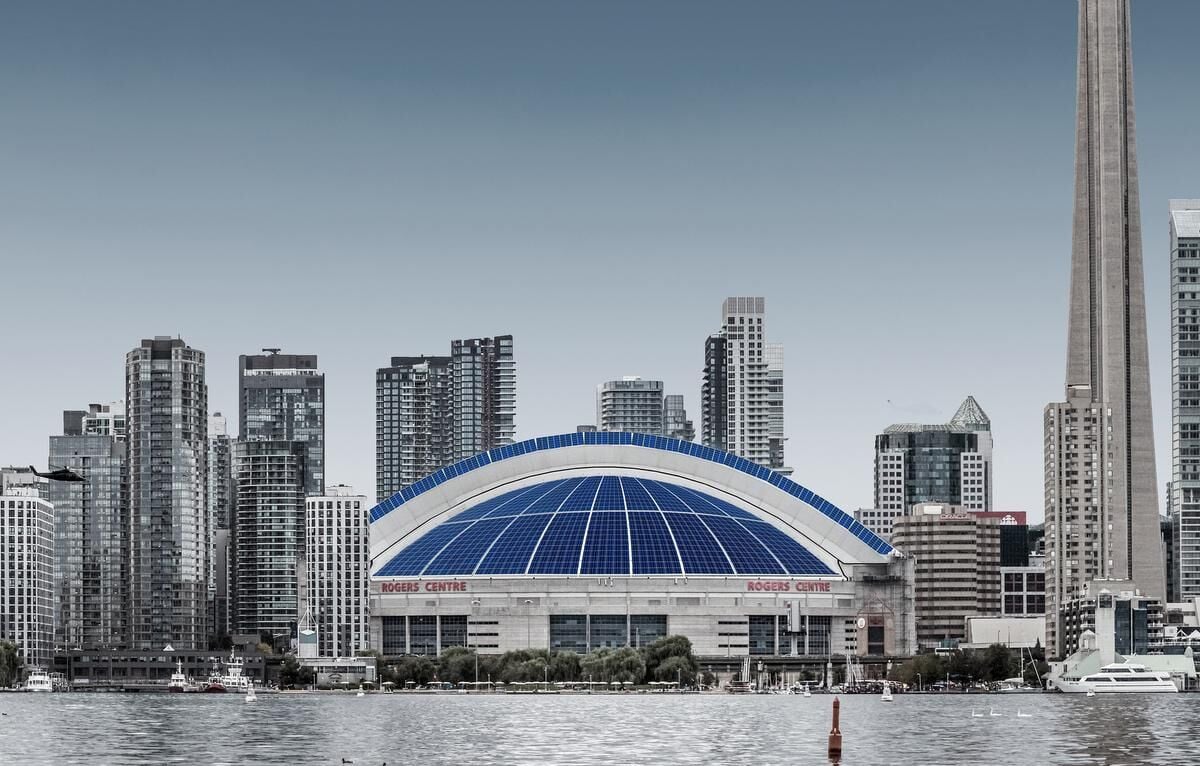
Even in a northern climate, Toronto’s rooftops are an incredible untapped resource —
An analysis published by Google shows that there are 4,880 hectares (or 48.8 sq. km) of usable roof space in the city that could collectively provide more than 45 per cent of Toronto’s total power consumption, and could hypothetically cover peak demand during the hottest days of summer.
Rooftop solar is being adopted rapidly across the world, flooding markets with cheap, abundant energy — even in much more northern and not particularly sunny places like the U.K. and Denmark.
In Australia, one in three houses nationwide has solar panels on the roof and they produce so much electricity that power is being given away free for three hours every day this summer.
“That’s not because the state overbuilt and paid a lot of money and now everybody is in debt,” said Phil MacKay, Senior Director of Member Programs at the Canadian Renewable Energy Association. “It’s because the customers said, ‘This makes a whole lot of sense.’ They invested in their own systems, and now everyone is benefiting.”
In Ontario, where the provincial government is spending more than $100 billion on new nuclear plants to meet rising demand for electricity, it begs the question: If everyone agrees that rooftop solar is good not only for the homeowner but also for the wider grid, why do we make it so hard to install?
’Soft costs’ make rooftop solar more expensive than it should be
Saul Griffith, the founder of US nonprofit Rewiring America, and a proponent of widespread rooftop solar as a climate solution, decries the “soft costs” that he calculates make solar panels six times more expensive to install in North America than Australia.
“Australian installation labour is similarly priced to that in the U.S. The difference is soft costs — cost of sale, cost of inspections, cost of overhead, cost of permits, cost of liability and insurance,” he wrote in a Substack post last fall. “Because it is so cheap in Australia, people install a lot of solar.”
While Griffith’s numbers refer to the US, his argument holds for Canada as well, according to several energy experts consulted by the Star. Widespread solar adoption will save individuals money on their own bills and encourage them to convert their stoves, furnaces and cars to run on the cheap electricity they generate on their roofs, he says, all while they feed excess energy into the grid, driving down the cost of electricity for everyone.
“The most impactful way to make U.S. electricity cheap again is to maximize the amount of rooftop solar. This is key to unlocking household savings, as cheap solar amplifies the efficiency of electric machines in your life, and their economic advantage over fossil machines,” Griffith wrote.
Currently, installing a rooftop solar array requires at least seven permits and inspections, according to Steve Dyck, president of Guelph Solar. Some utilities, like Hydro One, have started speeding things up by introducing apps where photos taken by the contractor replace in-person inspections, he said, but bureaucratic delays still add costs to every project.
The city has committed to reducing soft costs by amending zoning bylaws, streamlining permits and approvals and reviewing licensing fees. Staff say solar permit review timelines have already been reduced from 10-30 days to three days.
More than anything else, it’s the inconsistent incentives that come and go that affect homeowners’ decision-making more than anything else, Dyck said. When the MicroFIT program, which paid above-market prices for solar generation, ended in 2017, it decimated the industry. In 2024, the federal government ended the Greener Homes grant program, which provided grants and zero-interest loans for energy-saving renovations, taking with it most of the demand for new rooftop solar. In both cases, installations already approved took a year or so to be built, delaying the drop-off.
Smart grids share the cheap power
Dyck also decries the new provincial Home Renovation Savings Program, which offers up to $10,000 in rebates for rooftop solar, but only if it doesn’t feed energy back into the grid — called “net metering.” He says this undermines the wider community benefit of solar — sharing the cheap power.
“If the government subsidizes the equipment, it should be used as a public asset,” Dyck said. “Instead of saying you can’t net meter, net metering should be required, so all ratepayers can benefit.”
In a report put out last year, the Ontario Clean Air Alliance said in order to promote more rooftop solar, homeowners shouldn’t just offset their own bills; they should be paid for providing power into the grid, just like industrial generators are.
While critics of solar point out that the electricity is only available when the sun is shining, battery technology is now able to soak up that power and make it “dispatchable” just like a gas plant, so it’s available 24/7. In the U.K., people are using their EV batteries to help the grid, charging up when power is cheap and selling back when demand — and price — rises.
A new analysis commissioned by Clean Energy Canada found that rooftop solar, EV batteries and remotely-controlled thermostats could save the Ontario grid billions of dollars in planned electrical system upgrades by making the grid more efficient.
There’s a lot of room for more solar on Toronto’s power grid, says Matthew Higgins, Vice President of Engineering & Asset Management at Toronto Hydro. More solar will unlock all sorts of futuristic power solutions that promise to make power cheaper, grids more efficient, all while cutting emissions and creating new economic opportunities, he said.
This evolution moves us from a “dumb grid” that simply turns up supply to meet demand, into a “smart grid” that, like the internet, manages the flow of power between millions of nodes on a network, co-ordinating supply and demand simultaneously.
“We’re investing in the kinds of software technologies, sensors and controls that are going to allow us to better manage a grid that’s more dynamic in the future,” he said. “The more we can orchestrate the grid in real time, the more we can run it hotter, with more solar and more load.”