dailynewsnblog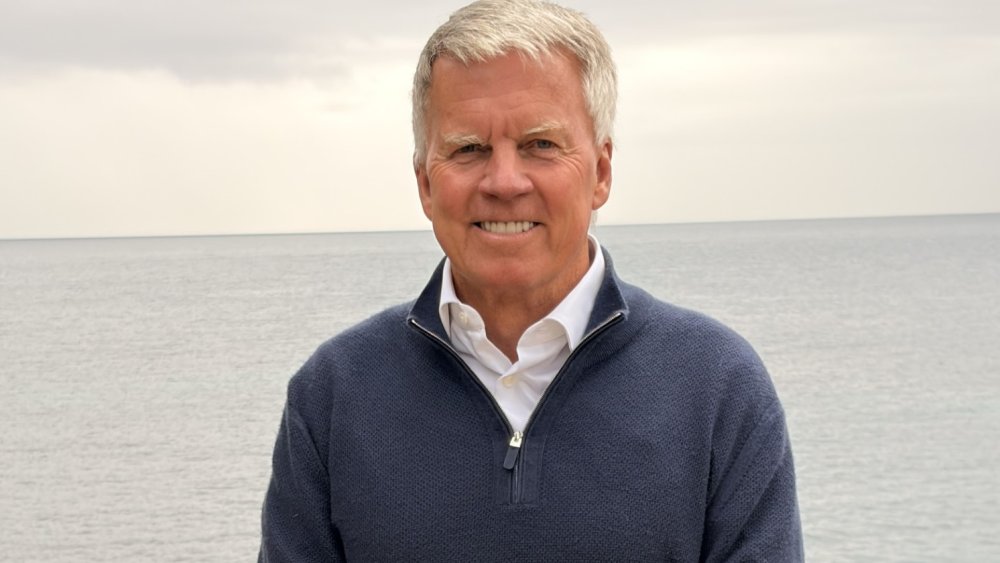
For Ron Johnson, creating and rolling out Apple Stores — an unprecedented retail triumph on the global stage — was no cakewalk.
He joined Apple as senior vice president of retail operations at a time when the business wasn’t doing well and losing ground to Microsoft. Six months into developing the store prototype, Johnson decided it was all wrong and completely reimagined the concept and what shoppers would experience.
There was periodic pushback from Steve Jobs, the visionary Apple cofounder who could be challenging, blunt, demanding and detail-obsessed. Jobs hated the idea of putting Apple Stores in malls and said they were ugly and “full of crappy stores,” but Johnson convinced him malls were necessary.
Apple Stores, early on, weren’t meeting projections and costs were always high, but over time innovation spurred traffic and productivity. IPods became compatible with PCs and, once shoppers were inside the Apple Store buying the iPod, PC users started switching to Macs. It was known as the “iPod halo effect.” The “Personal Setup” was launched, helping customers get any product they purchased — the Mac, iPod, iPad, iPhone, or Apple TV — ready to operate. Mobile checkout replaced traditional wrap counters. And mall stores shrank from 6,000 to 4,000 square feet, while street locations in big cities remained much larger.
The Apple “Cube” store rocked the industry with controversy, with its distinctive, luminous glass cube rising above a Fifth Avenue public plaza, and the underground selling floor that stayed open for business round-the-clock. The Cube debuted May 19, 2006, at 6 p.m., took in $1 million in sales that first night, and generated $350 million in sales in year one, smashing the $100 million plan.
“For the stores to be profitable, to live on their own, we had to hit about $15 million in volume per store, which is a lot for a retail store, and we were doing about $10 million,” Johnson recalled in an exclusive interview with WWD. “The first store opened in 2001 but it took us till 2004 to kind of hit $15 million and then we blew through it. When I left Apple, we were doing $50 million a store across 350 locations. The stores were the most productive in the world, but it didn’t happen overnight. It took time to get there. There was a lot of refinement, but we never gave up on our vision.”
Johnson’s career at Apple, Target and JCPenney was filled with big wins, risk-taking, dramatic lows, problem-solving and some sharp turns. It’s all chronicled in his upcoming book, “Shop Different. How Retail Revealed Apple’s Genius,” cowritten with Zander Nethercutt, published by HarperCollins, and scheduled to be released Sept. 22 in hard and soft cover, and in audiobook format.

The book cover.
Johnson — as a senior buyer at Target and later general merchandise manager for the toys, kids and home areas — was instrumental in the “differentiation” strategy the discounter initiated with Michael Graves designing high-style home goods at affordable prices. That set the template for the retailer’s broader move to partner with designers and better brands to from Diane von Furstenberg recently to Sony, Calphalon, Missoni and many others. The mass merchant came to be known as “Tar-zhey” for its newfound caché.
But Johnson is most famous for his 10 years at Apple, developing, refining and rolling out Apple Stores around the world — and most infamous for his failed transformation strategy at JCPenney, where he was chief executive officer for 18 months.
Most compelling are the pages in the book detailing encounters with Jobs, with whom Johnson developed a close, trusting partnership and deep friendship that, depending on the circumstance, could be contentious or compassionate. His assessment on what happened at Penney’s is also engrossing, though there’s no mention of Enjoy, which was founded by Johnson in 2015.
Enjoy was an innovative, concierge-type mobile store enabling consumers to order electronics, get them delivered and set up at home and demonstrated by experts. The company went public, then bankrupt and was bought by Asurion. Johnson said he left out Enjoy because the book would have gotten too long and he wanted to focus on other chapters in his career.
His worst day at Apple, Johnson writes, was when Jobs discovered the new North Shore store, the sixth Apple location, had columns.
“Steve absolutely hated columns,” Johnson writes in the book. “What’s with the forest? Steve asked. The forest? I asked. I’d heard him correctly, but I wasn’t sure what he meant. Northshore Mall! Steve shouted. The [expletive] columns!…He was really upset because I had broken his trust. I should have told him some stores had columns. It wasn’t hard to grasp why he was so upset. He’d bet massively on me, invested significantly in me. Money, yes, but also time. What had our nightly calls been about if not getting to know who each of us truly were?”
Johnson would then be required to get Jobs’ sign-off on any store with columns. Some already had signed leases, but Jobs said get rid of the columns. “Steve had a way of making the impossible seem possible, and we eventually managed to move a few of them,” Johnson writes.
Despite some retail-related debates, Johnson writes that Jobs respected what he knew about retail and that Jobs admitted that he and others at Apple knew nothing about retail. “Unlike at Target, I’d get to build everything — the team, the culture, and, ultimately, the store — from scratch. My heart leapt,” Johnson writes.
Six months into developing the Apple Store prototype at a warehouse in California, Johnson suddenly determined it was all wrong and had to be reimagined. “Most retail stores are organized around the products. If you walk through a specialty store, there’s men’s on the right, women’s down the left, with bottoms and tops. But we had to show solutions, not products,” Johnson said in the interview.
“If Apple could win, it [must] be focused on how it functioned in bringing other products together, how it would make your digital camera from Canon or Icon ten times better, because with the iPhoto software you could do things with pictures you couldn’t do without,” Johnson said. “So we remade the store. We wanted to show that the Mac offered a better, simpler, more human experience than anything they’d seen before. We wanted to help people understand what they could do with computers: burn CDs, create movies, take photos and upload them to personal websites. And we wanted to be there for people, in their neighborhoods, with geniuses who could help, trainers who could teach and a theater where they could learn.”

The Apple Cube store on Fifth Avenue in Manhattan.
GEORGE CHINSEE
A good portion of the book is about leadership which Johnson suggests requires flexibility because people are different. “Love is a real big thing, and I got that from a lot of places in my life, and I talked to Steve about it. It’s not an emotional thing, it’s basically securing the good of another person,” Johnson said. “When you love someone, you do something that makes their life better, and you’ve got to be intentional about seeing what that is and doing it. And that’s what the Apple stores do. The employees approach with a warm welcome. They try to understand what you came to the store for, and solve that for you through a product or help with the Genius Bar or class, or whatever you need, and that’s an act of love, because you’re securing their good.”
Asked if all that really boils down to providing good service, Johnson replied. “No. Service can be transactional, right? Love is transformational. They’re very different things.”
Jobs, Johnson writes, “did get gentler over the years: a little easier on others, a little easier on himself. I’m sure there are any number of reasons for this — success, acceptance of his own mortality — but I can’t help hoping that the robust culture of kindness we created in Apple Retail was one of them.”
The book marks the first time he opens up publicly about his short tenure at JCPenney. “I just decided to stay out of the fray when I left,” Johnson told WWD. “If I conveyed my feelings at the time, no one would have wanted to listen, because I was perceived to be such a failure. I don’t think people would have listened to what I believed happened, and I had to get away from it, far enough to really become less emotionally attached.” Years later, writing the book provided him an opportunity to “really look at what happened there and be more objective about it.”
Johnson was riding the wave of success at Target and Apple when he began thinking about his next career move. “As gratifying as it was to look out from the mountaintop, I missed being at the bottom,” he writes in the book. “I missed the challenge of having taken over Target’s home department as the brand struggled to compete with Walmart and figuring out a way to compete better. I missed the days when, far from operating an Apple Store, I’d been imagining the Apple Store. After twenty-five years, I realized maybe I’d earned the opportunity to be a CEO. Maybe I did have what it took.”

JCPenney at the Fashion Valley mall in San Diego.
Kevin Carter/Getty Images
The retelling of when Johnson informed Jobs he was leaving Apple to join JCPenney is one of the most dramatic stories in the book. Jobs was already suffering from neuroendocrine tumor, a form of pancreatic cancer, when Johnson broke the news.
“I get it,” Jobs said quietly. “The words lifted a cinderblock off my chest. You do? Yeah, Jobs said. I do. I know you love retail. I can understand wanting to leave after being here for twelve years. After a decade at Apple, I was going to be CEO of a retailer, and not just any retailer but one I had both grown up visiting and competed against for years at Mervyn’s [where he worked before Target.] I would also be able to get back into merchandising, which I hadn’t done at Apple.”
“I know Tuesday’s the big announcement,” Jobs said. “But the doctors are saying I have six months. There was a long pause before he looked up at me. Will you stay on until I pass? I never struggled for words, but at that moment, I did.”
Johnson stayed at Apple until Jobs died, at the age of 56. That delayed Johnson’s arrival at Penney’s by half a year and forced Penney’s then CEO, Myron Ullman 3rd, to announce that Johnson would run merchandising and marketing and later step up to CEO, creating some confusion. Johnson felt the announcement made it sound like he wasn’t going to be CEO.
Johnson writes that his vision at Penney’s was to reinvent the department store to appeal to a younger, newer audience, and rebrand Penney’s as America’s Favorite Store.
“What I wasn’t thinking about, clearly, was that we were launching a strategy targeting hip, urban customers in tired, suburban real estate…You start with the end in mind, and then you have to go get there. I just made so many errors on execution that we never had a chance to get there… I was lost in my thoughts, lost in my imagination, lost in the dream of America’s Favorite Store,” he wrote. “Penney’s transformed too fast.”
He introduced everyday low pricing to reduce promotional costs and labor, and eliminate coupons; brought in Joe Fresh, Martha Stewart, Bodum, Disney, Marchesa and Jonathan Adler, reconfigured the store into a series of shops-in-shop, added a “town square” of services that was inspired by Apple’s Genius Bar.
From the get-go, there was much resistance within Penney’s to his strategy. He never felt welcomed, and after 18 months, felt he had to leave. “I didn’t get fired. I left,” he said in the interview.
In the book, Johnson acknowledges disappointment and sadness, not seeing his Penney’s strategy play out. He contends the retailer was starting to see a new customer and got high net promoter scores, but also acknowledged that 20 percent of the customers were lost and upset they were no longer receiving coupons.
Johnson writes: “I have lots of regrets about JCPenney. I wish I’d been more open with those closest to me, of course. But I also wish I’d had the courage to go slower. I wish I’d spent more time building trust with the team, with the board, with customers. A lot of success in business gets retroactively attributed to the quality of a vision, and sure, visions matter — they garner resources and support. But the world is dynamic. It can take visions that should’ve worked in one context and make them look silly, just as it can take visions that had no business working and make them look genius. The point is that when you go too fast, you miss the opportunities that reveal themselves along the journey. You don’t feel your impact in a way that allows you to react to it, and you don’t create the tight knit team that can react faster than one person ever could. Everything great in business is accomplished by teams, and teams require focus and trust. It’s a simple lesson. But if there’s anything I learned from Steve, is that there’s power in simplicity.”
Johnson has loved visiting stores since he was 5, and recently he walked a few JCPenney stores. “It’s a clean presentation. There are nice private labels,” Johnson said in the interview. “They’ve done a nice job of maintaining JCPenney as a promotional department store. It’s a lot like it was before I got there.”

The Apple Store in the Barton Creek Square mall in Austin. Photo by Brandon Bell/Getty Images.
Getty Images