dailynewsnblog
The congressman thinks it’s time for a “Data Center Bill of Rights.”
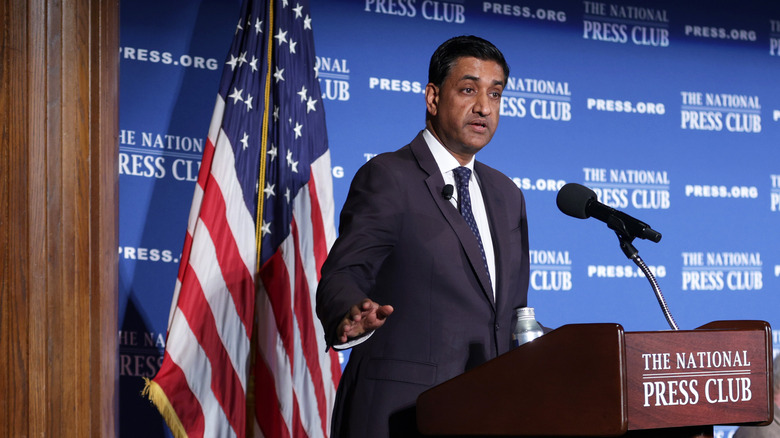
Representative Ro Khanna (D-CA) has introduced a new resolution calling on the House of Representatives to preserve local communities’ ability to reject data center projects near their homes. The resolution’s pitch for a “Data Center Bill of Rights” follows several state-level attempts to block or pause data center projects, including a one-year data center moratorium in New York.
The idea behind Khanna’s resolution is to protect people’s ability to regulate data center development, “without being preempted or overruled by the State,” the measure says. Communities should ideally be able to reject any data center project through a “transparent community process” and have the option to ban data center projects in residential areas and “within 2,500 feet of homes, schools, childcare facilities, hospitals or nursing homes.” The measure also says communities should have the option to demand transparency from data center providers, block changes to their electricity rates and require data centers to use clean energy.
The resolution is essentially an outline of a bill rather than a law that can be passed now, but it does highlight several concerns that make regulation worth pursuing. Those include the harmful pollution produced by the generators and turbines that power data centers and the up to 32 billion gallons of water AI data centers could consume each year by 2028.
The environmental and financial impacts of rapid data center buildout have been the primary concerns motivating data center protests and regulation across the country. It would be one thing if those issues were settled at the state level, but the federal government has largely tried to make it harder to do so, exempting data centers from existing environmental laws and pushing to prevent states from regulating them at all. A bill of rights could be one way to protect people’s ability to oppose data centers, in the absence of a nationwide data center moratorium. The resolution is the inverse of the housing laws of Khanna’s home state of California, which have largely tried to combat “NIMBY” objections to high-density development.