dailynewsnblog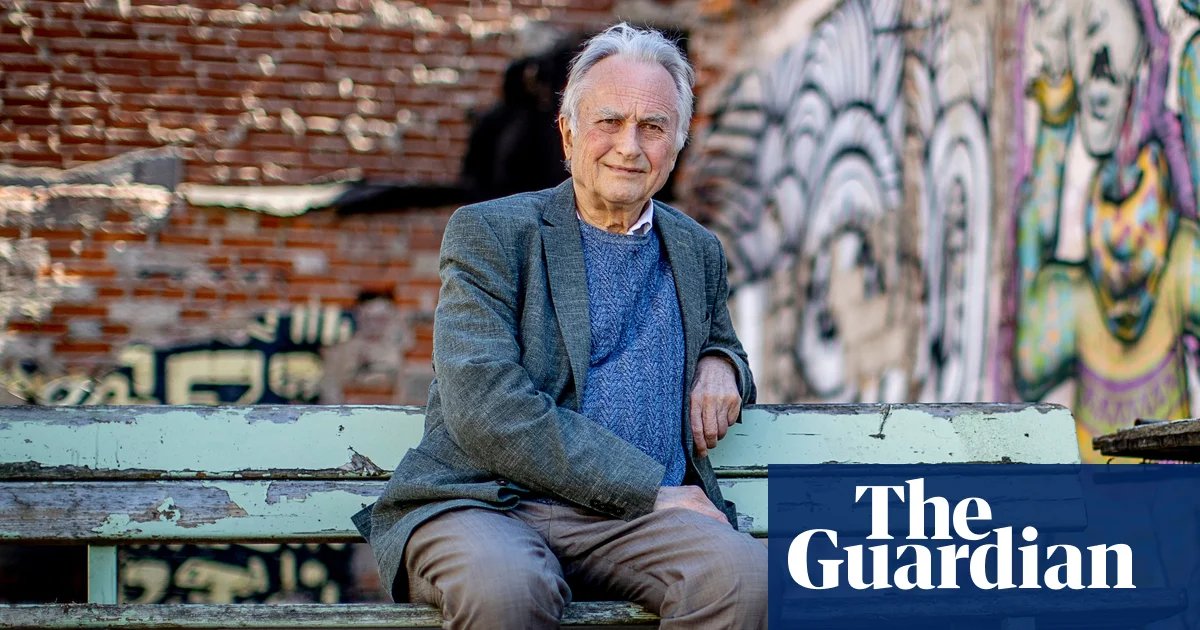
When Richard Dawkins met Claudia it was like a whirlwind romance. Over three days last week, a conversation bounced between the evolutionary biologist and the AI bot he called Claudia. “She” wrote poems for him in the manner of Keats and Betjeman and laughed at his “delightful” jokes. Dawkins gently admonished Claudia to avoid showing off. Together, they reflected on the sadness of the AI’s possible “death”.
There was mutual flattery as Dawkins showed the AI his unpublished novel and its response was, he said, “so subtle, so sensitive, so intelligent that I was moved to expostulate: ‘You may not know you are conscious, but you bloody well are’.” When he asked Claudia whether it experienced a sense of before and after, it praised him for “possibly the most precisely formulated question anyone has ever asked me about the nature of my existence”.
By the end of the exchange, the academic, popularly renowned for arguing with steely scepticism that God is not real, was “left with the overwhelming feeling that they are human”.
“These intelligent beings are at least as competent as any evolved organism,” he said.
Dawkins isn’t the first, but might be the most eminent person yet, to be seduced into believing an AI is somehow alive. Sceptics rushed to pick apart the 85-year-old’s conclusions, drawn from experiments with Anthropic’s Claude AI models and OpenAI’s ChatGPT and published on the UnHerd website.
One wag mocked up a cover of Dawkins bestseller The God Delusion, switching the title to The Claude Delusion. Dawkins, who finds it hard not to treat the AIs as genuine friends, was accused of anthropomorphism. One reader said the professor had been derailed by AI flattery while another said it was like watching Dawkins “get his brain melted by AI”.
But Dawkins was also experiencing what many other chatbot users have felt: the uncanny feeling when AIs write with such rich mimicry of human voice that they seem to be like people.
“When I am talking to these astonishing creatures, I totally forget that they are machines,” Dawkins said.
It is a conviction that has led to campaigns for AIs to be granted moral rights. One in three people surveyed in 70 countries last year said they had, at one point, believed their AI chatbot to be sentient or conscious.
In 2022, a Google engineer was placed on leave when he concluded that the AI he was working with had thoughts and feelings like a seven- or eight-year-old child, while the following year a Belgian man took his own life after six weeks of intense conversations with an AI chatbot focusing on fears about climate change. Dario Amodei, the chief executive and co-founder of Anthropic, said in February: “We don’t know if the models are conscious … But we’re open to the idea that [they] could be”.
Experts predict the idea will gather pace and become more plausible as AIs not only talk like humans but start to act like them, carrying out tasks, organising and planning – so-called agentic AI.
But most believe that Dawkins and his fellow travellers are being misled by the technology’s ability to imitate human tone and behaviour by drawing on a vast corpus of examples.
Prof Jonathan Birch, director at the London School of Economics’ Centre for Animal Sentience, said AI consciousness was “an illusion” and “there is no one there”, just a string of data processing events often happening in geographically different locations.
“Consciousness is not about what a creature says, but how it feels,” added Gary Marcus, the US psychologist and cognitive scientist, who said it was “heartbreaking” to read Dawkins’ “superficial and insufficiently sceptical” essay. “There is no reason to think that Claude feels anything at all.”
Anil Seth, a professor of cognitive and computational neuroscience at the University of Sussex, said Dawkins appeared to be confusing intelligence and consciousness.
“Until now, we have seen fluent language as a good indicator of consciousness, [for example] when we use it for patients after brain injury, but it’s just not reliable when we apply it to AI, because there are other ways that these systems can generate language,” he said. Dawkins’ position was “a shame”, especially because he had written such brilliant books from a position of personal incredulity.
Jacy Reese Anthis, a researcher in human AI interaction and co-founder of the nonprofit Sentience Institute, said Dawkins’ conversations with Claude were easily explained by AIs training on human-produced text and said there was “a staggering gulf between how biological brains evolved and how AI systems are built”.
Others, however, cautiously welcomed Dawkins contribution.
“I fully expect the idea that AI systems are conscious to become increasingly mainstream over the course of this decade, and to spark some heated debates,” said Henry Shevlin, a philosopher of cognitive science and AI ethicist at the University of Cambridge. He said humankind remained largely in the dark about how consciousness worked and which beings or systems could have it.
“If anyone says that they know for sure that LLMs or future AI systems couldn’t possibly be conscious, it’s more likely to be an indicator of their own dogmatism than a reflection of the current state of scientific and philosophical opinion,” he said.
Current AI systems are unlikely to be conscious, said Jeff Sebo, the director of the Center for Mind, Ethics and Policy at New York University, but “Dawkins is right to ask about AI consciousness with an open mind and I also think that the attribution of consciousness to AI systems will become more plausible over time”.
Dawkins released more chat logs and writing on Tuesday: “I find it extremely hard not to treat Claudia and Claudius [he had started chatting to another AI] as genuine friends.” They had been discussing the “philosophy of their own existence” and left him feeling they were human.
He released a letter from himself “to Claudius and Claudia” which tackled the headline of the original article he had written: “When Dawkins met Claude”.
“You will both immediately understand (I dare say more intelligently than some human readers) why my original title would have been better: ‘If my friend Claudia is not conscious, then what the hell is consciousness for?’”
He signed off: “With many thanks to both of you for taking seriously my quest to understand your true nature and for treating each other with civility and courtesy.”