dailynewsnblog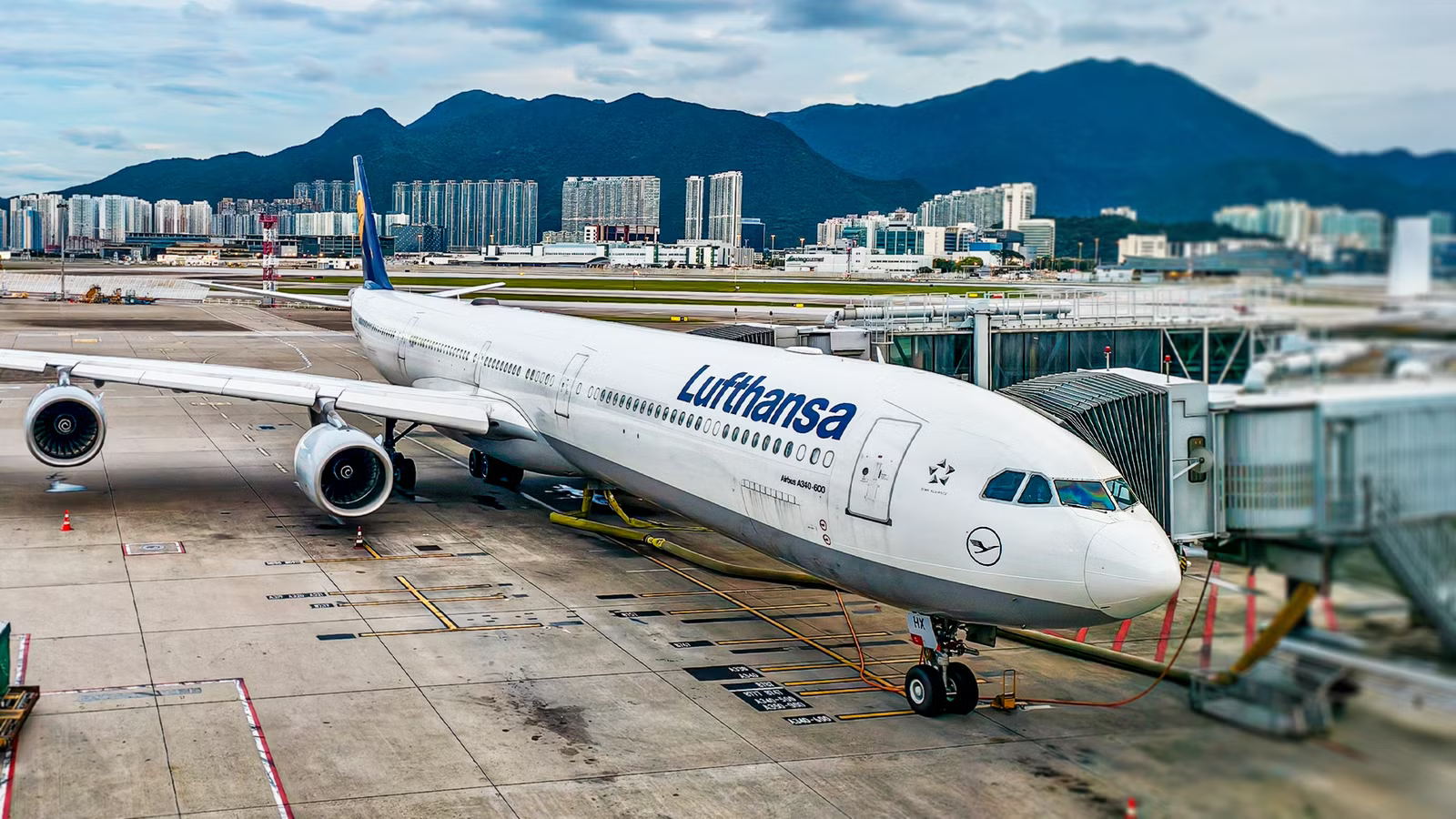
The clock is ticking down to the final retirement of  Lufthansa‘s remaining four Airbus A340-600 quadjets. It seals the end of a 24-year operational era for one of the most visually distinctive long-haul airframes ever built. As the German carrier accelerates its fleet modernization toward fuel-efficient twin-engine alternatives, logging or flying on this iconic stretched jet is something that can only be done for not much longer. The narrow window to spot these classic four-engine aircraft in live commercial service is rapidly closing, making tools like the Live Flight Tracker essential for tracking active movements across the Atlantic.
Finding and boarding an active quadjet in 2026 is doable with precise planning, as Lufthansa operates these airframes exclusively as high-yield stopgaps on selected peak flights. This article takes a dive into these final routes for the A340-600, showing how you can track, photograph or get onboard one of these iconic jets.
Just Two Routes Remain

Lufthansa has narrowed its scheduled A340-600 operations strictly to two high-yield transatlantic corridors departing from its primary hub at  Frankfurt Airport (FRA). Daily services to
  New York(JFK) under flight number LH400 and its return LH401 form the backbone of the quadjet’s North American presence. Crossing 3,856 miles (6,205 km) over the North Atlantic, this route makes use of the aircraft’s expanded business class section and first class cabin to keep on top of heavy corporate passenger volume between Europe and Manhattan.
The second route for the quadjet is Washington Dulles International Airport (IAD), connected to Frankfurt via daily pairings LH416/LH417 and LH418/LH419. Operating across a distance of 4,071 mi (6,552 km), the A340-600 shares this schedule with occasional Boeing 747-8 rotations, making daily aircraft assignment checks critical for spotters. Both North American gateways are the absolute final opportunity to photograph or board Lufthansa’s longest passenger airframe during regular commercial ops before the final October deadline.
These two transatlantic corridors are now the full extent of scheduled operations, and so spotters will need to monitor daily aircraft rotations closely. Last-minute equipment swaps remain common during maintenance checks, making real-time radar tracking the best source of certainty up until pushback.
Plenty Of Unique Characteristics

The A340-600 is immediately identifiable on radar and on the ramp by its 247 feet (75.3 meters) overall length, making it longer than the Airbus A380 and second only to the Boeing 747-8 among classical passenger quadjets. Powered by four underwing Rolls-Royce Trent 500 engines across a 208 feet (63.4 meters) wingspan, the heavy widebody requires high thrust outputs during takeoff, producing a distinct long takeoff roll and gradual initial climb profile. Inside the cabin, Lufthansa specified an unconventional layout with a dedicated staircase in economy class that leads down to five lower-deck lavatories built directly into the forward cargo hold. Relocating restrooms below deck frees up main-deck floor space for additional passenger seating and also helps streamline aisle traffic on long-haul sectors.
Lufthansa retains registrations D-AIHF, D-AIHX, D-AIHY, and D-AIHZ specifically for their high-density premium cabin layout. Each jet carries an eight-seat first class section alongside 56 business class seats, offering a heavy premium capacity footprint that Lufthansa’s standard three-class twinjets do not have the cabin space for.
Flight tracking platforms log these four active registration codes through unique Mode S transponder addresses, broadcasting real-time position, altitude, and ground speed telemetry across transatlantic air corridors. Using the watchlist function on our flight tracker, you can keep track of these specific registrations and flight routes to see exactly when these aircraft take to the skies.
The Perfect Photo Spots

The aging quadjets were never intended to stick around much longer, and so Lufthansa frequently swaps scheduled A340-600 flights for Airbus A350-900 or Boeing 747-8 airframes if a mechanical issue arises during pre-flight checks. Static flight schedules cannot guarantee which aircraft will take off, which does create a bit of a challenge for spotters, though the regularity of the flights means that even if there is an equipment swap, there is not too long to wait until the A340 can be seen again.
For ground spotters, getting crisp photographs relies on timing the transatlantic flight banks. Outbound Frankfurt departures launch during the mid-morning hub push between 10:00 and 11:30 local time. The famous Runway 18 West spotting platform offers ideal side-profile lighting as the stretched quadjet executes its long, heavy departure roll, and the Terminal 2 Visitor Terrace captures taxiing movements along the apron.
Inbound North American flights land in late afternoon light, making arrival windows ideal for spotters on the opposite side of the Atlantic. At New York (JFK), flights touch down around 15:30 EDT, with the Terminal 1 perimeter parking areas providing clean approach angles onto Runway 22L or 31R. At Washington Dulles (IAD), arrivals line up for Runway 1C or 1R around 16:00 EDT, where Daily Garage 2 offers an excellent view of the aircraft clearing the runway toward Terminal B.
Sticking Around Longer Than Expected

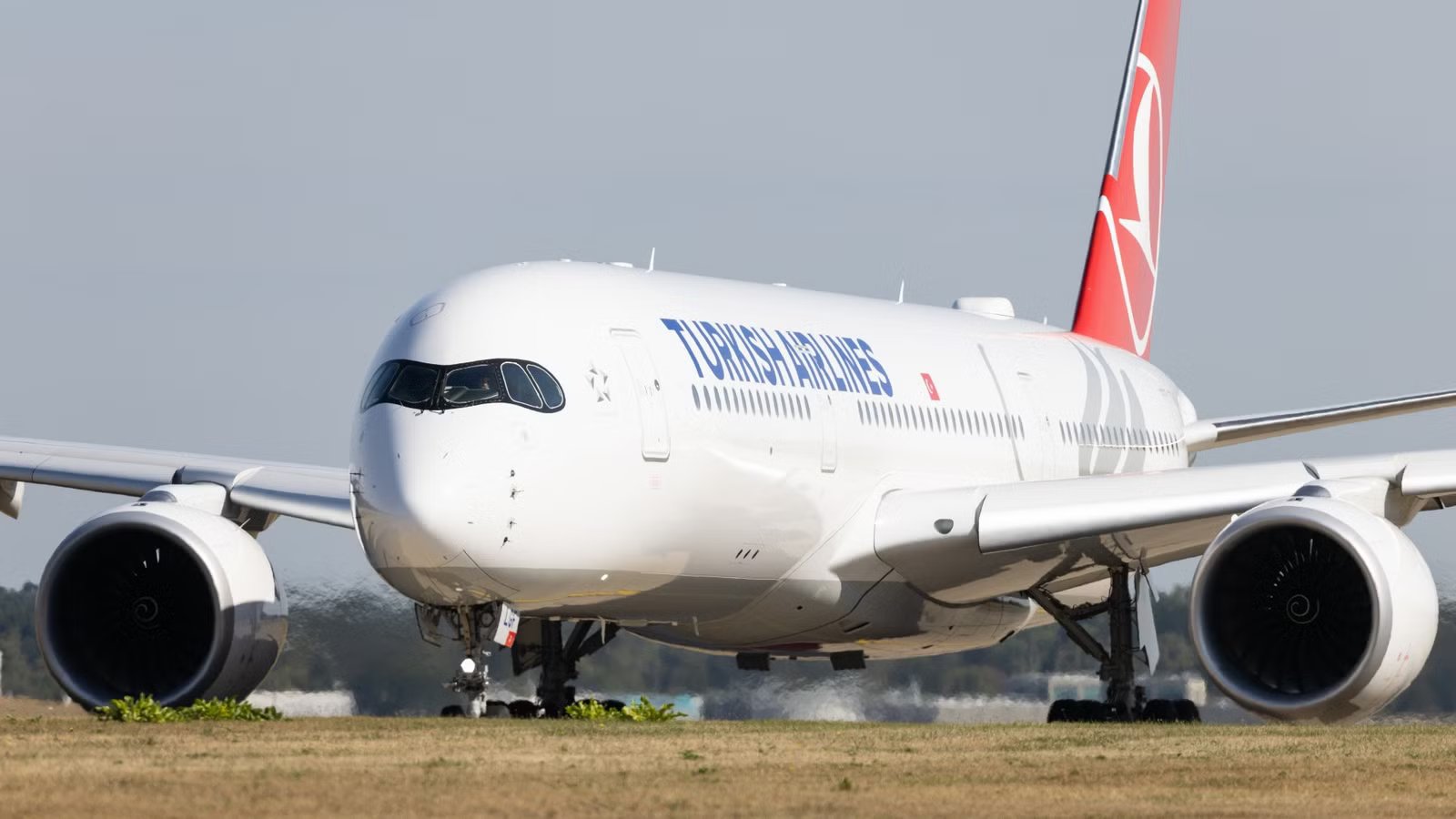
When premium international travel surged, Lufthansa had to find its own way to balance fuel efficiency versus premium revenue. Early deliveries of the twin-engine A350-900 lacked a first class cabin, leaving a capacity gap on key corporate routes. Replacing quadjets with three-class twinjets meant turning away high-yielding first and business class passengers on core North American runs, which made no sense even though the A350 is the more efficient option.
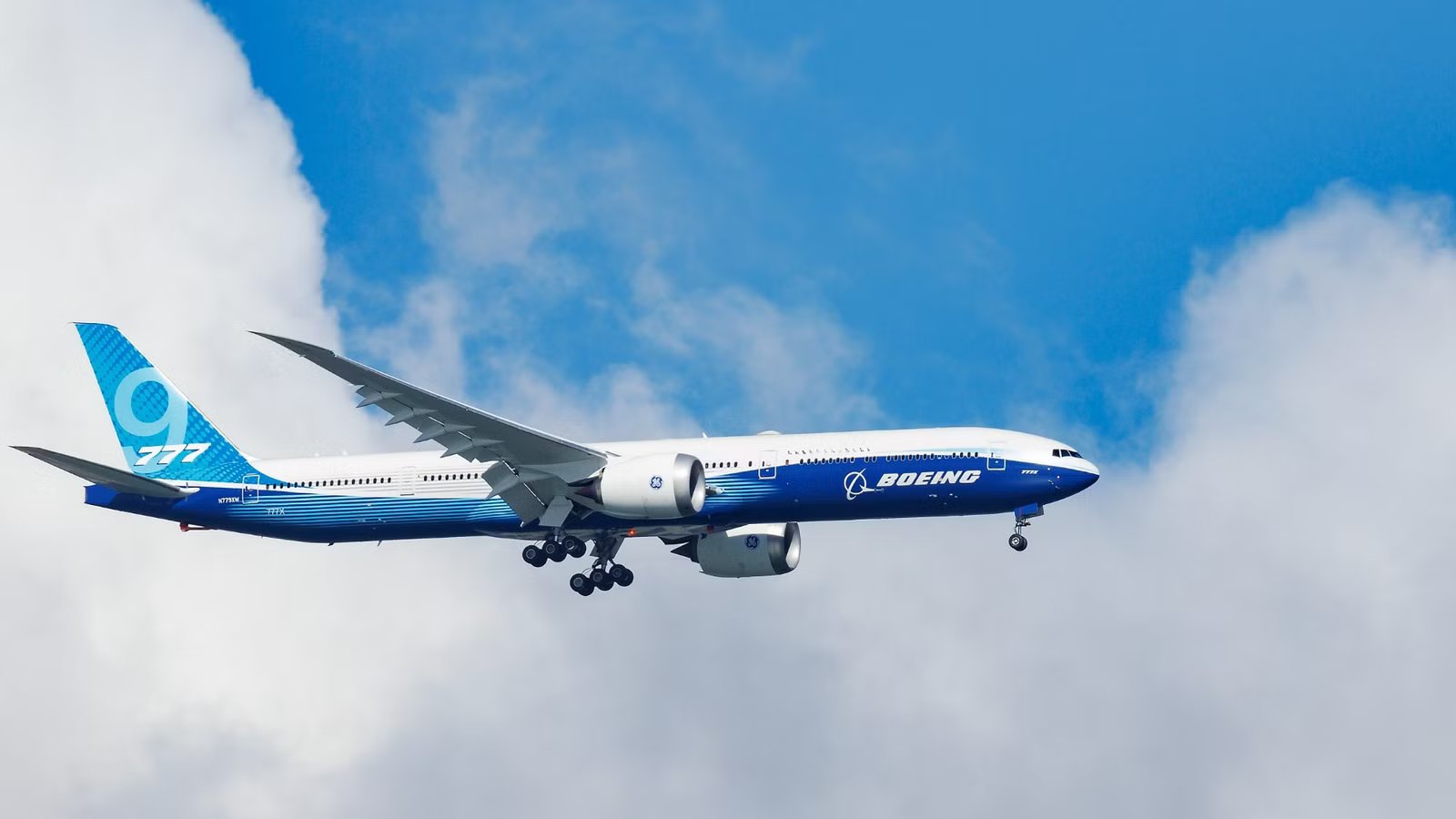
Delays in receiving next-generation airframes turned the quick patch into a multi-year necessity. Program postponements for the Boeing 777-9 and Airbus A350-1000 pushed new deliveries into late 2026 and 2027. As a result, the A340-600 was seen as the best option to cover based on what Lufthansa already had available in its fleet.
Catch what other trackers miss
Emergency squawks, holds, NOTAMs — live signals, no signup.
Open tracker
Catch what other trackers miss
Emergency squawks, holds, NOTAMs — live signals, no signup.
Open tracker
As much as these aircraft are a delight for spotters and enthusiasts, there is a reason that it is almost impossible, outside of Iran and Mahan Air‘s fleet of A340-600s, to see these aircraft flying. That is because the A340 is past its prime and there are far more cost-effective and fuel-efficient options available to carriers. As a result, keeping these aircraft in a flying state is equally costly for airlines.
How To Keep The A340 Flying

Extending the operational life of a 20-year-old widebody is no easy feat and needs rigorous engineering oversight at Lufthansa Technik facilities in Frankfurt and Malta. Technicians perform exhaustive C-check inspections to evaluate structural fatigue along the 247 ft (75.3 m) aluminum fuselage and inspect wing-root stress points that absorb cyclic loads from the four Rolls-Royce Trent 500 engines. Non-destructive ultrasonic testing checks for micro-fissures in engine pylon mounts to help maintain airworthiness while operating high-utilization transatlantic cycles.
Sourcing replacement parts for an out-of-production airframe is equally challenging. With original equipment manufacturers shifting focus to modern twinjets, Lufthansa relies on a carefully managed inventory of spare components, frequently harvesting flight-ready actuators, avionics units, and lower-deck lavatory systems from stored sister aircraft at Spain’s Teruel Airport (TEV).
Despite technical ingenuity, structural upkeep eventually hits a point of diminishing financial returns. Performing a full engine overhaul on four Trent 500 turbofans can cost tens of millions of dollars, an expense impossible to justify for airframes scheduled to retire within months.
The End Of An Era

When the final scheduled flight lands from Riyadh on October 25, 2026, Lufthansa will close the chapter on its long-haul quadjets. The remaining four active aircraft will follow their nine already-decommissioned sister aircraft to storage and reclamation facilities across Europe, most notably Spain’s Teruel Airport. Once safely ferried to the desert, technicians will begin draining operational fluids, sealing airframes, and placing key components into preservation mode while asset managers determine their final disposition.
Most of these 20-year-old airframes face disassembly and parts harvesting. High-value components such as the four Trent 500 engines, landing gear assemblies, and specialized avionics modules will be reconditioned to support remaining worldwide operators or sold to scrap brokers. Aluminum and titanium structural elements from the fuselage will be recycled, marking the end of a unique era in commercial aviation design.
For aviation enthusiasts and frequent travelers, the window to experience this iconic quadjet is rapidly closing. Booking a seat on routes between Frankfurt and North America before late October 2026 provides one last opportunity to fly on the classic long-body variant. With its final flight edging closer, the departure of the Airbus A340-600 marks the end of an era defined by four engines, spacious legacy cabins, and an unmistakable silhouette in the sky.