dailynewsnblog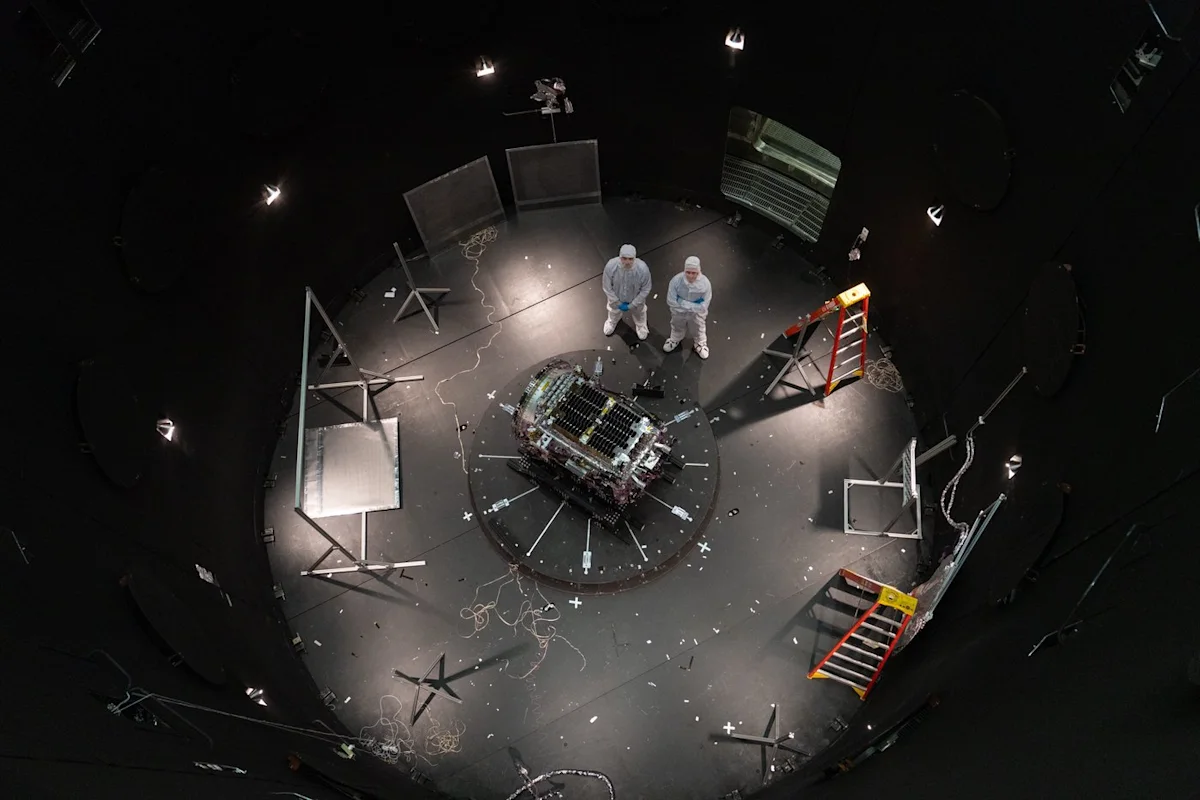
CAPE CANAVERAL, Fla. (AP) — A three-armed spacecraft rocketed into orbit Friday to rescue a NASA telescope that’s in danger of crashing back to Earth.
Northrop Grumman launched Katalyst Space Technologies’ Link spacecraft from the Marshall Islands in the Pacific. The Pegasus rocket blasted off from the belly of a modified airplane, putting Link on course to reach and capture NASA’s Swift Observatory in about a month.
Launched in 2004, Swift is sinking faster than ever because of recent solar storms. NASA is paying $30 million for Katalyst to capture the telescope and boost its orbit so it can continue tracking some of the biggest explosions in the universe, like gamma ray bursts and exploding stars.
If all goes well, Swift could be back scanning the cosmos by September. Observations are currently on hold to preserve the telescope’s orbit as long as possible.
NASA’s Hubble Space Telescope could be a candidate for a similar salvage operation in a few years. It’s also slipping in altitude because of increased atmospheric drag caused by the sun’s outbursts.
The 1.6-ton (1.4-metric ton) Swift currently is circling 224 miles (360 kilometers) above Earth. Katalyst aims to raise the telescope’s altitude by 150 miles (240 kilometers), back to where it all began. Link’s thrusters will fire to boost Swift slowly, so there’s no heavy jostling.
Katalyst threw the mission together in just nine months. NASA insisted on a rush job because the telescope will be too low to recover by the fall. Without a boost, it’s predicted to plunge to its demise in October.
Bad weather and technical issues caused a series of last-minute launch delays.
“This is a high-risk, high-reward mission,” Katalyst Space CEO Ghonhee Lee said ahead of liftoff. “The biggest danger was always we don’t launch anything and we let Swift burn up in the atmosphere. So we were always trying to avoid that risk, and our team has done that.”
___
The Associated Press Health and Science Department receives support from the Howard Hughes Medical Institute’s Department of Science Education and the Robert Wood Johnson Foundation. The AP is solely responsible for all content.
Marcia Dunn, The Associated Press