dailynewsnblog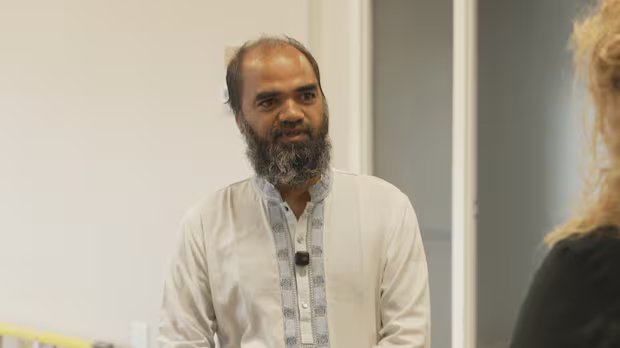

Listen to this article
Estimated 4 minutes
The audio version of this article is generated by AI-based technology. Mispronunciations can occur. We are working with our partners to continually review and improve the results.
A downtown Regina mosque says it has received threats after beginning a weekly amplified Muslim call to prayer from its rooftop speaker.
Regina City Jamia Masjid began testing the broadcast of the adhan, or the Muslim call to prayer, over the noon hour on Friday. The call lasts about three minutes.
“We are not here to bother anybody,” M Anisur Rahaman, director of the mosque, said. “We are here to meet and greet and share the knowledge.”
In a statement, the Regina Police Service said it issued an amplification permit to a local faith group for the downtown rooftop speaker.

Police say the permit is based on Regina’s noise abatement bylaw and is in place until July 10, 2026, when the city and police will review the application.
Police say they issue more than 100 amplification permits each year to various community groups. Applications are assessed based on the length of the sound, area, time of day and sound pressure.
Rahaman said the call to prayer is not happening five times a day, nor in the early morning or at night. He said it is planned for Fridays only, before the noon prayer, also known as Jummah prayer.
Since the first rendition of this call to prayer, Rahaman said the mosque has received 10 to 15 threats and negative messages by phone, email and social media.
Some of the messages, he said, appeared to be based on misunderstandings about how often the call would happen and where.

He urges people to come forward and learn more.
“We are more than willing to discuss with them, to let them know what exactly is that call to prayer,” he said. “We also would like to talk and gain experience about other religions, what they’re thinking and how we can work together.”
Police said they are aware of threats related to the call to prayer and that an enhanced police presence will be visible around Muslim places of gathering this Friday.
“Threats will be taken seriously and investigated under recently enhanced Canadian hate crimes legislation,” the police statement said.
Amin Asfari, Law Foundation of Saskatchewan Chair in Police Studies in the department of justice studies at the University of Regina, said the threats and hate directed at the mosque are unacceptable.
But he also said the decision to begin broadcasting the call to prayer was a mistake.

His concern is that making a religious practice more publicly visible, without enough foundation with the broader community, can intensify existing prejudice.
“When people don’t know who you are, haven’t seen you invested in the communities, haven’t seen you contributing to the solutions of the social ills that plague this community, I think that’s problematic,” he said.
He added that broadcasting the call to prayer can also put young Muslim people at risk.
“What we’ve seen over the past few days, and with respect to the social media presence and so on, the commentary there is that it actually exacerbates the Islamophobic discourse,” he said.
“It makes children feel more isolated, more marginalized, because they don’t understand the history and the political issues that we’re talking about.”
Rahaman said he disagrees with the idea that the call to prayer should not be broadcast. He said the mosque wants to keep the door open to people who have questions, including non-Muslims.
“Without dialogue, I don’t see there is any solution,” Rahaman said. “If anybody asks us questions and we don’t respond or we keep quiet, that is not the solution.… We are here to work together in our short life.”
Rahaman said the first Friday call to prayer was a positive moment for the mosque, and he hopes it can continue if the permit review goes well.
“We are not here to argue with anybody,” he said. “We are here to share knowledge.”