dailynewsnblog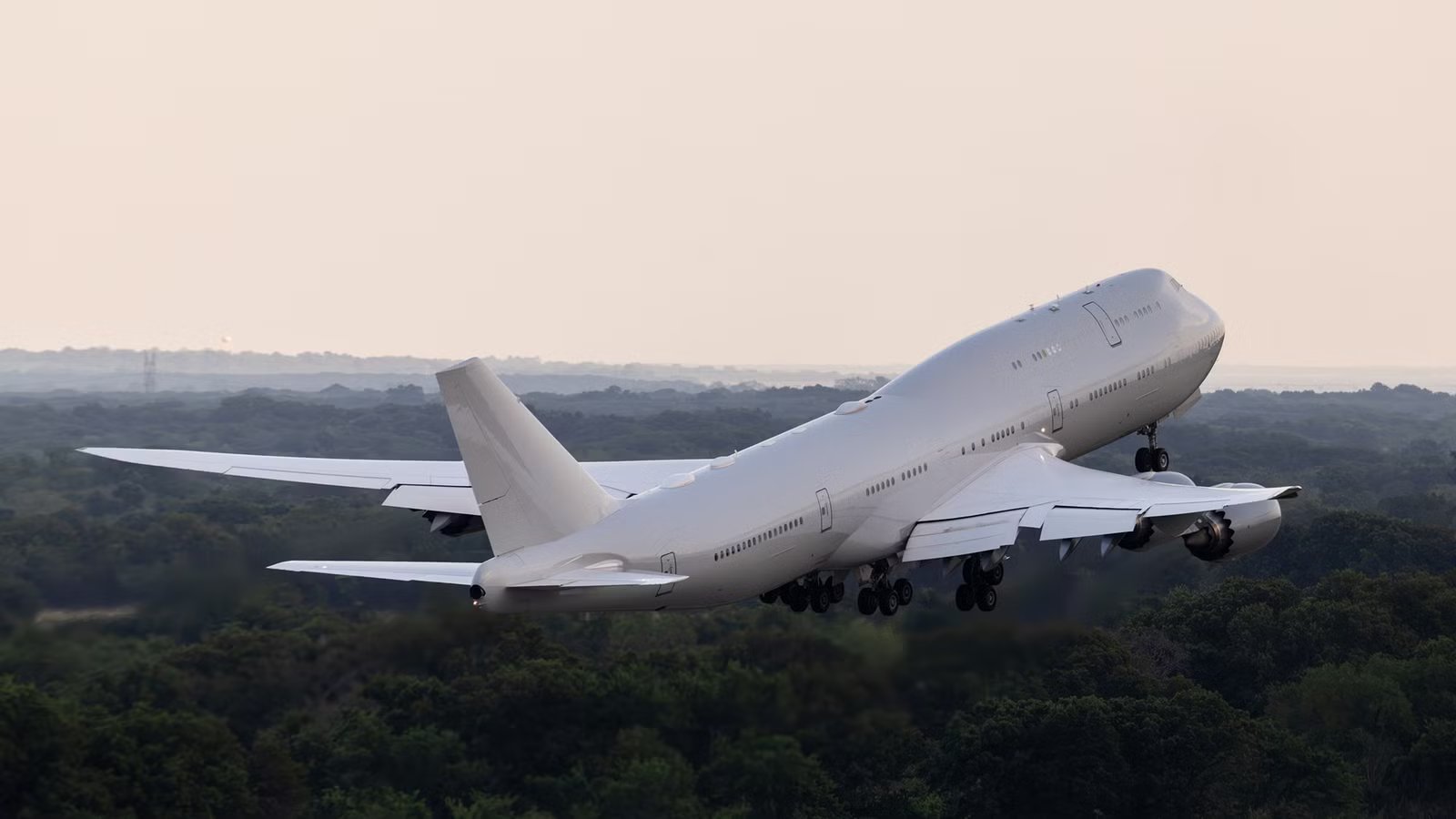
The United States Air Force’s (USAF) ‘Bridge’ Air Force One is almost ready to enter service. The VC-25B interim presidential jet — a former Qatari Royal Boeing 747-8i — has officially completed its accelerated modification and flight-testing phase in Texas. The heavily modified superjumbo will now enter the paint shop to receive its Trump-backed red, white, gold and dark blue livery before its scheduled entry into service this summer.
In the face of mounting delays for its permanent VC-25B fleet, the Pentagon is fast-tracking the gifted Qatari Boeing 747 into service as an interim presidential aircraft. Initially slated to debut in 2024, the entry-to-service timeline for USAF’s upcoming VC-25B fleet won’t be realized until 2028 at the earliest, and the program has notoriously suffered from significant cost overruns and technical hurdles.
VC-25B ‘Bridge’ Air Force One Nears Summer Debut

According to USAF, the aircraft has now officially completed modification and flight testing under contractor L3Harris at its facilities in Waco and Greenville, Texas. It has been rapid progress for the former Boeing Business Jet (BBJ), which has undergone a radical transformation under a warp speed program by the Pentagon to have it ready by Summer 2026. The milestone marks an extraordinary feat of aviation engineering, converting a foreign VIP aircraft into a presidential command center in just 12 months. Testing began on April 17th with a five-hour flight out of Greenville, and the entire test program was completed in just two weeks.
Details on the modifications are understandably being kept under wraps, while the overall cost of converting the ex-Qatari jet has not been disclosed. Simple Flying has covered the progress of this gifted 747-8i, which flew missions for the Qatari royal family for several years until it was donated to the US last year. The decision to accept it provoked controversy but has been justified by the Air Force, which has declared the “exceptional operational urgency” of an additional Air Force One to bridge the gap to 2028, when its two primary VC-25B aircraft are scheduled to enter service. Gen. Dale White commented,
“This program epitomizes what is possible when clear accountability is placed on one individual, and the entire enterprise of stakeholders aligns behind a single mission outcome … deliver a bridge capability as soon as possible to relieve pressure on the aging VC-25A fleet.”
Red, White, Gold And Blue

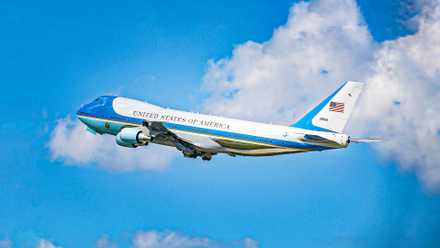
The current Air Force One livery features a light blue and white scheme that has defined the presidential fleet since the Kennedy administration. But that will change once the Bridge VC-25B enters service with its more distinctive and darker aesthetic. President Trump has pursued his own Air Force One livery design over the years, finally succeeding in February when the Air Force confirmed his favored design would be the new standard for the US presidential fleet.
The livery features a darker navy blue body across the belly and engines of the aircraft, as well as other key touches, like a gold cheatline. The design was initially dismissed for potential thermal heating problems due to its darker color. However, L3Harris has utilized heat-reflective paint and a lighter shade around the belly, as well as tweaks to its environmental systems to overcome this.
Trump has said the design is more “presidential” and an appropriate global symbol of American power, and also features an American flag on the vertical stabilizer and a Stars and Bars military roundel toward the rear. The ex-Qatari jet is now receiving its new paint scheme; interestingly, it won’t be the first aircraft to showcase the new US presidential livery, as a C-32 ‘Air Force Two’ was recently spotted with this design.
Why Replacing Air Force One Has Become A Billion-Dollar Headache
The debacle of replacing America’s most iconic 747.
Progress On The Other VC-25Bs

The Air Force’s two primary VC-25Bs are currently being converted by Boeing, which won a fixed-price contract to build the next two presidential aircraft back in 2018. However, the planemaker has faced several issues with the program, including billions of added costs and technical complications, pushing their entry to service from 2024 to at least 2028.
It is also currently waiting on two former Lufthansa Boeing 747-8i airframes for the VC-25B program, finalizing a $400 million deal for the two jets in 2025. One of these jets will serve as a training platform for pilots and crew, while the other airframe will be utilized as a spare, providing critical parts needed to maintain the primary VC-25B fleet.