dailynewsnblog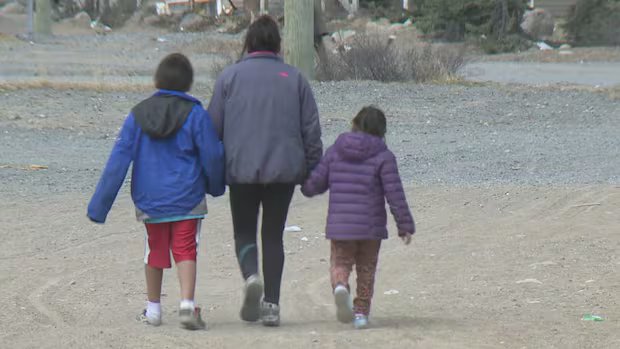
Innu children are still overrepresented in the child protection system, though far less likely to be removed from their homes than they were nearly a decade ago.
That’s the high-level finding of a report tabled on Wednesday at the public inquiry into Innu experiences within Newfoundland and Labrador’s child protection system.
The report, authored by researchers Barbara Fallon and Tara Black, showed Innu children were 6.76 times more likely to be removed from their homes in 2018-19. That number has seen a sharp decline in the years since, reaching 1.55 in the last fiscal year.
“There is a clear understanding that wherever possible, children need family-based care,” Fallon told the inquiry during pre-recorded testimony played on Wednesday. “And so the attention on what services can be provided to families in the home means that the resulting data shows fewer children are being placed in care.”
The inquiry — first promised in 2017 following the suicide death of a 16-year-old Natuashish boy who was involved in the child protection system — has been ongoing since 2023.
A key part of the process was a series of circle hearings, which examined the deaths of six youths who died between 2015 and 2021. All six had been removed from their homes at times, with five of them being sent outside the province for care or treatment.
Investigative reports found those youths struggled when they returned home to their families, feeling disconnected and isolated from everything that was once familiar to them. They suffered a loss of language and cultural connection, and struggled to find their place at home.
Among the Innu children still being removed from their homes, the report tabled Wednesday showed an increased reliance on placing them with extended family members — known as kinship care — and a reduction in the use of foster care.
“However, the administrative data do not capture information about whether kinship caregivers received adequate financial support, training, or access to services, nor whether placements were culturally appropriate from the perspective of Innu communities,” the report reads. “These dimensions are critical to understanding whether the growth in kinship care represents genuine improvement in outcomes for children and families.”
Investigations continue to rise
While the number of Innu children removed from their homes has seen a drastic reduction, child protection investigations involving Innu families have actually increased over the same time frame.
Social workers decide whether or not to launch an investigation after a referral is received by the department.
In 2018-19, Innu families were 2.08 times more likely to receive an investigation compared to non‑Indigenous families. In 2024-25, that disparity increased to 2.87.
The report also looked at the number of false positives — cases that were investigated where no maltreatment was verified within a year. In 2018-19, 50 per cent of investigations into Innu families were unfounded, versus 30 per cent for non-Indigenous families.
By the last fiscal year, that number had dropped to 20.8 per cent for Innu families and 15.5 per cent for non-Indigenous families.
“Innu families without maltreatment remain disproportionately subjected to child protection investigation and intrusion,” the report reads.
False negatives — cases where a legitimate child protection concern is missed — also increased for Innu families over the same time period, rising from 6.6 per cent to 9.6 per cent, causing some concern for Fallon and Black.
“The increase in false negatives for Innu families suggests that efforts to reduce over‑investigation may have inadvertently resulted in missing some protection concerns,” reads a section of the findings.

There have been plenty of grim details shared at the inquiry on the treatment of Innu children and youth in care this week. But the people tasked with preparing those details, have also put forward plenty of solutions. The CBC’s Regan Burden has the story.
Parents ‘invisible’ without lawyers, says retired judge
Retired Judge Bill English also appeared before the inquiry commissioners throughout Tuesday and Wednesday, presenting his findings from a report into the barriers Innu parents face in the family court system.
English described the impacts of chronic court delays, language barriers and difficulty obtaining legal representation.
He said parents are often represented by Legal Aid in the initial stages of a family court proceeding, but are often dropped if they are above the financial threshold for a publicly funded lawyer. In rural communities like Natuashish and Sheshatshiu, there are “few good options” aside from Legal Aid.
“An unrepresented parent often becomes invisible in the system because they have no voice and no representative, as their case continues without them in court,” English wrote in his report. “In a sense, unrepresented parents fall off a legal cliff. They face hearings for which they have no idea how to prepare. They deal with social workers without advice and assistance from legal advisers. They negotiate key issues alone.”

Without a lawyer, English said some parents choose to simply walk away.
He also pointed out how legislatively mandated timelines in family court have very little actual meaning. Authorities have 24 hours after the apprehension of a child to file a child protection application in court. They then have 10 days after that filing to have an initial court hearing, and 30 days to file a protective intervention application.
English pointed to one case in which it then took 16 months to have a hearing on the protective intervention application. The province’s appeal court issued a stern decision in 2024, calling the delays “unacceptable.”
English made seven recommendations in his report, including the expansion of Legal Aid eligibility for Innu parents involved in child protection cases, and a thorough study of child protection hearing timelines.
Download our free CBC News app to sign up for push alerts for CBC Newfoundland and Labrador. Sign up for our daily headlines newsletter here. Click here to visit our landing page.