dailynewsnblog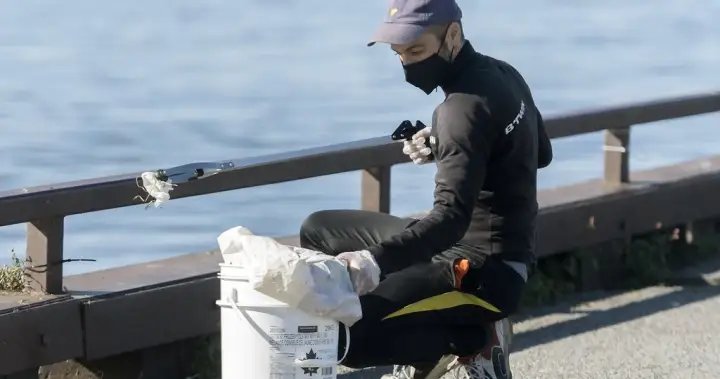
MONTREAL – As a marine biologist, Lyne Morissette grew tired of the “doom and gloom” of passively describing the impact of pollution on whales, turtles, and the rest of the wildlife inhabiting the St. Lawrence River.

So, about eight years ago, she co-created an initiative with the modest goal of collecting 10 tonnes of trash along the shorelines of the river and seaway.
This year, Morissette and a bus full of scientists, divers and volunteers are spending 16 days travelling some 2,000 kilometres up and down the river, where they’re teaming up with local volunteers and organizations on shoreline cleanups as part of the expanded project, now called Mission 1,000 tonnes.
The blitz, called L’Expédition Saint-Laurent, includes stops in the Greater Montreal and Quebec City areas as well as further afield, including Baie-Comeau and the Innu community of Pessamit, on the province’s North Shore.
Collecting huge piles of trash feels both good and bad at the same time, Morissette said in a phone interview.
Related Videos

“The more we have, the worse it is, but at the same time, it’s that amount less in nature so it’s kind of mixed feelings,” she said in a phone interview as she prepared to take part in a cleanup in Magog, in the Eastern Townships.

Get breaking National news
Get breaking Canada news delivered to your inbox as it happens so you won’t miss a trending story.
Morissette, who is also an associate professor at the Université du Québec à Rimouski’s ocean sciences group — the Institut des sciences de la mer — says each region has a slightly different trash signature.
Volunteers always find cigarette butts, plastic takeout containers and coffee cups, but also sometimes surprises. Once, memorably, what appeared to be a gun was pulled from the water.
“At the end of the day, it was just a starting gun for a rowing competition, but we needed to call the police and everything,” said Morissette, who added that there are protocols in place at cleanups to ensure items are handled safely.
Morissette, who is the expedition’s scientific director, says the garbage pulled from the rivers is documented, in order to better understand how shorelines are being affected by pollution.
The sights they see aren’t always encouraging, she said, and prove that Quebec isn’t immune to the ecological challenges the planet is facing.
“Climate change, sea water temperature rising, biodiversity loss, plastic pollution, we cannot say that it’s (far) away, it’s elsewhere,” she said.
On the other hand, she’s encouraged by all the volunteers who give their time to cleaning up shorelines. She said it’s also important to share a message of hope, and empower people to take action.
“It can be seen as a small gesture to just spend an hour collecting trash, or spending five minutes during your walk to collect some garbage along the way, but all these small moments, they add up,” she said.
According to Mission 1000 tonnes’ website, the organization has collected some 749 tonnes of trash over the years (Morissette estimates it slightly higher), and are nearing their goal.
Morissette said the organization she co-founded will keep going, even after the 1,000-tonne goal is reached, although she doesn’t anticipate changing the organization’s name again, as they did after the initial 10-tonne goal was reached.
The cleaning expedition, which is co-organized by another organization, Stratégie Saint-Laurent, wraps up Aug. 21.
This report by The Canadian Press was first published Aug. 8, 2026.
© 2026 The Canadian Press