dailynewsnblog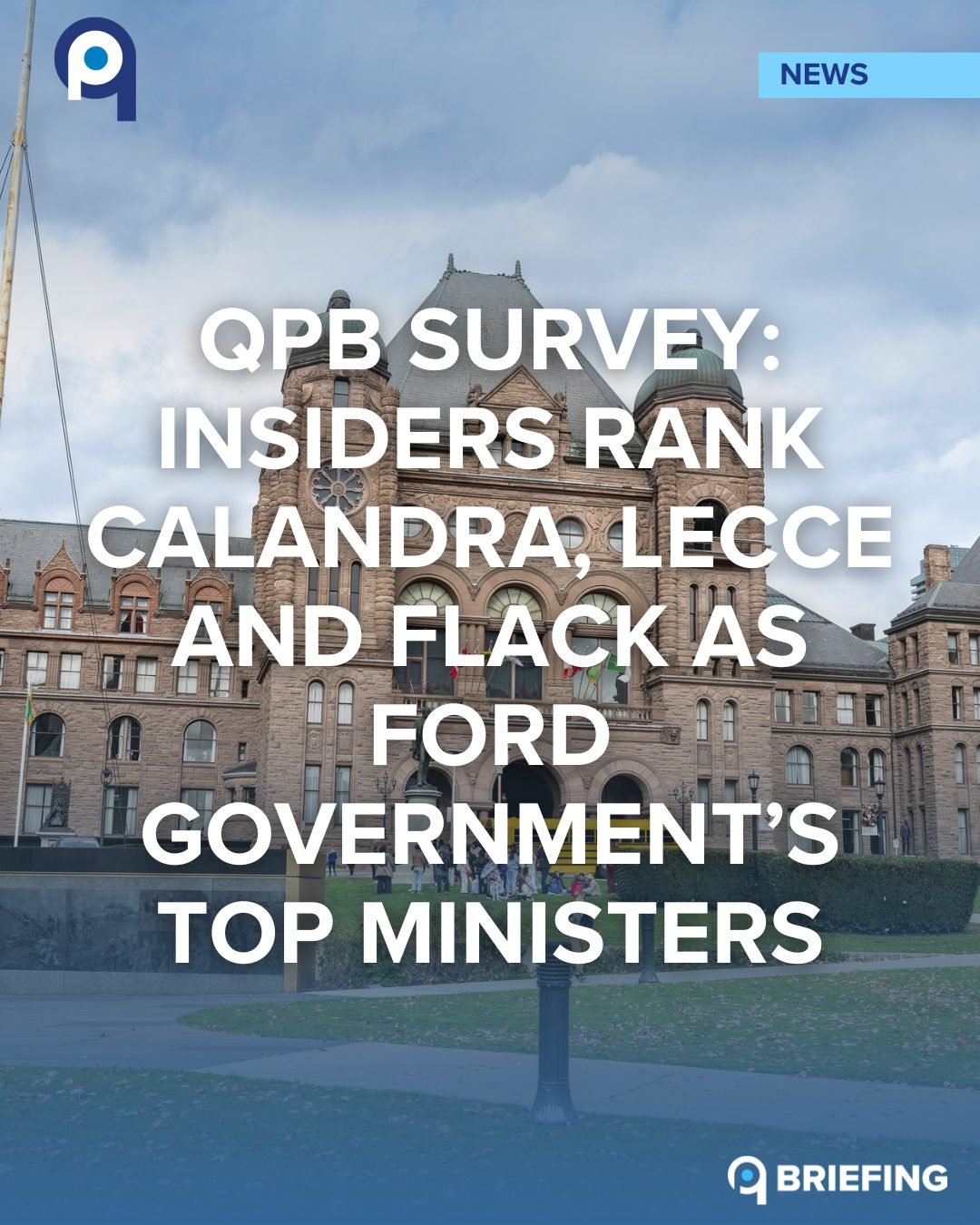
If it’s spring, it means it’s time once again for Queen’s Park Briefing’s annual survey of Ontario’s political movers and shakers — and in 2026, one familiar face remains firmly at the centre of power.
If it’s spring, it means it’s time once again for Queen’s Park Briefing’s annual survey of Ontario’s political movers and shakers — and in 2026, one familiar face remains firmly at the centre of power.
This year’s QPB survey, conducted throughout April, gathered responses from cabinet ministers, MPPs, political staff, lobbyists, advocates and other Queen’s Park insiders to identify the politicians and staffers wielding the most influence behind the scenes.
Over the coming days, QPB will roll out rankings across multiple categories. We begin with the ministers respondents viewed as the most influential and effective members of Premier Doug Ford’s government.
Top 3 most influential and effective ministers
Respondents were asked to rank their top choices for the government’s most influential and effective ministers.

1. Paul Calandra
Claiming the top spot for another year is Paul Calandra, whose influence inside government has only grown as the Ford government enters another mandate.
A veteran minister and longtime Ford ally, Calandra took over the education file amid mounting pressure around student performance, school boards governance and classroom consistency. Since stepping into the role, he has moved aggressively to reshape Ontario’s education system around accountability.
Among the most notable changes advanced this year was the government’s proposed Putting Student Achievement First Act, 2026, legislation designed to strengthen provincial oversight of school boards, standardize educational expectations and impose greater accountability measures on local boards. The bill seeks to increase scrutiny of school boards governance and student outcomes, while also creating a more consistent learning experience across Ontario.
For months, there was speculation the Ford government might abolish elected trustees entirely. Instead, Calandra’s bill keeps trustees in place but significantly narrows their role. Trustees would have less authority over day-to-day operations and spending, with responsibilities increasingly focused on governance and oversight rather than operational decision-making.
The bill also caps the number of trustees at 12 per board, a big change for large boards such as the Toronto District School Board, which currently has more than double that number. Trustee pay and expense rules would also face tighter provincial controls.
One of the biggest structural changes is that school boards would be run more like organizations with executive leadership rather than politically directed institutions.
The traditional Director of Education role would now be replaced with a CEO-style position responsible for finances and operations, while a separate Chief Education Officer would focus specifically on academic outcomes and student performance.
Calandra has also said that academic performance and consistency in assessment are priorities, continuing the Ford government’s “back-to-basics” education agenda.
His new legislation significantly expands the Ministry of Education’s authority to intervene when boards are deemed financially unstable or poorly governed. Now, boards may require ministerial approval for budgets in certain situations, and the province gains stronger tools to intervene in capital planning and infrastructure decisions when boards fail to deliver projects “in the best interests of students.”
This means Queen’s Park would have greater influence over school construction, expansions and spending priorities.
At Queen’s Park, Calandra is widely viewed as one of the government’s most effective political operators. He is known for his accessibility, frankness, and willingness for not shying away from managing politically difficult files.
Having served as government house leader and legislative affairs minister, Calandra is often viewed as someone who understands procedure, caucus management and how to move politically difficult legislation through the legislature.
For many insiders, his first-place reflects both his policy influence and his enduring proximity to the premier’s inner circle.

2. Stephen Lecce
Landing in second place is Stephen Lecce, who has remained one of the government’s most recognizable and politically prominent ministers following his move from education into the energy and mines portfolio.
Lecce has spent much of the past year at the centre of Ontario’s push to meet rapidly rising electricity demand while positioning the province as a North American energy and critical minerals powerhouse.
Among the most notable initiatives tied to Lecce this year has been Ontario’s accelerated energy expansion strategy, including efforts to boost nuclear generation capacity, expand electricity infrastructure and fast-track approvals tied to energy-intensive industries and mining projects.
His ministry has also promoted faster permitting and investment attraction in the mining sector, while advancing plans connected to Ontario’s long-term electricity expansion and energy self-reliance agenda. The government has increasingly linked Lecce’s portfolio to industrial strategy, manufacturing growth and the province’s response to rising demand from electrification and AI-era infrastructure.
Lecce got compliments from being one of the government’s strongest communicators and a highly visible cabinet presence.
Beyond policy, Lecce continues to earn praise inside Queen’s Park for being polished, media-savvy and relentlessly prepared.

3. Rob Flack
Rounding out the top three is Municipal Affairs and Housing Minister Rob Flack.
Tasked with one of the government’s most politically consequential portfolios, Flack has spent the year advancing reforms aimed at accelerating homebuilding, streamlining approvals and reshaping municipal governance to support the Ford government’s housing agenda.
Among his biggest legislative moves this year was the introduction of new housing and infrastructure legislation intended to speed up approvals, simplify planning rules and better align transit and housing construction.
One of the biggest changes in Flack’s bill is the attempt to reduce the patchwork of local planning systems that developers and municipalities have long complained slows projects down.
Bill 98 restructures parts of Ontario’s planning framework by creating more standardized official plan requirements and simplifying how municipalities prepare and amend planning documents. The government argues this would shorten approval timelines by making planning rules more consistent across jurisdictions instead of forcing builders to navigate dramatically different municipal systems.
Flack’s reforms also include targeted financial incentives designed to encourage building.
Among them are exemptions from development charges for certain non-profit retirement home developments, alongside broader planning reforms meant to reduce project costs and speed approvals.
Flack has also remained closely associated with the government’s push on municipal accountability. He managed to pass Bill 9, the Municipal Accountability Act, through the legislature still in this session.
The bill standardizes municipal codes of conduct, expands integrity oversight and creates a mechanism to remove councillors in the most serious misconduct cases ahead of October’s municipal elections.
At Queen’s Park, he has developed a reputation for spending considerable time with municipal leaders, planners, developers and industry groups while positioning himself less as an ideological crusader than someone trying to “make projects happen.”
Insiders often describe him as collaborative and solutions-focused, someone comfortable with technical detail and willing to negotiate on implementation.
—–
The ministers landing at the top are not only managing some of Ontario’s most politically sensitive files, but are also overseeing structural reforms with long-term consequences: Calandra’s reshaping of school governance, Lecce’s push to expand Ontario’s energy capacity and Flack’s efforts to accelerate housing construction and put forward important legislation to standardize a code of conduct across municipalities.