dailynewsnblog
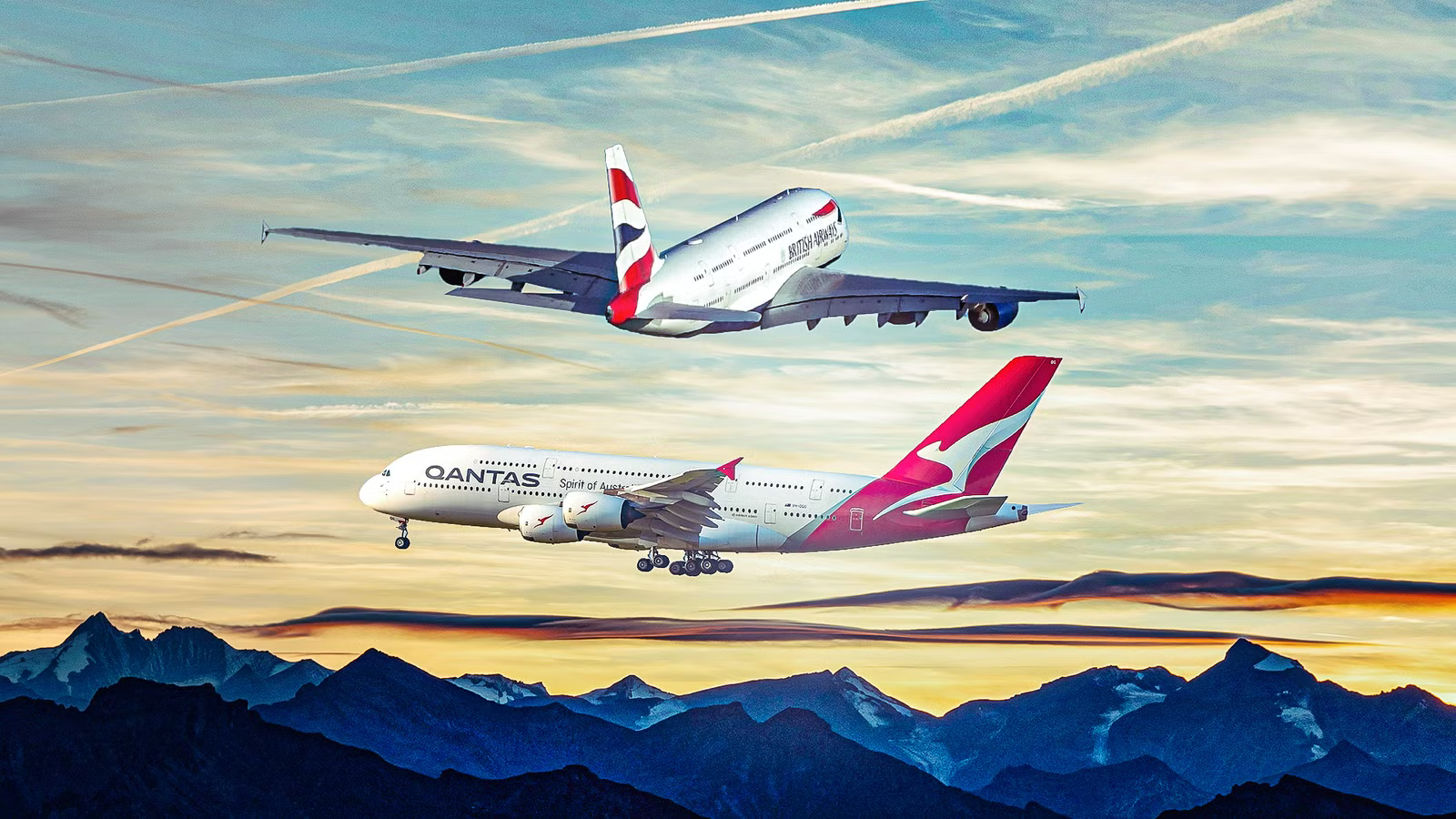
Qantas has laid out its retirement plan for the Airbus A380, which will now begin sooner than previously expected. But before the superjumbos disappear from the Australian flag carrier’s fleet altogether, they will be reconfigured to tap into strong appetite among passengers for more premium seating.
The bid to give its A380s one last lease of life before they are ultimately replaced with newer, twin-engine widebodies comes as rivals like  British Airways commit to similar projects. In Qantas’ case, the refurbishment would appear to involve just a handful of seats. At British Airways, however, the effort behind revitalizing its A380s is set to be far greater. Either way, one question remains: Why bother updating aircraft that are destined to be phased out in favor of more efficient alternatives over the coming years anyway?
Qantas Brings Forward A380 Retirement Plan

That question is far more relevant with Qantas. Just months ago in August, the carrier flagged that its A380 fleet retirement would commence in 2028, rather than four years later in 2032 as previously planned. This, it said in a trading update at the time, would broadly coincide with the delivery of new next-generation Airbus A350 and Boeing 787 jets.
“With […] more A350s and 787s on the way, it’s a new era for Qantas’ international fleet, with these next-generation aircraft set to transform the way our customers travel,” the airline noted in the results. Outside of 12 specialist Airbus A350-1000ULR models specifically set to serve its Project Sunrise routes from Australia’s east coast to London and New York, Qantas flagged firm orders for a further 12 A350s and 787s each. Discussions were also taking place with Airbus and  Boeing around converting roughly 20 existing purchase right options into firm orders from 2030, the airline added.
All told, next-generation aircraft replacing its A380s were capable of flying further, meaning they could serve the same routes or even open up new ones, Qantas pointed out. Coming at a time when soaring fuel prices have placed additional pressures on carriers, there is little surprise in the decision to replace the huge quad-jets with more efficient options sooner rather than later. In doing so, stronger earnings and reduced complexity should help to push Qantas International segment operating margins to between 10% and 12% from 2032, according to the airline, from roughly 4% as of its last financial year. That does not mean its A380s will be obsolete in the meantime, however.
Qantas Set On Reconfiguring A380 Seating In The Meantime

Far from it, Qantas is actually poised to pour time, effort, and — notably — funding into rejigging seating configurations across its A380 fleet before the gradual process of phasing them out gets underway in a few years’ time. Reportedly, this is set to see a portion of seats removed from each and replaced with extra legroom economy options.
As it stands, Qantas’ A380s each house 485 seats across four classes. Some 14 of these sit in first-class cabins, 70 in business, 60 in premium economy, and the rest in standard economy. In adding an economy extra option, expectations are that a portion of the 341 standard seats will be stripped out. Qantas has yet to confirm the details of the plan, though.
Qantas fleet, from Planespotters.net data:
Model | Number in fleet | Average age |
Airbus A321 | 7 | 0.8 years old |
Airbus A330-200 | 15 | 18.0 years old |
Airbus A330-300 | 13 | 21.0 years old |
Airbus A380-800 | 10 | 17.1 years old |
Boeing 737-800 | 78 | 18.1 years old |
Boeing 787-9 | 14 | 7.6 years old |
Total | 137 | 16.3 years old |
Qantas’ other economy extra seats, aboard some existing narrowbodies, boast 34 inches (86.4 cm) of pitch, compared to roughly 30 inches (76.2 cm) in standard economy. Aboard its A380s, the latter already sits at 32 inches (81.3 cm), so how much pitch will be added on top of that remains to be seen. In installing extra upgraded seat options, Qantas will follow the likes of British Airways.
British Airways’ Own Multi-Billion Dollar Transformation

British Airways is in the midst of a far more ambitious project to refurbish its A380s. Under a wider £7bn ($9.3bn) transformation effort, the UK’s flag carrier will completely overhaul interiors across its 12-aircraft-strong A380 fleet. As Qantas is expected to do so, British Airways will boost premium capacity largely by removing economy seats.
Capacity aboard each of its A380s will drop from 469 to 421 after they are retrofitted. Specifically, this will see the number of first-class seats reduced from 14 to 12, with the cabin remaining at the front of the jets’ lower decks. An 84-seater World Traveller Plus premium economy cabin will be placed directly behind, instead of the 55 such seats situated upstairs on the aircraft currently. World Traveller economy will also be on the lower deck, being made up of 215 seats rather than 303 as it stands. Instead of a three-class layout upstairs, British Airways is poised to fit 110 Club Suites running along the entire cabin — increasing business class capacity from 97 spots today.
British Airways fleet, from Planespotters.net data:
Model | Number in fleet | Average age |
Airbus A319-100 | 21 | 23.9 years old |
Airbus A320-200 | 60 | 19.7 years old |
Airbus A320neo | 36 | 4.4 years old |
Airbus A321-200 | 11 | 20.9 years old |
Airbus A321neo | 20 | 4.6 years old |
Airbus A350-1000 | 18 | 5.2 years old |
Airbus A380-800 | 12 | 12.5 years old |
Boeing 777-200 | 43 | 26.6 years old |
Boeing 777-300ER | 16 | 12.1 years old |
Boeing 787-8 | 12 | 11.4 years old |
Boeing 787-9 | 18 | 10.3 years old |
Boeing 787-10 | 12 | 4.3 years old |
Embraer ERJ-190 | 20 | 15.0 years old |
Total | 299 | 14.8 years old |
Anticipations are that the first of these updated British Airways A380s will debut this year, bringing with it an all-new first class product as well as the largest business cabin ever seen across the industry. According to the carrier, each plane involved will require some 35,000 new parts and structural modifications as their interiors are entirely stripped back and rebuilt. As to why British Airways, and Qantas to a lesser extent, are going to such lengths to update their A380s, the answer lies in shifting demand trends being seen across the industry currently.
Responding To Soaring Premium Travel Demand?

The International Air Transport Association (IATA) reported earlier this year that premium travel demand had remained on a strong growth trajectory through 2025. The number of premium-class passengers — those flying business or first — grew 4.5% on an annual basis to 109.7 million, accounting for 5.5% of all international traffic. Aside from Europe, which was already the world’s largest market for premium travel, greater numbers of such higher-paying passengers were recorded in every region throughout the world. Positive trends were seen across the board in 2024 too, with the number of business and first-class flyers having jumped by 11.8% during the year.
No doubt airlines have noticed, hence Qantas and British Airways both moving to create more space aboard their largest jets for passengers that might be willing to pay extra for anything from extra legroom upwards. Indeed, the last few years have proven that more and more people have been doing exactly that, whether that be forking out for business or first-class fares — as highlighted by IATA — or intermediate options such as premium economy or extra legroom.
British Airways, for instance, will have outfitted each of its A380s with space for 206 travelers from within this bracket once its retrofit project is complete, compared to 166 on the current fleet. That means slightly under 49% of the refurbished models’ capacities will be dedicated to those paying over and above the price of a standard ticket for better service or a more comfortable seat, say. Unlike Qantas, however, British Airways has not laid out any timeline for the retirement of its A380s, so the investment in them is a sign it intends to keep them in service as high-yield workhorses for some time yet. Similarly, Qantas looks to be set on making the most of strong premium demand using its own A380s while it still has the chance.
Only The Beginning Of The End For Qantas’ A380s

While the Australian carrier has set 2028 as the start date for the retirement of its superjumbo fleet, that is only going to be the beginning. On average, Qantas’ A380s were 17.1 years old as of the time of writing in mid-October — a way off the 12.5-year mean age of British Airways’. That said, there was a notable margin between the oldest and youngest examples.
Per Planespotters.net data, the first of Qantas’ superjumbos was handed over by Airbus in September 2008, with a total of 12 models having been delivered through to December 2011. Ten of these remain in service today, after those registered VH-OQE and VH-OQF were both retired during the pandemic.
Qantas Airbus A380 fleet delivery dates and individual ages:
Registration | Delivery date | Age |
VH-OQA | September 2008 | 18.7 years |
VH-OQB | December 2008 | 18.3 years |
VH-OQC | December 2008 | 18.2 years |
VH-OQD | August 2009 | 17.9 years |
VH-OQG | December 2010 | 17.2 years |
VH-OQH | January 2011 | 17.1 years |
VH-OQI | January 2011 | 16.3 years |
VH-OQJ | April 2011 | 16.1 years |
VH-OQK | November 2011 | 15.5 years |
VH-OQL | December 2011 | 15.5 years |
That places the oldest, VH-OQA, at 18.7 years. VH-OQK and VH-OQL are over three years younger at 15.5 years each, in comparison. That means come 2028, when the phase-out begins, VH-OQA will be approaching 21 and closing in on the 25-year lifespan Airbus originally intended for each A380, while the youngest will be a way off from reaching the end of their theoretical service lives. Qantas does have some leeway around the timeline of retirements as a result, with these set to take place gradually over several years rather than all at once. In that context, the thinking behind the retrofits makes more sense.
Qantas’ A380s Still Useful To Tap Into Premium Travel Shift

Qantas itself highlighted strong premium cabin revenue growth in its latest full-year results. Where overall revenue from Qantas International increased by 8% to AU$9.9 billion ($6.9 billion), premium cabin revenue within the segment climbed by 15% to outpace that of economy ticket sales. At the same time, the full return of its A380 fleet to operations as of late 2025 following pandemic-induced groundings offered “critical network flexibility,” the airline noted.
Simply put, faced with stubborn demand for better but more costly seats and the need to bridge the gap until newer models can take the strain, Qantas has opted to make the most of the situation by slightly reconfiguring its A380s. Given that a number of these should remain in the skies for several years, the addition of economy extra options reflects a relatively cheap and simple way of further tapping into that pool of passengers willing to pay more for something a step up from a standard seat.
Catch what other trackers miss
Emergency squawks, holds, NOTAMs — live signals, no signup.
Open tracker
Catch what other trackers miss
Emergency squawks, holds, NOTAMs — live signals, no signup.
Open tracker