dailynewsnblog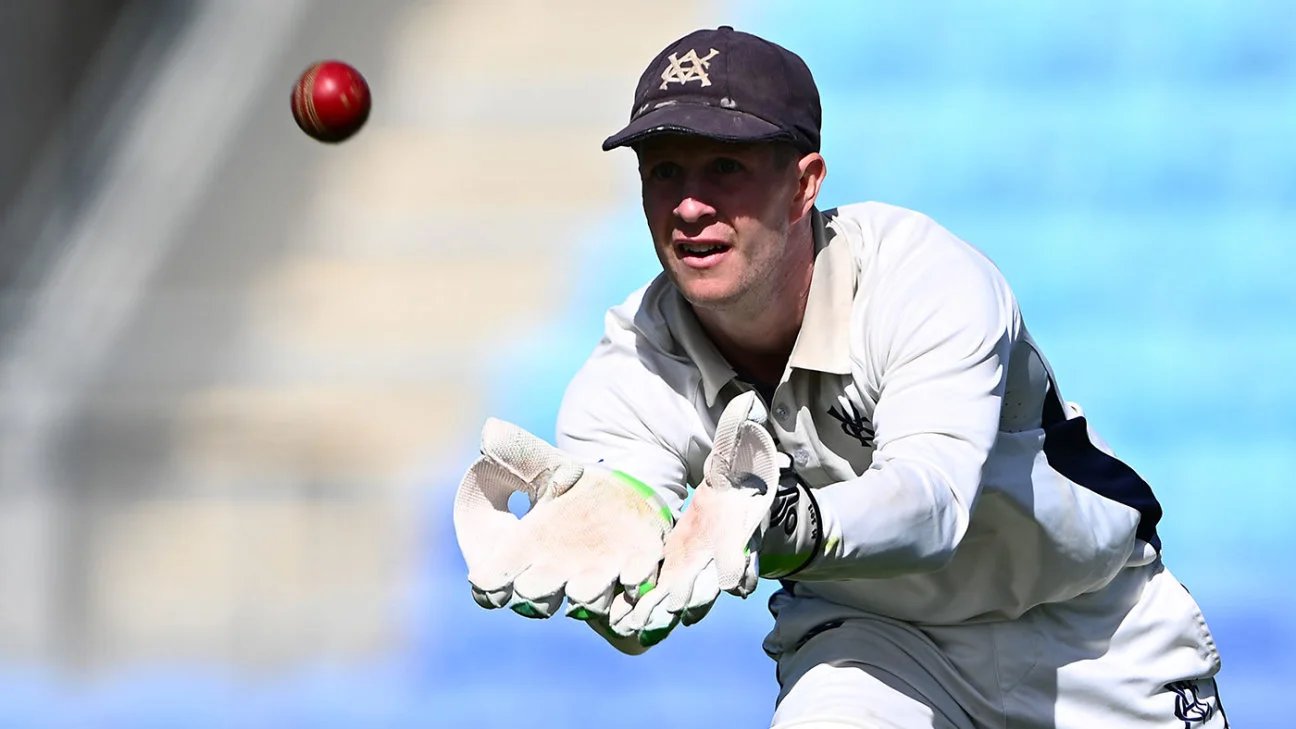
While Harper’s runs have produced eye-catching numbers, and have certainly propelled him towards the Test team after Inglis’ fractured finger, chair of selectors George Bailey referenced his evolving glovework.
“[With] Harps the batting’s been wonderful, but I think the keeping, he’s worked incredibly hard on that,” Bailey said. “And given what we saw last summer and what we expect here, [there’s] that ability now for keepers to do their work back to the quicks and do their work up to the quicks, and [we’re] expecting that we’re going to get a heavy amount of spin.”
However, it has been Harper’s work with the bat that has transformed his career after an elevation to the top of the order for Victoria as a tactic to counter tricky batting conditions in the Sheffield Shield. He responded with back-to-back centuries against Western Australia and a 93 against Tasmania. His hundred for Australia A came back in a middle-order role, in conditions that favoured spin bowling, showing the versatility that the selectors value highly.
“He has been batting pretty well with a different role and a slightly different mindset, which is certainly working,” Bailey said. “But his ability to come up with a pretty clear plan and be able to put pressure back on the opposition has been has been impressive over the last little bit.”
Bailey did not shut the door on Harper playing as a specialist batter, which Inglis has done in his five Tests, but suggested Australia’s injury list would need to grow to alarming levels for it to be an immediate reality.
“I think there is [a chance he plays as a batter], but I don’t know if he’d be the first,” Bailey said.
Inglis, who is currently back home in Western Australia, will have another scan on his finger in a week’s time when a call will be made on whether he returns head of the second Test in Gqeberha which begins on October 18.