dailynewsnblog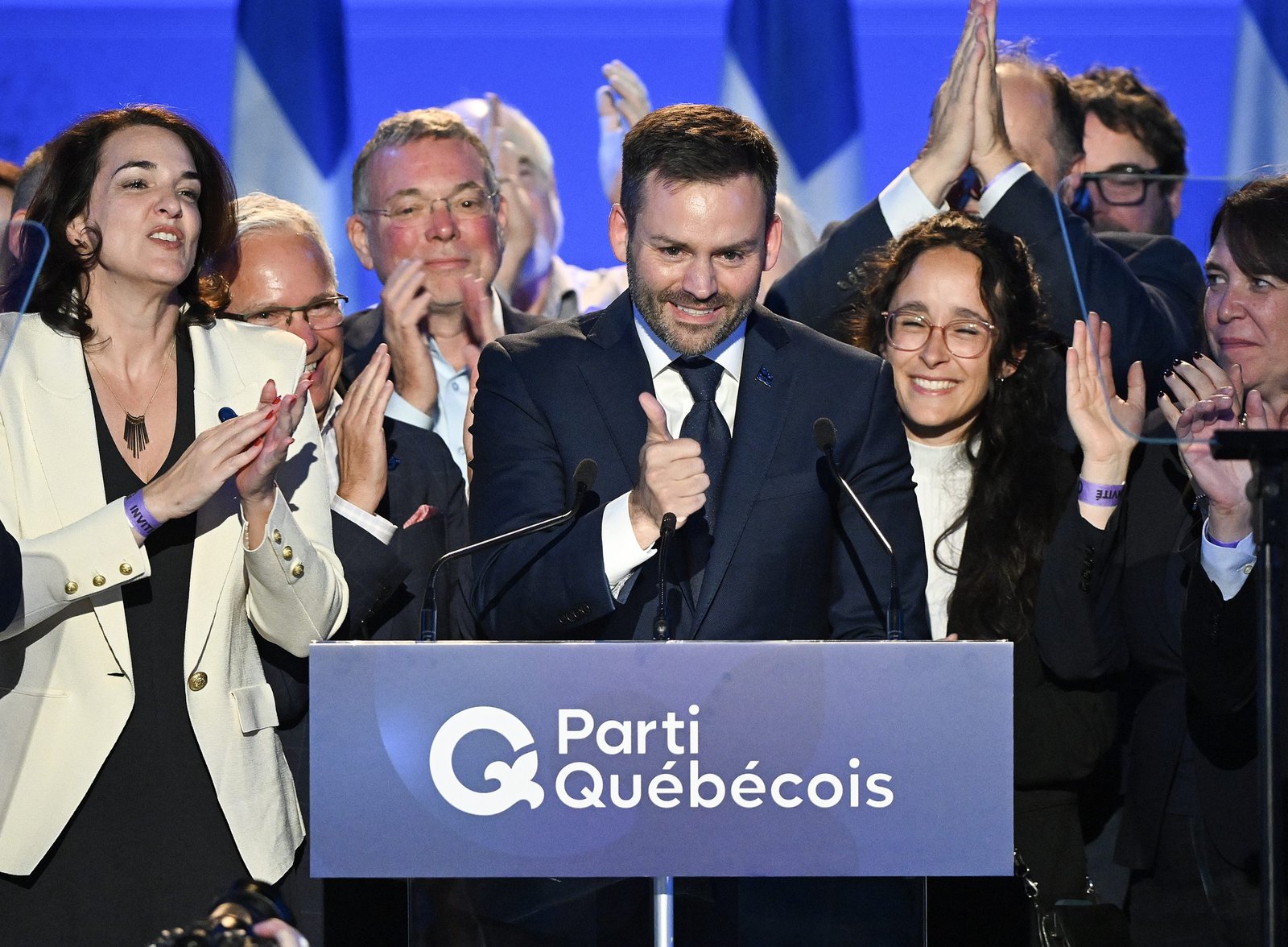
Here’s what the activist media is reporting on this week.
“Fasten your seat belts, Canada.”
That’s how Rabble politics writer Karl Nerenberg concludes his lengthy post-mortem on the now-wrapped Quebec election, in which Paul St-Pierre Plamondon — “known more often by his initials, PSPP,” Nerenberg notes — led the Parti Québécois to a minority victory, and coming “only a handful of votes short of a majority, even though 72 per cent of Quebeckers voted against them,” he notes.
“Plamondon’s PQers came, almost literally, out of the wilderness. In the last Quebec election, in 2022, they were reduced to three seats, and there were predictions in the wake of that result that the PQ might disappear altogether,” and although there were other factors at play, Nerenberg gives Plamondon full credit for the party’s success.
“Over the past four years, Plamondon has proven himself to be an appealing media personality. He comes across as a good-looking young family man, with an affable and articulate manner. PSPP has the rare and ineffable capacity to instill confidence in voters. He can make them believe he has heard them and that he understands what irks them.”
Plamondon also moved the formerly left-leaning PQ “toward the populist Right,” he notes.
“Although the PQ’s platform includes some progressive proposals, such as increasing pay for teachers, what the current party leader (and new premier) tends to emphasize are identity-related issues and his goal of imposing austerity on the Quebec public sector. PSPP has even promised to name an Elon-Musk-type Secrétariat à l’efficacité de l’État, which will evaluate the effectiveness of Quebec’s public services and recommend cuts.”
In fact, “much of what PSPP stands for would fit comfortably into the universe of Trump’s MAGA movement,” he warns.
“Currently, U.S. officials are openly courting Alberta separatists, even though the odds are heavily against the leave-Canada side in the coming Alberta referendum. Now, in Quebec, the Trump gang can consider how they might influence events in the wake of a separatist victory at the polls – however mitigated that victory might be. Power is power, no matter how one gets it. Nobody knows that better than Trump.”
His fellow Rabble contributor Evan Wexler checks in on what he frames as the “new fight for labour rights in the age of AI,” and what Canadian unions are doing to “protect workers from the threat of algorithmic management,” particularly — although not exclusively — within the public sector.
“In general, Canada’s unions have been pushing for more safeguards against AI, while employers have been reluctant to offer these protections saying that technology is moving too fast and the impacts are not yet known,” he notes.
“Over the past six months, pattern bargaining among Canadian unions have introduced a growing number of clauses to address specific labour concerns around the use of algorithmic management systems, the need to protect employee data, increased workload, decreased autonomy, more surveillance and monitoring, and AI-powered human resources system. This summer, workers at York University also demanded AI guardrails. So did workers at the Canada Revenue Agency last year. Last January, Unifor negotiated to have its members at Bell Canada set up a ‘Committee on Artificial Intelligence,’ but also stopped short of offering actual protections.”
Even so, there remains no comprehensive, economy-wide federal law in Canada that specifically governs the use of artificial intelligence,” he points out.
“Bill C-27, enacting the federal Artificial Intelligence and Data Act, died when parliament was prorogued in January 2025. This is another reason why union contracts, thus far, have relied on a case-by-case negotiation with employers to work out their member’s rights around AI.”
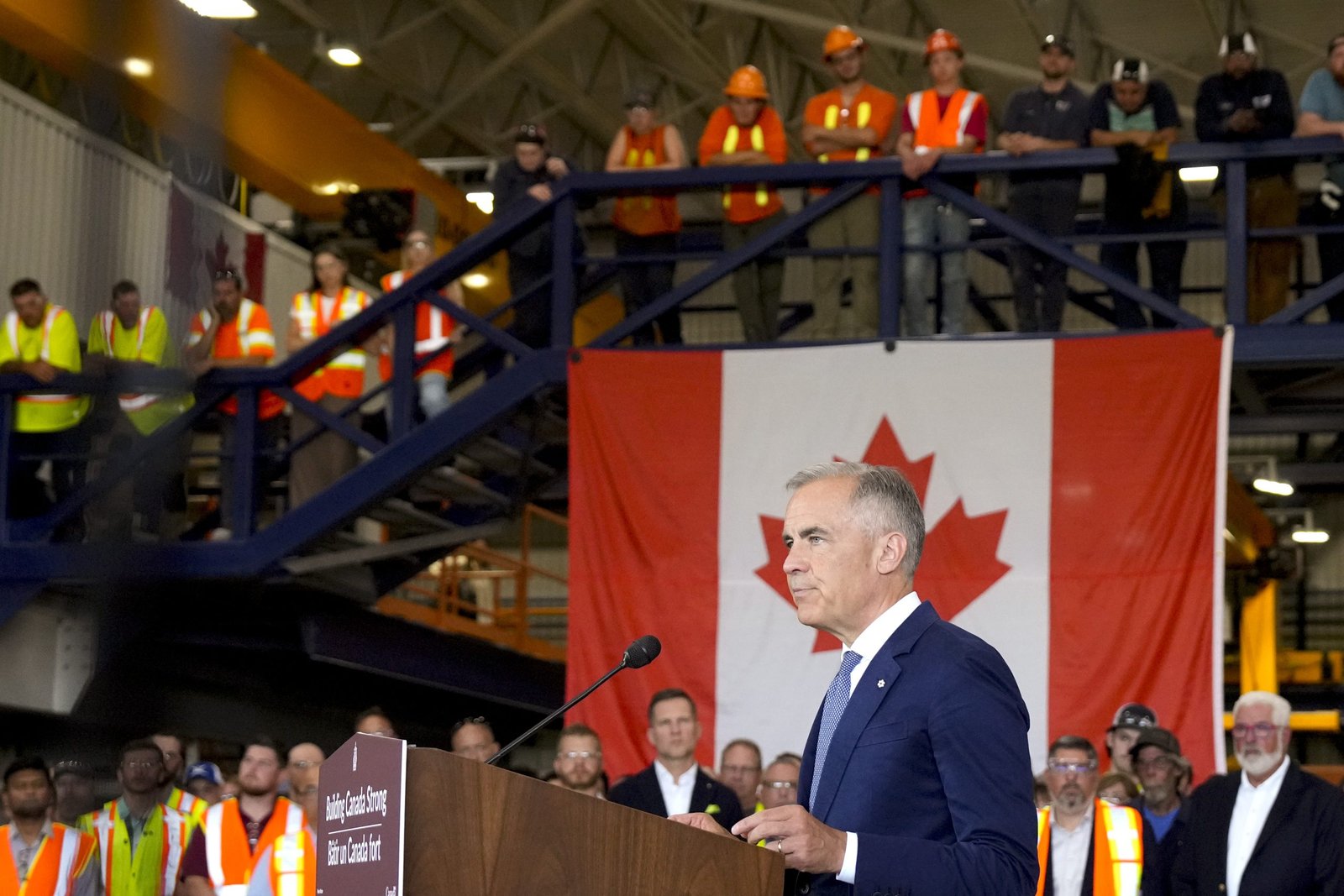
Meanwhile, Rabble executive editor Sarah Sahagian makes the case for why, in her view, Prime Minister Mark Carney “does not merit a Nobel Peace Prize,” no matter how much such an honour “would infuriate Donald Trump, who would be green with envy to see a Canadian rival take home the prize he covets,” or how “amusing (it would be) to read the president’s jealous reaction rant on Truth Social.”
As proof of her assertion, she points to the “purpose of the award itself, which is not simply to piss off foreign leaders by celebrating their foes,” but “is meant to be bestowed upon ‘the person who shall have done the most or the best work for fraternity between nations, the abolition or reduction of standing armies and for the holding and promotion of peace congresses,’’ which “does not describe grey-suited Mark Carney,” she contends.
Although she acknowledges that she simply doesn’t have the space to “articulate the myriad ways Mark Carney has failed to promote a more peaceful world,” she does provide “a few highlights,” including his ongoing push to boost military spending, his “horrific record on climate change” and the “significant cuts to foreign aid” by his government, “siphoning funds that once went to vital public health programs in developing countries.”
Sahagian does, however, proclaim herself to be “a woman with an open mind.” Given that, “is it possible Mark Carney will surprise progressives with new policies that reverse my opinions,” she wonders.
“Of course! I genuinely hope the day comes. And if it does, I will giddily eat my words. But until then, let’s reserve Peace Prizes for people who implement policies that promote peace.”
Over at Canadian Dimension, Christo Aivalis believes the “distorted result” of the Quebec election “offers another stark example of how first-past-the-post fails to reflect the will of voters,” who “essentially handed a nearly equal level of support to two parties, yet the electoral system nearly bestowed total power upon one of them,” he explains.
“Monday’s Québec election narrowly averted a crisis of democracy, but only partially and barely so,” he points out.
“As the votes were being counted, the prospect of the Parti Québécois (PQ) winning an outright majority with less than 30 percent of the vote nearly came true. With only 28 percent of the vote, the PQ came only a handful of seats short of having total control of the National Assembly. A slight change in voter distribution would have delivered that power with far less than 50 percent of the vote.”
Given that context, it is “one of the most egregious examples of first-past-the-post (FPTP) failures in modern Canadian history and should wake us all up, including in English Canada,” he argues.
“A democracy is meant to represent the will of the people. It’s time our Parliament and legislatures live up to that standard.”
Elsewhere on the site, Caroline Stitt and M.V. Ramana team up to take a closer look at the Carney government’s “push for ‘AI sovereignty,” as well as its newly released critical minerals strategy, which “are not independent policy agendas but mutually reinforcing industrial projects” that “make the ecological and social costs of obtaining these minerals invisible, in part by not talking about these costs and in part by framing extractivism as technologically inevitable and geopolitically necessary,” they contend.
“Taken together, AI for All and the Critical Minerals Strategy reinforce a particularly Canadian vision of nation-building that pursues industrial expansion, resource extraction, and infrastructure development over democratic control and the protection of communities, ecosystems, and Indigenous rights.”
Rounding out the progressive-left circuit, The Maple’s Alex Cosh crunches the numbers and concludes that the Department of National Defence “has already more than doubled the total value of its new contracts signed with American tech giants this year.”
Since the start of the year, DND has signed new deals “worth a total of $67.7 million with Microsoft, Amazon, Google and their Canadian subsidiaries, up from $30.3 million signed in 2025,” he reports.
“The department’s hike in new contracts with the companies comes despite Prime Minister Mark Carney repeatedly claiming that Canada is reducing its reliance on U.S. contractors.”
Trending on the right-of-centre side of the Canadian activist mediaverse:
- Rebel Media’s Alberta bureau chief Sheila Gunn Reid highlights recent comments by Governor General Louise Arbour’s son-in-law, Ottawa lawyer Michael Spratt, who “has publicly attacked Rebel News and publisher Ezra Levant, accusing him of making ‘inflammatory,’ ‘misleading’ and ‘reckless’ comments over the prosecution of anti-Israel protesters.”
- Gunn Reid also files a fresh Alberta Fact Check that asks: “Why is Quebec ‘sovereigntist’ while Alberta is ‘separatist’?”
- Juno News correspondent Melanie Bennet flags an upcoming visit by “Muslim American politicians,” including “a controversial Dearborn mayor,” who are set to “descend on Markham “to share advice on winning electoral seats at a convention aimed at increasing religious political representation.”
- In a pre-election op-ed, Juno contributor Sue-Ann Levy unspools the “tale of two Torontos,” as depicted by rival mayoral candidates Olivia Chow and Brad Bradford.