dailynewsnblog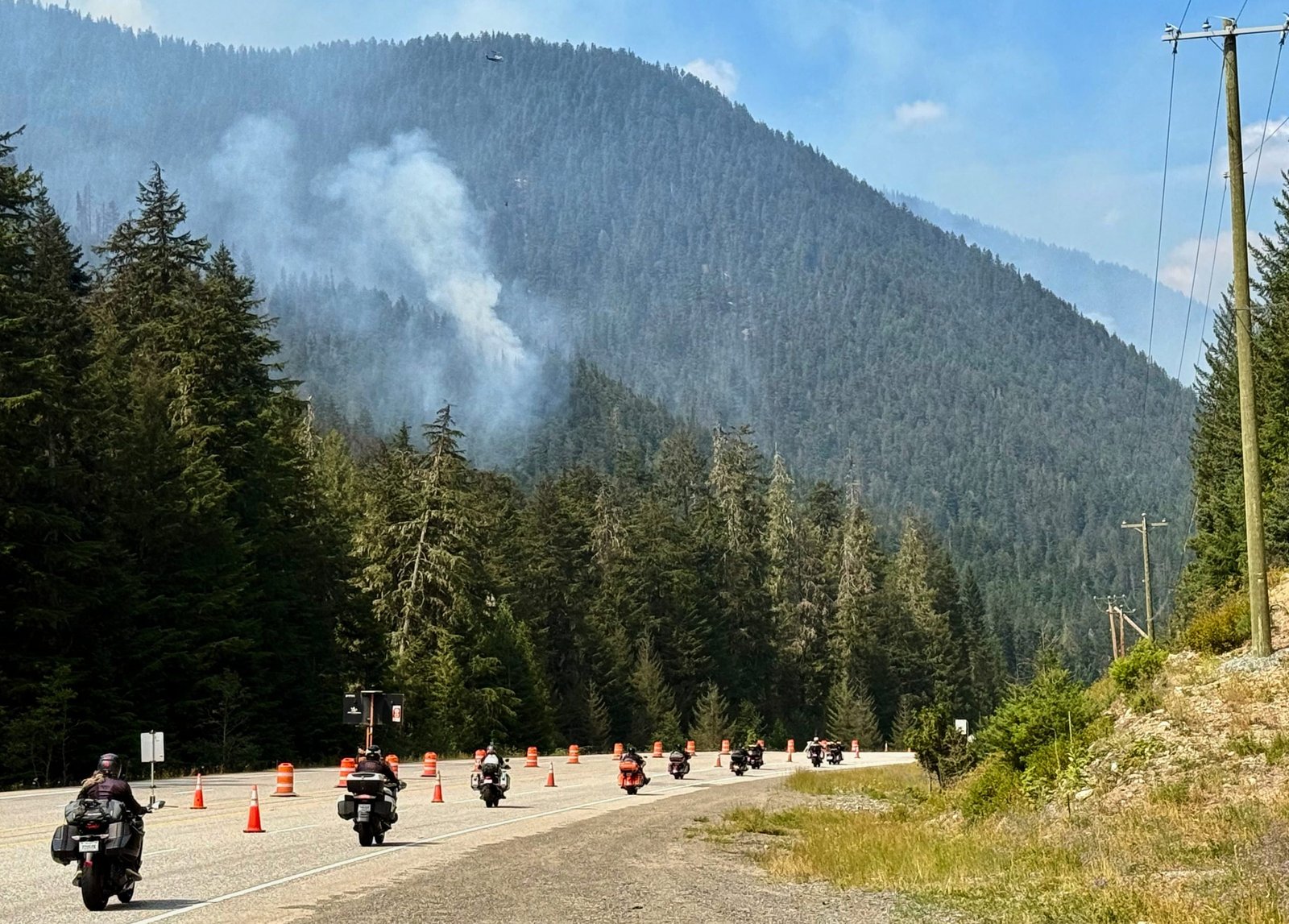
Here’s what the activist media is reporting on this week.
After joining The Breach’s Desmond Cole last month to highlight what the podcast summed up as “gaps in the public broadcaster’s climate coverage,” Simon Fraser University climate research coordinator Tara Mahoney makes her debut appearance on Ricochet to promote her newly-launched campaign calling on CBC News to “provide clearer, more consistent reporting on the causes of the climate crisis,” as she explains.
“In 2023, we published Quiet Alarm: A Review of CBC’s Climate Reporting, based on two weeks of monitoring CBC’s flagship news programming,” she notes.
“One of our most concerning findings was that only nine per cent of climate stories made the connection to the burning of fossil fuels. These findings were consistent with Re.Climate’s 2024 analysis of more than 803 Canadian national media stories on wildfires which found that only 13 per cent of wildfire stories explicitly connected fires to climate change.”
In both cases, “researchers concluded that although climate coverage has increased, it continues to lack crucial context about both causes and solutions,” she explains.
“And yet, three years after our original research, the problem persists. This lack of contextual details matters because Canadians already have a serious climate literacy problem.”
In fact, “climate change has been so successfully politicized that simply naming its causes can be interpreted as taking a political position,” she warns.
“But providing context is not advocacy. It is journalism. Reporting that burning fossil fuels is the dominant cause of global warming is not taking a political position. And making these contextual pieces can be communicated in a sentence or two.”
She also offers one very specific suggestion on how CBC News could fulfill its responsibilities as a public broadcaster — namely, a “daily climate report on CBC’s flagship shows (that) could tell Canadians about air quality, extreme-weather risks, emissions, climate policy and our progress toward national targets,” she explains.
“More importantly, climate context should become routine across political, economic, health and disaster reporting.”
Meanwhile, newly installed Press Progress executive editor Rumneek Johal — who, as flagged in last week’s roundup, has taken up her new role in the wake of the departure of longtime editor Luke LeBrun — files a fresh dispatch on the wildfires currently ravaging Canada’s West Coast, including near communities along the path of the proposed pipeline backed by Prime Minister Mark Carney and Alberta Premier Danielle Smith.
“As of Monday morning, nearly 22,000 people were under evacuation orders across the province and more than 10,000 are under evacuation alerts,” she noted.
“An 80 year-old woman fleeing the wildfires in Penticton is confirmed to have died as a result of the fire.”
And yet, “as a smokey haze covers the province, provincial and federal governments are still seeking to press forward with infrastructure projects that experts say could only exacerbate the impacts of climate change in B.C.,” she points out.
“’People’s homes are burning down, people’s communities are burning down, and the people who still have their homes are dealing with very real health consequences from these fires, so how can you justify a project in that sense?’ Tegan Hansen, Stand Earth’s Senior Forest Campaigner told PressProgress.”
Hansen also “recalled protesting the Trans Mountain pipeline construction years ago while Burnaby was similarly covered in smoke,” the story notes.
“‘We were talking then about seeing the impacts of climate change while trying to stop a major project that would make climate change worse. (It) is jarring to have not learned those lessons, and now being met with them in such an extreme way.’”
Alberta-based Rabble regular David Climenhaga examines how his province’s “uninspiring Tory Blue flag … has become a symbol of separatism,” albeit one that “flops on both inspirational and vexillographical grounds,” as he sees it.
Even so, “no one in Alberta can deny that the blue flag is now irrevocably associated with the separatist movement,” which “has been true since Convoy-adjacent pickup truck drivers here in Wild Rose Country replaced the black F-Trudeau flags that once snapped over their tailgates and truck nuts with the more pedestrian blue standard,” he argues.
“It may be possible for reasonable people to take the blue flag back eventually, as has happened in Alberta with Canada’s striking Maple Leaf Flag that for a spell after the Ottawa occupation was flown almost exclusively by the Maple MAGA set. But that will take time and effort, possibly more than it’s worth. In the meantime, it’s hard to feel much sympathy for folks who have successfully turned the Alberta flag into a symbol of separatism and are now suffering the vapours because others are associating it with, uh, the same thing.”
Elsewhere on the site, Paul Kahnert delivers the latest — and, judging from the framing, possibly the final — chapter in his ongoing series, The Oligarch Chronicles, which explores “the return of the robber barons” in meticulous detail, including both historical background, a rundown on the “world’s biggest oligarchies” and an update on the current dynamics in Canada, which “is often viewed as a bastion of stability but is still vulnerable to Oligarch control,” he warns.
“There are not enough superlatives to properly say THANK YOU to Nick Seebruch and rabble for publishing The Oligarch Chronicles, when no one else would,” he adds.
“Objective and factual reporting is increasingly disappearing, edited out or dismissed as fake news. This underlines just how important Rabble news has become, in getting out the facts and the truth.”
Over at Canadian Dimension, Dennis Pilon cites Shopify CEO Tobias Lütke’s recent musings about how “the rich should have more votes than everyone else and that anyone dependent on the state — like pensioners — should have none” in his bid to make the case that Canada’s “ultra-rich are no friends of democracy.”
He acknowledges that, “at one level, Lütke’s views can be easily dismissed as the self-interested rantings of a privileged and entitled individual,” but nevertheless “typify what many members of the uber wealthy have always thought about themselves and what their role should be in influencing government,” he contends.
“The only real difference with Lütke’s recent comments is that he uttered them publicly. The recent firestorm over Lütke’s call for greater political influence for the wealthy blew up primarily because he said out loud what most of his class really thinks but seldom admits—namely, that being rich gives you the right to order other people around.”
There is, however, a silver lining, he suggests. “Most media stories about monied individuals tend to focus on how charitable they are, with fawning attention to the substantial sums given to hospitals and universities. More public knowledge about how the rich think and actually behave could help to dispel such myths. As such, Lütke’s unscripted admissions are an opportune wake-up call to the Canadian public.”
His fellow CD contributor Marc Edge weighs in on the latest movement in the “ongoing shift from the Trudeau Liberals’ attempts to regulate the Internet to the Carney government’s willingness to retreat from them,” which “became even more apparent last week, as Ottawa continued backing away from policies designed to tax some of the world’s largest technology companies,” he notes.
“The change in policy was first reported in June by the Globe and Mail, which cited unnamed senior government sources saying Ottawa would drop the requirement for streamers to fund local news and niche broadcasters and would instead negotiate ‘a more reasonable rate’ of contribution with them.”
The upshot, in his view: “Taxpayers should expect to soon fork out even more money to our media, including broadcasters, despite the fact they are owned by some of the country’s most profitable companies.”
Rounding out the progressive-left roster, The Maple’s Alex Cosh digs into the backstory behind Defence Minister David McGuinty’s recent closed-door meting with “war industry leaders,” whose names his office “is refusing to disclose” along with “details of what was discussed,” he reports.
“A spokesperson from the Department of National Defence (DND) told The Maple via email that the meeting was held under ‘Chatham House Rules,’ a protocol that politicians commonly invoke to hide details about closed-door meetings,” he explains.
“McGuinty’s secretive meetings come as the Liberal government continues to massively hike military spending to an estimated $150 billion per year by 2035 at the behest of U.S. President Donald Trump. This week, McGuinty told reporters that his government is continuing its long-delayed review of plans to buy a full fleet of 88 American-made F-35 fighter jets, even as Trump continues to threaten Canada with annexation.”
- Rebel Media commander Ezra Levant and Alberta Rebel bureau chief Sheila Gunn Reid stopped by a weekend protest against a proposed AI data centre outside Morinville, Alta., and surveyed the crowd on what they see as a key question: “Do you want AI controlled by Communist China, or do you want it controlled by America?”
- West Coast Rebel Drea Humphrey examines the ongoing push by the British Columbia and federal governments to transfer “a whopping 334,643 acres of Crown land tied to treaty agreements involving 20 First Nations or treaty groups, across multiple regions of the province.”
- Juno News contributor Clayton DeMaine reports on how Canada Border Services Agency officers “raided a weeks-long international student protest” in Calgary, during which “a source familiar with the operation” told Juno News that that officers “checked attendees’ immigration status,” as captured on video.
- Elsewhere in the Juno network, Alex Dhaliwal highlights how the Alberta government is “hammering rogue truckers, booting 20 carriers off its roads and issuing 443 penalties in an escalating safety crackdown.”