dailynewsnblog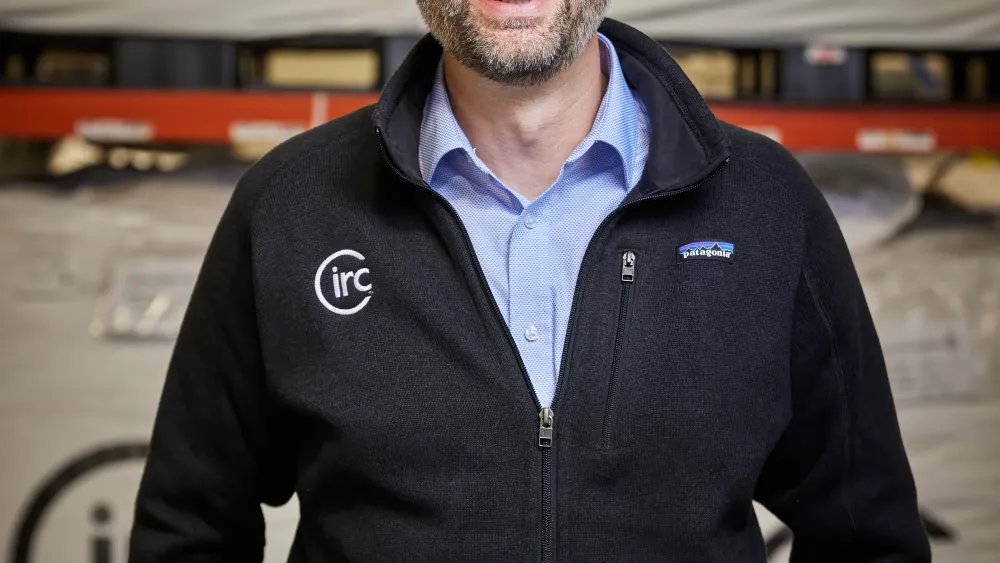
PARIS — Irish fast-fashion retailer Primark has signed a multiyear agreement to buy recycled polyester from textile-to-textile recycler Circ, committing to use the material in its clothing from 2029 as Circ prepares its first industrial-scale recycling facility in France.
The agreement marks Primark’s first multiyear offtake deal with a textile-to-textile recycler. Financial terms and volumes were not disclosed.
For Circ, the agreement provides a commitment of future demand as the company works to build commercial-scale capacity.
“It is a significant moment because it turns shared ambition into a credible, long-term commercial pathway,” Circ chief executive officer Peter Majeranowski told WWD.
“Primark’s multiyear commitment to incorporate Circ Polyester into its products gives us commitment of future demand. That helps reduce market risk, strengthens the case with investors and financing partners, and allows the wider supply chain to plan for integration,” he said.
Circ’s planned facility in Saint-Avold, northeastern France, is designed to process 70,000 metric tons of textile waste a year. The plant is expected to cost around $500 million and is being developed through a mix of equity and debt, with Circ also seeking grants and guarantees.
The Primark agreement does not finance the facility on its own, Majeranowski noted.
“The agreement does not finance the facility on its own, and Primark is not directly financing its construction. A project of this scale requires a broader package of mixed capital sources,” he said.
A spokesperson for Primark told WWD that it spent about 18 months evaluating textile-to-textile polyester providers before selecting Circ.
“Circ’s dual solution of recycling polycotton, one of the hardest to recycle and most abundant material blends available” was a key factor, the spokesperson said, adding the location of its planned French facility was another. “We recognized not only could we source recycled textile polyester but also contribute to solving a problematic material.”
Primark said 39 percent of its clothing units sold in its most recent financial year contained recycled fibers, up from 32 percent in the prior year. The retailer has also committed to removing “conventional materials” from its clothes by 2030, it said.
The Circ partnership will provide another route to reducing reliance on virgin materials alongside Primark’s existing work with recycled fibers, including with supplier Recover, the spokesperson added.
Circ’s technology is designed to separate polycotton into its component materials, recovering cellulose from cotton and PTA and MEG, the building blocks of polyester, from the polyester component.
The company said its technology is designed to process polycotton feedstocks that meet defined technical specifications and have been properly sorted and prepared.
“The challenge is not a shortage of textile waste because there is plenty of polycotton available,” Majeranowski said. “Our technology requires feedstock that meets defined specifications, so we are developing a diversified supply pipeline and working with partners on sorting, preparation, traceability and qualification.”

Circ textile-to-textile recycler
Courtesy of Circ
That need to build that wider supply chain is also a focus for Primark.
The retailer said scaling textile-to-textile recycling will depend on established waste collection and sorting infrastructure, including higher collection rates and automated sorting, as well as advanced recycling technology and policy measures such as clear extended producer responsibility, or EPR, schemes and recycled-content requirements.
“Textile waste is one of the biggest challenges facing the fashion industry, and innovation will be critical to solving it at scale,” Primark said.
For Circ, the Primark agreement is also relevant to the financing of its commercial infrastructure because investors and lenders need visibility on future demand, Majeranowski said.
“When you are building first-of-a-kind infrastructure, investors and lenders need confidence not only in the technology, but also that there will be sustained and growing commercial demand for the materials the facility produces,” he said.
“A long-term agreement with a global retailer like Primark committing to incorporate defined volumes of Circ Polyester into its collections turns broad market interest into a much more tangible demand signal and helps reduce the commercial risk and reinforce the foundational economics of the project.”
Circ has said construction of the French facility is expected to be completed by the end of 2028, with the company targeting the use of its recycled polyester in Primark products from 2029.
Primark’s agreement with Circ comes as the retailer continues to develop its broader approach to circularity. The company said it is reviewing its Primark Cares strategy, which was launched in 2021, in light of changes in regulation, technology and consumer expectations in Europe.
On that front, Majeranowski added that textile recycling cannot be viewed as a solution to the fashion industry’s wider environmental impact on its own.
“If clothing volumes and virgin material consumption continue to rise together, the benefits of recycling can be outweighed by the industry’s increasing overall impact,” he said.
“The industry therefore has to address both the volume of resources it consumes and the material system behind those products.”