dailynewsnblog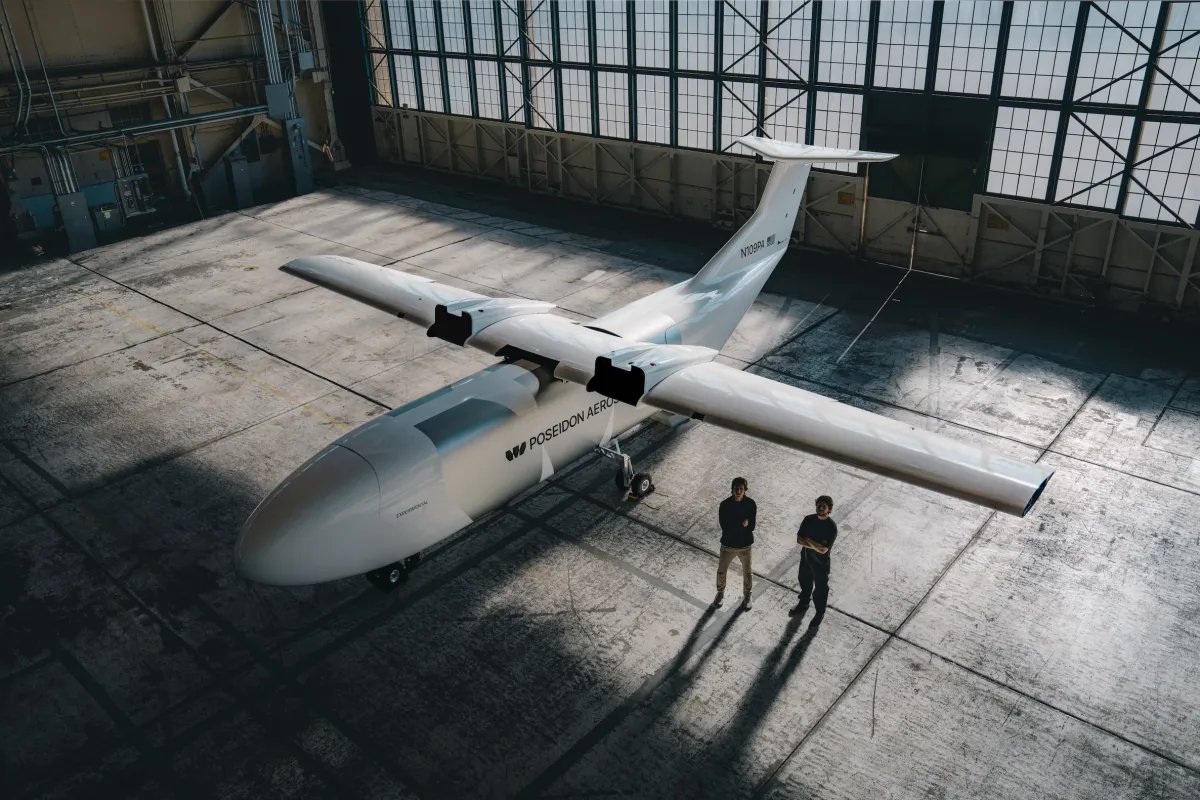
Silicon Valley is known for embracing the ethos of “move fast and break things.” Poseidon Aerospace’s co-founder and CEO David Zagaynov just wants to move things fast.
When he was working on logistics at Amazon in 2024, Zagaynov and his Poseidon co-founder Parker Tenney (who was at Lockheed Martin) found themselves repeatedly talking about the rise of advanced air mobility startups. They realized, Zagaynov told TechCrunch in an exclusive interview, that the focus was almost always on introducing flashy new technologies.
“Philosophically, we want to build the future of aerologistics,” Zagaynov said. “Not to be a hater, but I think a lot of people who start aerospace companies get nerd-sniped by very cool technology and then want to implement it into market. For us, we want to improve cargo.”
Poseidon Aerospace secured $11 million in seed funding last year in pursuit of this goal. Now, the company has closed a $60 million Series A ahead of the first test flight of its uncrewed cargo plane, Egret, expected by the end of this year.
The funding round was led by early-stage VC firm, TQ Ventures, and saw new investments from Hanwha Asset Management, G Squared and JAWS. Existing backers Starship Ventures, Draper Associates and Drover Ventures also invested.
True to Zagaynov’s allergy to getting “nerd-sniped” by promising-yet-currently-unworkable technologies, Poseidon is being built with a ruthless approach to lowering the cost of transporting cargo.
The startup is embracing autonomy and remote piloting, but it’s not bothering with the vertical takeoff and landing tech that is de rigueur among so many aviation startups. There’s also no hydrogen or electric powertrain to be found. Egret and its seaplane variant, Heron, are fixed-wing aircraft powered by regular old combustion engines.
“It’s really hard to beat the energy density of fuels of anything carbon-related,” Zagaynov said. “Can I make a really good box with wings to move things for super cheap? If you do that, then abstracting the tech away, we’re left with unmanned cargo like planes that are able to operate on a much lower cost curve, and have much higher utilization.”
Zagaynov said Poseidon is initially targeting the defense and regional commercial cargo spaces.
On the defense side, the startup is designing its aircraft so it can service “remote communities and underserved routes where air cargo service is constrained.” Poseidon wants its planes to handle locations with “degraded or nonexistent infrastructure,” because such capabilities make a nation’s logistics capabilities “harder to disrupt and more resilient to adversary denial.” The startup has noted in the past that China is already testing its own cargo drones.
On the commercial side, Zagaynov said Poseidon isn’t going to sell its planes. He wants Poseidon to operate its own regional air cargo business in order to compete with existing air cargo carriers for business from UPS, FedEx, and others.
Not requiring pilots for the aircraft also paves the way for Poseidon to operate at lower cost. “What’s very nice is, logistics is a commodity, and so if you sell a commodity and do it better, faster, cheaper, the demand is all yours,” he said.
The autonomy also makes Poseidon a potentially more flexible and dynamic carrier, according to Zagaynov. If demand spikes in a particular region, it will be easier for Poseidon to change its routes since it isn’t planning around a particular pool of pilots who live in one area or another. He also imagines a world where Poseidon’s aircraft can break the typical hub-and-spoke model of regional air cargo, and do more point-to-point trips, similar to how low-cost commercial airlines like Breeze or Avelo operate.
“When you have a pilot, they have a maximum amount of hours that they can fly. So if they fly a five-hour leg in one direction, they’re not able to come back home. And unless you have a relief [pilot], then you have to pay for them to spend the night somewhere,” he said. “The plane is like a very expensive asset that spends most of its life just waiting.”
Another benefit of not having a pilot, according to Zagaynov, is that it frees up the startup to change fundamental aspects of the design of its aircraft.
“Get rid of the cockpit; get rid of the life support systems,” he said. “You get to pull a ton of structured weight out, which then means that your ratio of payload to empty weight changes. Your engines can be much lighter, much more efficient, and so it’s like a virtuous cycle in the positive direction of just lighter, cheaper.”
To do all this, Poseidon has expanded into an old Navy hanger in Alameda, California, and is about to go on a hiring spree as it pushes towards that first flight. The startup last year developed and flew a quarter-scale version of its vehicle, which it called Seagull, but it needed more space to build its full-size, 50-foot-wingspan aircraft.
Poseidon’s also benefiting from a regulatory environment that is open to new ideas. The Federal Aviation Administration recently started a pilot program that makes it easier for startups working on electric vertical takeoff and landing aircraft to test their tech. Poseidon isn’t working in that space, but Zagaynov said his startup still benefits from the program, and that there’s a “path to commercialization that I don’t think existed like five to ten years ago.”
When you purchase through links in our articles, we may earn a small commission. This doesn’t affect our editorial independence.