dailynewsnblog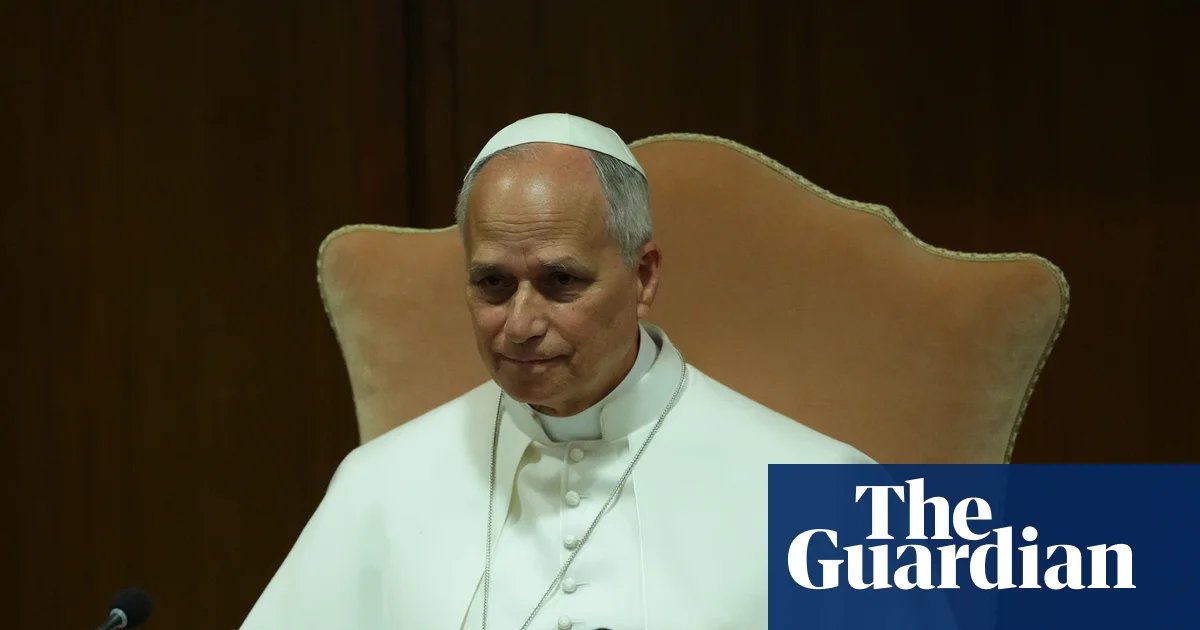
Pope Leo has denounced the “culture of power” driving the rapid rise of artificial intelligence while warning that the technology must be subject to the “most rigorous” ethical constraints as it infiltrates everything from work to war.
In his encyclical – the first major text on safeguarding humankind of his papacy – Leo, the first US-born pontiff, also apologised for the Catholic church’s long delay in condemning slavery, describing it as “a wound in Christian memory”, while warning about the “new forms of slavery” due to the digital economy.
In a break from tradition, Leo, who soon after being elected in May last year said he considered AI to be the biggest threat to humanity today, presented the document himself on Monday during an event at the Vatican. Among those in attendance was Christopher Olah, a co-founder of Anthropic, a US-based AI firm that has clashed with Donald Trump’s administration.
Encyclicals are one of the highest forms of teaching from a pope to the Catholic church’s 1.4 billion members, and typically outline his priorities while highlighting the major issues in society.
In the document, called Magnifica Humanitas (Magnificent Humanity), Leo referred to “a troubling revival of war as an instrument of international politics” while warning that AI was helping to facilitate the “normalisation of war”.
“For this reason, the development and use of AI in warfare must be subject to the most rigorous ethical constraints, to guarantee respect for human dignity and the sanctity of life and to avoid a race to develop such arms,” he wrote.
In a passage that appeared to be targeted at Silicon Valley, Leo warned that power over digital systems, infrastructure and data “does not rest with States but with major economic and technological actors”, and that when such power was concentrated “in the hands of the few” it tended to “become opaque and evade public oversight, increasing the risk of distorted forms of development that give rise to new dependencies, exclusions, manipulations and inequalities”.
The first US-born pope, whose family history includes enslaved people and slave owners, wrote on slavery: “It is impossible not to feel deep sorrow when contemplating the immense suffering and humiliation endured by so many in stark contrast to their immeasurable dignity as persons infinitely loved by the Lord … For this, in the name of the church, I sincerely ask for pardon.”
Past popes have apologised for Christians’ involvement in the transatlantic slave trade. But no pope has ever publicly acknowledged, much less apologised for, the role that past popes themselves played in giving European sovereigns explicit authority to subjugate and enslave “infidels”.