dailynewsnblog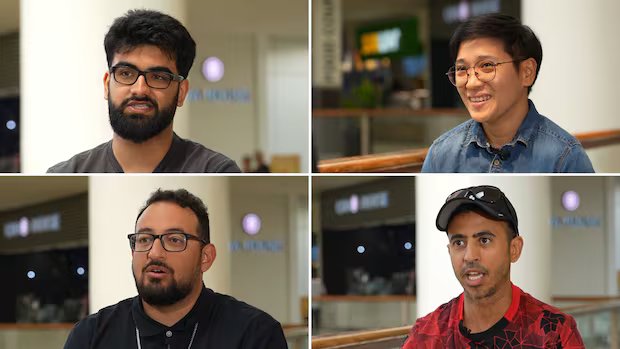
We heard empathy for separatists when CBC News set up at Calgary’s Sunridge Mall recently.
It came from people such as Mohamed Elhaouzi, a truck driver originally from Morocco. He moved to Calgary 18 years ago to work in oil and gas and retrained after being laid off in a downturn.
He has friends riding the booms and busts of Alberta’s economy, too.
“I do have some friends that they really support the idea of separation. I’m not gonna lie,” he said.
“A lot of them are losing their businesses. Some of them, they even lost their mortgage in their house. So it hurts you and your family, and now those ideas start coming as solutions.”
Elhaouzi said he personally thinks Alberta is stronger as part of a united Canada, pointing to other unity movements around the world such as efforts in the Maghreb region of North Africa.
“Hopefully, the solutions won’t be to separate. Hopefully, the politicians come with other ideas to bring Canada back as an economic power, at least at the same level it used to be 20, 30 years ago,” he said.
“Especially Alberta, because I came here in 2007, and it was a very good time.”

Alberta’s referendum is scheduled for Oct. 19 and will include a question on whether to move toward separation. Leading up to the vote, CBC News will be talking with many different communities and demographics, trying to understand why people feel the way they do.
What the polling says today
We set up at Sunridge Mall, in a culturally-diverse area of the city, hoping to speak with racialized or non-white Albertans, and we heard a mix of views, including from people excited about the idea of independence, those who support unity, and those who were not following the debate at all.
That diversity of opinion lines up with recent polling.
In CBC’s Road Ahead poll with Janet Brown Opinion Research, people who did not self-identify as being of white/European heritage were only slightly more likely to support remaining in Canada. The difference was two percentage points.
Feeling disconnected from the debate
Adam Elkestawi is a second generation immigrant and a psychologist, who was walking through the mall while on a lunch break.
He says a feeling of being displaced keeps him from getting involved in politics.
“English is my first language, but not by choice, right?” he said. “And so in that way, it doesn’t feel like the politics of today even has me in the conversation. It’s not very clear to me that I even have a seat at the table to have a valid opinion about whether we should separate from the rest of Canada or not.”
He purposefully stays apolitical and simply listens to friends who are passionate on either side.
Enthusiasm for a different path
On the other hand, Karen Berdin works in retail at the mall and is excited by the possibility of independence for Alberta. She moved to Canada three years ago after working in Singapore and Kuwait.

She says many of her neighbours in northeast Calgary are also excited. Some are nervous about speaking publicly, fearing it could affect jobs and immigration options, but others have gone together to participate in pro-independence rallies near the Whitehorn CTrain station and in Saddle Ridge.
“We have the oil and we’re not getting back the support,” she said, explaining her position. “I’m just being transparent here. We don’t get the support, and we’re giving too much tax to the capital.”
How personal politics could play a role
John Santos, a data analyst with Janet Brown Opinion Research, says he’s not surprised polling data suggests more non-white voters support unity. Many racialized Albertans live in cities and have higher rates of formal education, which also correlates with less support for separatism.
On the other hand, many of them may also be feeling stretched financially — they earn a significant income, but are also now finding it hard to pay their bills. He says statistically, that’s one of the biggest predictors of support for independence.
But beyond all that, Santos says racialized communities could be a demographic to watch for another reason.

He says polling suggests most Albertans have already made up their minds for or against separation.
But in many tight-knit ethnocultural communities, politics is personal. Local leaders or influencers can make a big difference in how people think or how motivated they are to vote.
“If there’s a pro-separatist or a very strong federalist community leader who has the connections to sort of deliver a block of voters, there could be some persuasion,” said Santos, whose family background is Filipino.
“A lot of folks, myself included, have been talking about this referendum as mostly a mobilization game. But I think the one place where people could be persuaded either way might actually be in these visible minority communities.”

What it would take to get out the vote
Gurnoor Grewal is a second-year university student hoping to get into law. He said he’s personally not in favour of separatism because it would deprive Alberta the support it currently gets from the federal government. And he says Albert needs more support, not less, because the surging cost of everything from clothing to body wash is making life difficult.
But he hasn’t heard much discussion yet about separatism within the Sikh community, at least not in his social circles.
“It’s like everyone here just focuses on one thing: waking up, going to work, making sure there’s food on the table for everyone, there’s a roof over our heads, clothes on our back.”
He said he doesn’t think many of the older generation will even vote, as they pay more attention to politics in India.
“We’d have to start talking to them, educating them about what’s going on … also providing examples of what’s going on back home to give them that sense of: OK, if that’s what was going on back home in India, the same thing’s going on here,” he said.
“That would give them a reason to tie into it and be more invested in the situation.”

Alberta referendum vote by mail applications are open. Are you signing up?