dailynewsnblog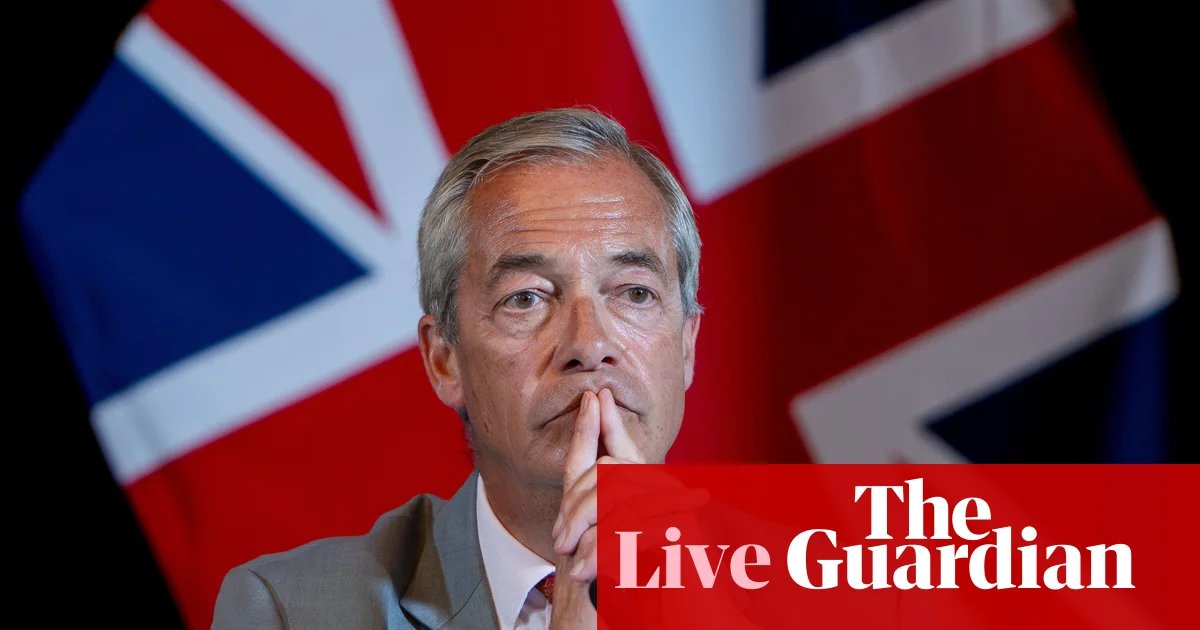
Polls open in Clacton, as research shows Farage has spent more than £10,000 in byelection fight against Count Binface
Good morning. In the media, August is known as the “silly season”. With parliament not sitting and many people on holiday, there is less proper news than normal, which means the nonsense stories get (even) more attention than usual. We are almost slap bang in the middle of the month, and today we’ve got a silly season classic in Clacton, where Nigel Farage, the Reform UK candidate, is fighting a byelection in which his main opponent is a joke candidate who dresses up as a dustbin.
Farage is not inherently silly. Few politicians have been more consequential over the past quarter of a century (because he did more than any other single individual to make the Brexit referendum happen); for most of the past 16 months his party has had a big poll lead and he has a very realistic chance of being the next PM; and even if he doesn’t become PM, his hard-right, anti-migrant, crass, crypto-friendly populism will have changed British politics significantly.
But this byelection is rather absurd because it is essentially pointless; all it will do is postpone, not resolve, the verdict on the financial sleaze allegations that Farage is facing (his alleged failure to properly declare donations, including a £5m gift from a cryptocurrency billionaire).
Here is Alexandra Topping’s story.
Voting started in Clacton about two hours ago.
Normally there is not much new to report on polling day. But Politico has published a good story by John Johnston and he reveals that Reform UK has spent more than £10,000 during the election campaign on social media adverts designed to help it see off the threat from Count Binface. Johnston says:
POLITICO analysis of the Reform UK leader’s digital campaign messages shows that Farage has run a twin-track strategy in the seaside seat as polls open Thursday. The two key themes of the digital air war have been painting Farage as a champion for local residents — as well as an insurgent leader harried by the “establishment” machine.
Farage and his party have spent more than £10,000 pushing those messages via ads on Meta’s platforms — which include Facebook and Instagram — in the campaign so far.
Johnston says Farage is the only candidate in the byelection using “paid Meta features to bolster his online campaign”. He says:
Almost £1,000 has been spent on videos of Farage urging local supporters to request the party deliver and install an “I’m with Nigel” garden sign. Meanwhile, around £500 went to ads asking voters to return their postal votes and “send a message to the establishment.”
The largest single sum — between £4,000-£4,500 — was spent on an almost five-minute campaign video in which Farage waxes lyrical about the connection he’s made with local constituents, while claiming his party’s surging success has resulted in the powers-that-be using “foul means” to hamper him.
“Rather than being judged by the political class and the mainstream media, I am going to let you, the voters in the Clacton constituency, make a decision,” he said. “I want you to be my judge, not the political elite.”
There is not much else happening in Westminster politics. But it is a big day for A-level students, with results out this morning. Tom Ambrose is covering that on a separate live blog.
As I explained last month, we are no longer going to have comments open below the line on this blog. If you want to contact me, please email politics.live@theguardian.com. You can use this to flag up corrections, comments for publication, questions or complaints. There is a longer post here about how we hope this will work.
Key events
Cooper says making social care reform happen relies on public accepting everyone, not just dementia families, will benefit
Yvette Cooper, the health secretary, has said the government will need to persuade the public that everyone will benefit from social care reform, and not just families where someone gets dementia.
She made the point in an interview with George Osborne on his Political Currency podcast.
Andy Burnham has said that social care reform will be a priority for his government. But, as he admitted in a speech last month, he faces an uphill task because multiple attempts to reform the system over the past few decades have ended in failure.
Asked why so many previous attempts to secure reform had failed, Cooper said a key factor was making people realise that this issue affected everyone.
She said:
I think the thing we always failed to do is have a sense that this actually affects everybody. Because as long as you think, ‘Well, it might not affect my family, it’s not something I really need to worry about or focus on,’ that’s a problem.
The fact that it has such a massive impact now on our NHS, the fact that if you go to A&E, you could be waiting a lot longer because of failings in social care, that you could be waiting longer to get a bed in hospital, because there are people who are in hospital who don’t have social care – it affects all of us.
So it’s not just those families who have a really acute pressure. It’s affecting all of us.
But we still have to make that argument so everybody needs to feel part of it.
And that, I think, is what Andy was trying to do – make this a bigger argument, not just something that affects some people.
As Rowena Mason reports, in the interview Cooper also criticised Keir Starmer’s leadership style, saying Labour had “not done government very well” in the last couple of years.
Osborne co-hosts the podcast with Ed Balls, Cooper’s husband. But Osborne conducted the interview on its own. It’s available here.
Nigel Farage has voted in Clacton.
Back to Clacton, and Sarah Elizabeth Cox, who lives in the constituency, has written a good article for the Guardian about what the byelection has been like for residents.
Here is an extract.
Nobody wanted a byelection. For the many people struggling here, there is little energy for another awful circus. Clacton didn’t need yet more focus on Farage, Farage, Farage, while the area’s entrenched and complex problems continue to be ignored by him and by the government …
Yet in shops, the gym, pubs, on the beach, in the street, at the park, at nursery drop off, I’ve not overheard a single conversation about any of it, unless it was between a reporter and a local. Not one. The leaflets started getting left in the hallway, unread. Few of my family or neighbours plan to vote. We’re angry at him, but we are also bored, and exhausted.
My prediction: It’ll be a low turnout, Farage way ahead, with Binface second but the only real winner. I’ll read about how we wasted the chance for a hilarious outcome, you idiots. You gullible, racist fools. You deserve him. And so on. Then it’ll die down again, briefly, and we can get back to what’s left of the summer, the lives Farage has no clue about or interest in and keep talking about the things that really matter in Clacton: litter, landlords, potholes, parking and whether there’ll be a second series of Secret Lives of Gypsy Wives.
Minister defends zero-hours contracts ban, as BCC claims official figures show it will be ‘hammer blow’ to firms
Yesterday the Department for Business, Innovation, Science and Trade published a document saying that the government’s plan to ban zero-hours contracts could cost businesses up to £3bn a year. The government has already legislated for the ban, but it has not yet decided some of the precise details about how this will work and the document was published as part of a consultation. DBIST says:
The government has taken this forward through 3 measures in the Employment Rights Act 2025, giving employees the right to:
-guaranteed hours, where the number of hours offered reflects the hours worked by a qualifying worker during a reference period
-reasonable notice of shifts and changes to these
-payment for shifts cancelled, curtailed or moved at short notice
These measures have not yet taken effect. This consultation seeks input on details of the new rights, which will be set out in regulations.
The consultation is only running for two weeks, which suggests ministers already have a fairly good idea about how they intend to proceed.
The document has revived all the arguments used against the government when the Employment Rights Act was being debated, and the £3bn figure has attracted a lot of attention. The Times has splashed on the story. But it is just a figure for the maximum possible cost. The government’s central estimate is £1.1bn, as this chart indicates.
The British Chambers of Commerce said the figures show “the proposed changes to zero hours contracts will be a further hammer blow for many firms struggling to keep their heads above water.”
Jacqui Smith, the skills minister, was doing interviews for the government this morning. Speaking to Sky News, she defended the government’s plans. She said:
We will look very carefully at how we implement the changes that we have put in place through our Employment Rights Act.
But just to remind people why we did that in the first place, that’s to make sure that when people get into work, that will be work that is fairly paid, where they’ve got security, where they can combine it with the responsibilities that they have in their families.”
I don’t think it’s fair for somebody to be on a contract where they literally don’t know whether or not they’re going to be working at all, and yet they’re bound by that contract. So, that’s what we want to bring an end to.
UK economic growth slows down as Iran war pushes up energy prices
Economic growth slowed in the second quarter of the year, as the disruption unleashed by the Iran war began to take its toll, official figures show. Heather Stewart has the story.
Polls open in Clacton, as research shows Farage has spent more than £10,000 in byelection fight against Count Binface
Good morning. In the media, August is known as the “silly season”. With parliament not sitting and many people on holiday, there is less proper news than normal, which means the nonsense stories get (even) more attention than usual. We are almost slap bang in the middle of the month, and today we’ve got a silly season classic in Clacton, where Nigel Farage, the Reform UK candidate, is fighting a byelection in which his main opponent is a joke candidate who dresses up as a dustbin.
Farage is not inherently silly. Few politicians have been more consequential over the past quarter of a century (because he did more than any other single individual to make the Brexit referendum happen); for most of the past 16 months his party has had a big poll lead and he has a very realistic chance of being the next PM; and even if he doesn’t become PM, his hard-right, anti-migrant, crass, crypto-friendly populism will have changed British politics significantly.
But this byelection is rather absurd because it is essentially pointless; all it will do is postpone, not resolve, the verdict on the financial sleaze allegations that Farage is facing (his alleged failure to properly declare donations, including a £5m gift from a cryptocurrency billionaire).
Here is Alexandra Topping’s story.
Voting started in Clacton about two hours ago.
Normally there is not much new to report on polling day. But Politico has published a good story by John Johnston and he reveals that Reform UK has spent more than £10,000 during the election campaign on social media adverts designed to help it see off the threat from Count Binface. Johnston says:
POLITICO analysis of the Reform UK leader’s digital campaign messages shows that Farage has run a twin-track strategy in the seaside seat as polls open Thursday. The two key themes of the digital air war have been painting Farage as a champion for local residents — as well as an insurgent leader harried by the “establishment” machine.
Farage and his party have spent more than £10,000 pushing those messages via ads on Meta’s platforms — which include Facebook and Instagram — in the campaign so far.
Johnston says Farage is the only candidate in the byelection using “paid Meta features to bolster his online campaign”. He says:
Almost £1,000 has been spent on videos of Farage urging local supporters to request the party deliver and install an “I’m with Nigel” garden sign. Meanwhile, around £500 went to ads asking voters to return their postal votes and “send a message to the establishment.”
The largest single sum — between £4,000-£4,500 — was spent on an almost five-minute campaign video in which Farage waxes lyrical about the connection he’s made with local constituents, while claiming his party’s surging success has resulted in the powers-that-be using “foul means” to hamper him.
“Rather than being judged by the political class and the mainstream media, I am going to let you, the voters in the Clacton constituency, make a decision,” he said. “I want you to be my judge, not the political elite.”
There is not much else happening in Westminster politics. But it is a big day for A-level students, with results out this morning. Tom Ambrose is covering that on a separate live blog.
As I explained last month, we are no longer going to have comments open below the line on this blog. If you want to contact me, please email politics.live@theguardian.com. You can use this to flag up corrections, comments for publication, questions or complaints. There is a longer post here about how we hope this will work.