dailynewsnblog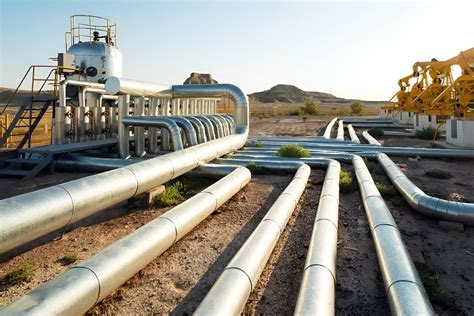

Sometimes I could swear I am living in the world that George Orwell so presciently predicted in his novel Nineteen Eighty-Four. In that world, history was constantly being rewritten, so that a country that had once been an ally but now an enemy meant that it had always been an enemy. Indeed, entire departments were devoted to constant revisioning of the ‘facts’.
Not so long ago, I seem to remember that the MOU signed between the feds and Alberta on constructing another pipeline was contingent on two things: finding the required private investment in the project and the development of the Pathways Carbon Capture project, also to be funded by the private sector. Apparently, that was all part of a false memory.
This is the state of things.
The Alberta government’s proposal estimates the pipeline would cost $35.2 to $43.7 billion, with the federal and Alberta governments remaining majority owners in the project. That’s despite an earlier promise from Prime Minister Mark Carney — enshrined in his government’s memorandum of understanding with Alberta — that the pipeline would be privately financed.
However, the private sector, it turns out, had little interest in investing in what will ultimately be a stranded asset. Chris Severson Baker, executive director of the Pembina Institute, makes this observation:
“There is simply no private company that is interested in taking this level of risk. They don’t see a future in that scale of oilsands production in Canada,” Severson-Baker said.
That’s because countries in Asia, where Smith wants the oil to end up, are quickly transitioning to electric vehicles and green energy, reducing their future demand for climate-warming oil.
In a scenario where countries around the world continue to lower their emissions and follow all the climate policies they have implemented or proposed until now, the IEA now says that oil demand will peak around 2030 before gradually declining. Ergo, the rewriting of history.
Andrew Coyne offers this:
There is, of course, the famous agreement between the Prime Minister and the Premier of Alberta to allow a “private sector constructed and financed” pipeline to carry heavy oil to the north coast of British Columbia, now revised as an agreement to build an almost entirely government-financed pipeline to the south coast of British Columbia.
[Cost: an estimated $35.2-billion to $43.7-billion. And by estimated, I mean “probably four times that amount,” when all the bills are paid.]
How did we get here: from governments doing everything they can to stop pipelines from being built, to governments doing everything they can to ensure they are built?
The answer lies in the canniness of the private sector, which was watching closely, ready to play the system as it always does. Quite aware of the politics at work (Trump’s trade madness and Alberta’s minority threatening separation), that sector bided its time.
Once potential private sponsors figured out that the pipeline must be built, no matter what, they started visibly trying to game the two governments, claiming the terms of the agreement, namely the increased industrial carbon price and Pathways carbon-capture project, made it too costly for them to participate.
Possibly they hoped they would get the subsidy. Instead, the two governments elected to build it themselves, via the federally owned Trans Mountain Corp. – legacy of a previous pipeline bailout – and the Alberta Petroleum Marketing Commission, thus calling both the companies’ bluff and their own at the same time.
And the carbon capture project? Well, I misremembered again; it will be built, not by the private sector, but mostly by us, the hapless taxpayers.
As I get older, like most people I fear cognitive decline, even dementia. The fact that I now have so many ‘false’ memories makes me wonder how much longer I shall be capable of any semblance of clear thinking.