dailynewsnblog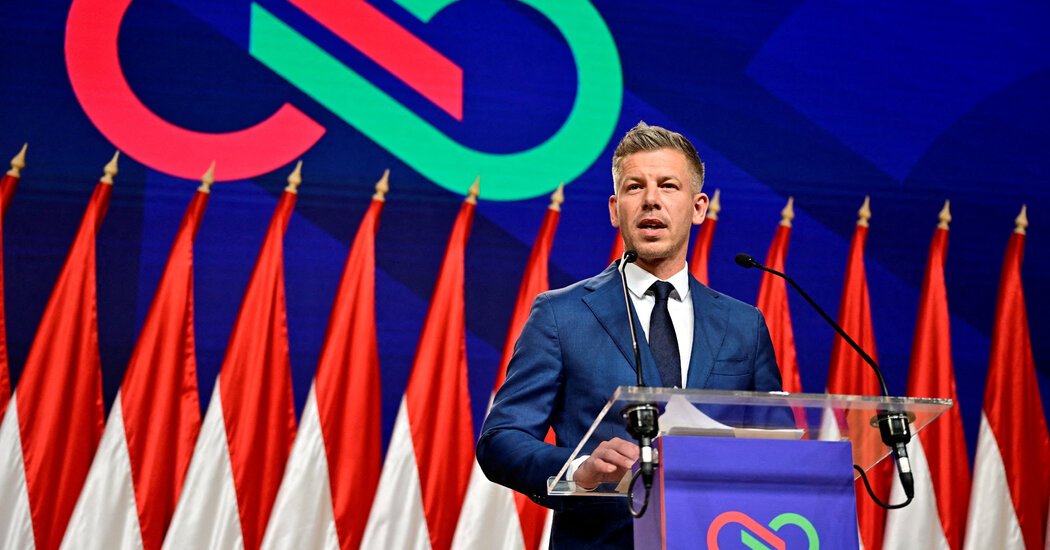
Peter Magyar, the former opposition leader, prepared to be sworn in as prime minister of Hungary on Saturday, after winning an uphill election campaign to unseat Viktor Orban, whose 16 years in power made him a global icon of nationalist right-wing politics.
Mr. Magyar, a 45-year-old lawyer, has vowed to reverse the democratic backsliding and embedded corruption that ultimately turned huge numbers of voters away from Mr. Orban’s Fidesz party and handed the opposition Tisza movement a landslide victory less than a month ago.
In April, Tisza, which Mr. Magyar took over in 2024 after souring on Fidesz and breaking from it, secured an overwhelming 141 seats in the national assembly. Fidesz managed to keep control of only 52 seats, despite extensive gerrymandering, near-total control of the news media and a full-throated endorsement from President Trump and his top officials.
The scale of Mr. Magyar’s victory has left Fidesz in pell-mell retreat, and has the potential to give him a powerful hand as he faces the monumental task of dismantling what Mr. Orban called “illiberal democracy” and reviving Hungary’s anemic economy.
But Mr. Magyar will have to prove his ability to lead the country. Many in his parliamentary faction are political novices; so is most of his cabinet.
His job could be harder if Fidesz-appointed dignitaries, including the president, the chief prosecutor, and heads of various judicial, regulatory, and oversight authorities remain at their post. Mr. Magyar instructed them to resign by the end of May
Many former Fidesz loyalists are already distancing themselves from the losing party.
Mr. Magyar has also pledged to hold corrupt businessmen and politicians accountable and to recover stolen funds for the state. That could, at least temporarily, help stabilize the economy.
A key test will be if he can reclaim E.U. funding withheld from the previous government, more than $12 billion of which is set to expire in August.
Voters have faith in him, according to a new poll by Median, an independent pollster that predicted the election result accurately. Seventy-two percent of Hungarians now think Mr. Magyar is suitable to lead the country.
Endre Hann, Median’s founder and managing director, said belief in Mr. Magyar helped overturn the rule of Mr. Orban, as “society gradually came to realize that Fidesz could be defeated.”
This belief persisted after the election. According to the same poll, nearly two-thirds of Hungarians think the country is headed in the right direction, twice the level recorded in November. But the Tisza government will have to “take many concrete steps to meet the high expectations,” Mr. Hann added.
Mr. Magyar will have to tread carefully. He won by pitching himself as a conservative to win over disaffected Fidesz voters. Liberal and left-wing voters disliked many of his views on immigration and L.G.B.T.Q. issues but supported him because he offered the first viable alternative to Mr. Orban in years.
Some expectations for a real change of direction for Hungary, both within the country and abroad, may prove overblown.
Mr. Magyar pledged to maintain border security, even in the face of E.U. asylum policies, while preserving good relations with the bloc. He said he would not veto the $106 billion loan package for Ukraine, though he plans to opt out of the financing.
Progressives hope he will abide by a recent ruling by the European Court of Justice and repeal a 2021 “child protection law” that connected homosexuality with pedophilia and restricted gay rights.
But doing so would risk alienating his right-wing voters, playing into Fidesz narratives that he is a closet liberal and a puppet of the European Union.
Civil organizations, for now, simply hope that Mr. Magyar will see them as partners, said Emese Pasztor, a lawyer and project manager at Budapest-based human rights organization Tasz. She said Tisza’s election victory felt like a “breath of fresh air.”
Ms. Pasztor hoped the new administration would be more receptive to criticism and willing to engage in discussion. “If governance would be transparent, and the public had better access to information,” that alone would be a success, she added.
Budapest’s mayor, Gergely Karacsony, who was vilified by the Fidesz government, is hoping that the relationship between the capital and the state will improve.
For years, the mayor accused Mr. Orban’s government, which drew most of its support from outside the relatively liberal capital, of withholding funding and weaponizing the tax system against the city.
“We’ve lost the last six years locked in a constant financial and political battle with the government,” Mr. Karacsony said in an interview. A lot of the city’s development and investment in infrastructure, which said were in very poor condition, had been put on hold.
“We want to honor 16 years of struggle and usher in a new era in Hungary,” Mr. Karacsony said. “We want to remember the sins of the Orban government to make sure that this kind of exclusionary, hate-driven political culture never takes root again.”