dailynewsnblog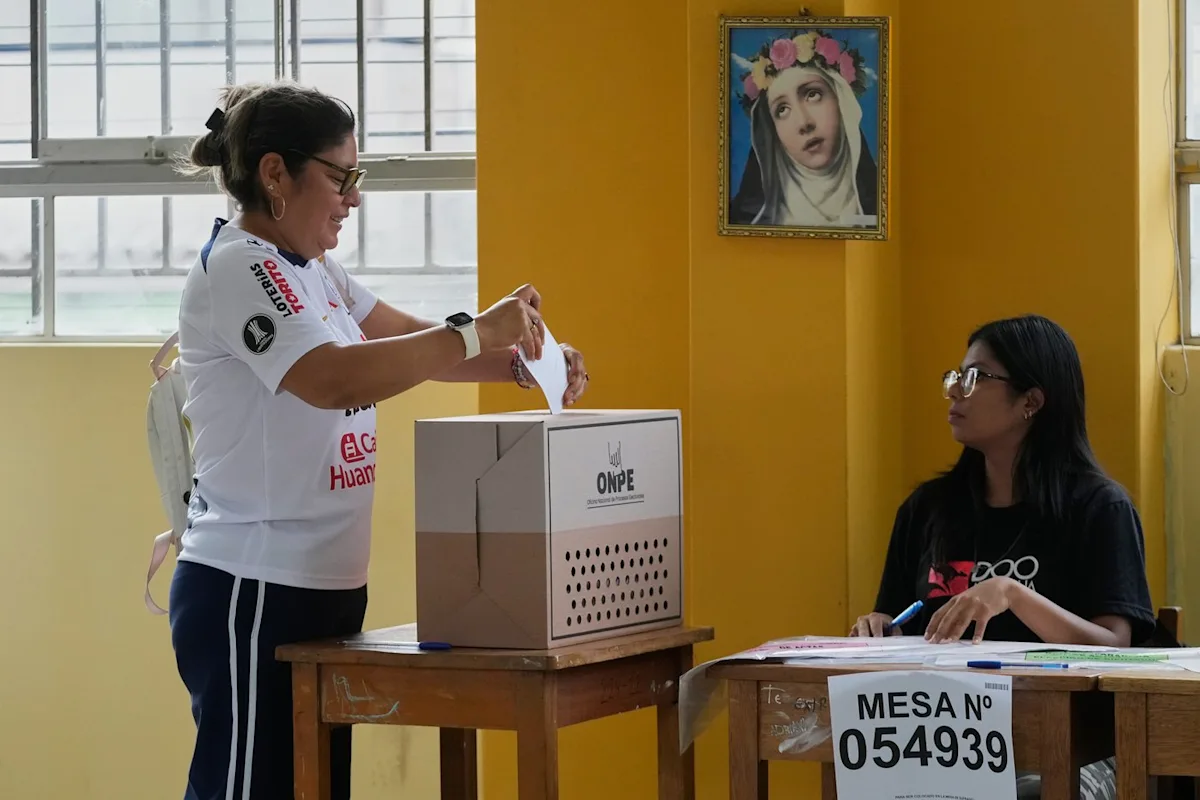
LIMA, Peru (AP) — Peruvians will vote in a presidential runoff in two months after none of the 35 candidates secured an outright victory in the weekend election, though by Tuesday afternoon, the two contenders in the June vote were still unconfirmed.
Electoral authorities continued to count the ballots for a third straight day as authorities were forced to extend voting into Monday after ballots had not been delivered in time to polling stations.
With 77% of ballots tallied, official results on Tuesday showed Keiko Fujimori, the conservative daughter of a disgraced former president, leading the count with 16.86% of the votes, while Rafael López Aliaga, the ultraconservative former mayor of Peru’s capital, Lima, earned 12.66%.
Jorge Nieto Montesinos was close in the third place, with 11.74% of the vote, maintaining a narrow chance of making it into the June 7 runoff.
The sluggish pace of the count mirrored Peru’s 2021 presidential election, a contest where final tallies weren’t completed until five days after polls closed.
A presidential candidate needs more than 50% of votes to win outright. The two candidates with the most votes in a first round advance to the runoff. The winner will be Peru’s ninth president in just 10 years.
A European Union election observation mission said Tuesday it didn’t see “sufficient grounds” supporting claims of fraud, following allegations by López Aliaga, who described the election — without providing evidence — as a “fraud of a kind unique in the world.”
The election has been mired with logistical issues that left thousands in the country and abroad unable to cast ballots. That prompted authorities to allow more than 52,000 residents of Lima to vote on Monday. The extension, announced after vote counting had begun Sunday evening, also covered Peruvians registered to vote in Orlando, Florida, and Paterson, New Jersey.
“I’m fed up,” Iris Valle, 56, said as she waited to vote on Monday at a public school in Lima, the country’s capital. She feared that her employer would cut her pay for not showing up early, because she had to fulfill her voting obligation.
Voting is mandatory for Peruvians from the ages of 18 to 70. Failure to vote comes with a fine of up to $32.
The election took place amid a surge in violent crime and corruption that has fueled widespread discontent among voters, who largely view candidates as dishonest and unprepared for the presidency.
Peru’s economy, however, has defied both the crime surge and the political instability stemming from a revolving door of presidents, having had three since last October alone. Aided by its status as one of the world’s largest copper producers, the country posted more than 3% growth in 2024 and 2025, though that’s lower than the 5%-6% annual growth it saw in the 2000s.