dailynewsnblog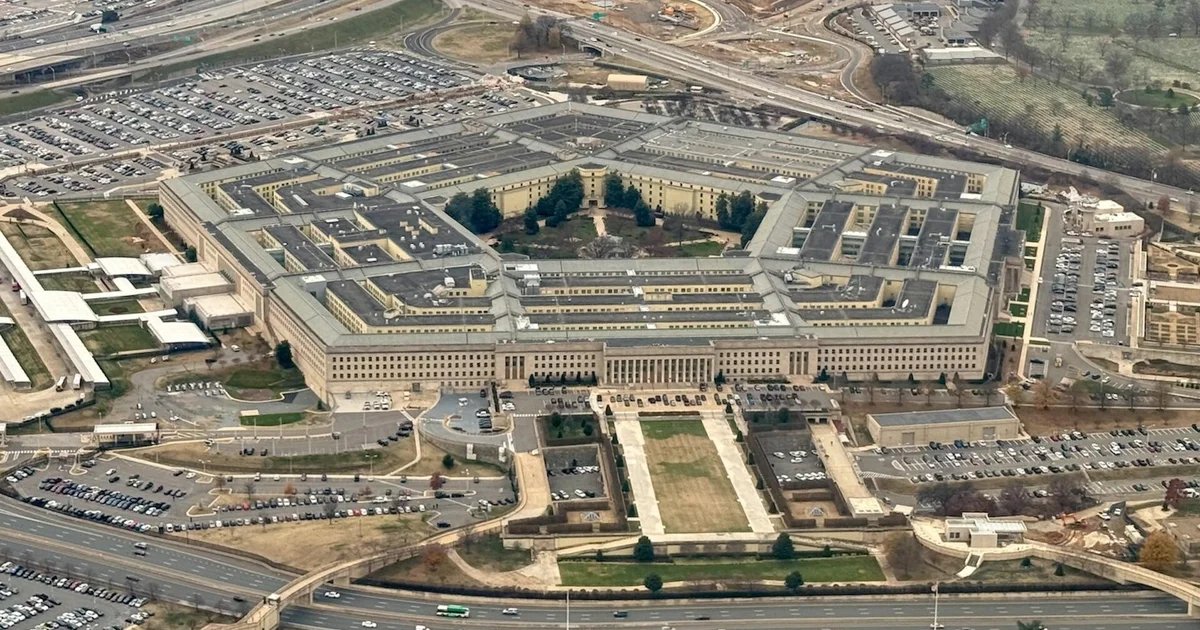
Washington — The Pentagon is asking Congress for broad new authority to withhold unclassified records from the public, a proposal that transparency advocates say could significantly reduce the public’s ability to scrutinize the nation’s largest federal agency and understand how billions of taxpayer dollars are spent.
The legislative proposal seeks to create a new section of federal law allowing the defense secretary to exempt certain “controlled unclassified information,” or CUI, from disclosure under the Freedom of Information Act if the U.S. military determines the records concern national defense vulnerabilities and concludes that the harm from disclosure outweighs the public interest.
Brett Max Kaufman, senior counsel with American Civil Liberties Union’s Center for Democracy, told CBS News in an email that for decades, there has been “a massive overclassification problem throughout the executive branch.”
“The last thing the government needs is a new power to withhold information under the FOIA,” Kaufman wrote.
Controlled Unclassified Information was established under an executive order during the Obama administration to replace dozens of inconsistent “For Official Use Only” markings that agencies had developed over decades.
The CUI system was designed to standardize how agencies safeguard sensitive but unclassified information. Importantly, CUI itself does not create authority to withhold records from the public.
The National Archives, which oversees the government’s CUI program, has repeatedly emphasized that designation as CUI does not affect whether records may be released under the Freedom of Information Act. Agencies like the Defense Department must still rely on one of FOIA’s nine statutory exemptions to prevent the public disclosure of documents.
The Pentagon proposal would fundamentally change that relationship. Instead of treating CUI as an administrative marking, it would allow the Defense Department to use it as one of the central predicates for withholding records altogether.
Greg Williams, the director of the Center for Defense Information at the D.C. watchdog Project on Government Oversight, called the proposal “a significant concern” in an interview with CBS News. He said it would make receiving information through the FOIA process “a lot more difficult.”
“Controlled unclassified information is already very problematic because it’s not very carefully defined and it’s used to protect lots of different kinds of information,” Williams said, adding that when he was a contractor, the general guidance was, “when in doubt, mark it as CUI.”
The Freedom of Information Act, enacted in 1966, was designed to reverse the presumption of government secrecy by requiring federal agencies to disclose records unless they fall within one of the nine narrowly drawn exemptions. Congress has repeatedly amended the law to reinforce that principle, most recently through the FOIA Improvement Act of 2026, which strengthened the presumption of openness by requiring agencies to demonstrate a concrete — not speculative — foreseeable harm before withholding many records.
The Pentagon’s proposal, which was sent to Congress in late June for potential inclusion in legislation this year, comes amid a broader shift in how it has managed information under Defense Secretary Pete Hegseth. Over the past year, the department has imposed new restrictions on reporters’ access and movement inside the Pentagon, requiring official escorts for areas that credentialed journalists had long accessed on their own.
The New York Times has filed lawsuits challenging the Pentagon policy that required reporters accessing the Pentagon to sign an agreement that could restrict information-seeking and the Pentagon’s journalist-escort policy. Federal judges ruled in favor of the New York Times, citing the First Amendment, but the Pentagon has appealed in both cases.
Pentagon officials describe the legislative proposal as an effort to better protect sensitive military information from foreign adversaries. The measure would mark a notable expansion of the department’s ability to keep unclassified records from public view. It would also allow the Defense Department to block state and local governments from releasing covered records under their own open records laws, extending the Pentagon’s control over information even after it leaves federal custody.
In a statement, acting Pentagon press secretary Joe Valdez said, “The legislative proposal seeks a statutory FOIA exemption for certain CUI that implicates national security interests to provide more uniform protection and more consistent withholding decisions for such information.”
The Pentagon’s proposal does not explain why existing FOIA exemptions are insufficient and claims there’s a gap in existing law to protect sensitive documents.
But much of the information the Pentagon says it is trying to protect is already shielded under existing law. Export-controlled technologies, protected critical infrastructure information, certain nuclear records, procurement-sensitive data and intelligence-related information are all covered by statutes or regulations that agencies already rely on to withhold records under FOIA.
Congress receives several legislative proposals each year after the Office of Management and Budget submits a budget request, but it’s unclear if this one will be included, since both the House and the Senate have already done their markups of the annual defense policy bill.
This is not the first time the Pentagon has sought language to adjust FOIA. For instance, a draft version of the annual defense policy bill in 2017 included language to withhold information “on military tactics, techniques, and procedures, and of military rules of engagements.” It prompted a coalition of oversight organizations to write to Congress opposing it.
Inside Defense first reported on the latest legislative proposal. If adopted, the legislation would become part of a FOIA system that has long suffered from chronic delays. The Defense Department’s backlog of FOIA requests has been growing. The most recent annual Pentagon FOIA report said that at the end of the 2025 fiscal year, there were 30,476 backlogged requests, a 42% increase from 2024.
The growing backlog reflects a FOIA system that has struggled to keep pace with the size and complexity of the modern federal government. Although FOIA requires agencies to respond within 20 working days in most cases, requests can remain pending for months or years, forcing petitioners to enter into costly litigation to compel agencies to act. By the time records are ultimately released, the public debate has often passed, undermining FOIA’s central purpose of providing timely public oversight of government decision-making.
Williams told CBS News the proposal on its face is unnecessary because there’s already a system for classifying sensitive national security information.
“Ask yourself, you know, if you’re going to mark something as ‘controlled unclassified information’ for national security concerns, why wouldn’t you classify it?” Williams said.