dailynewsnblog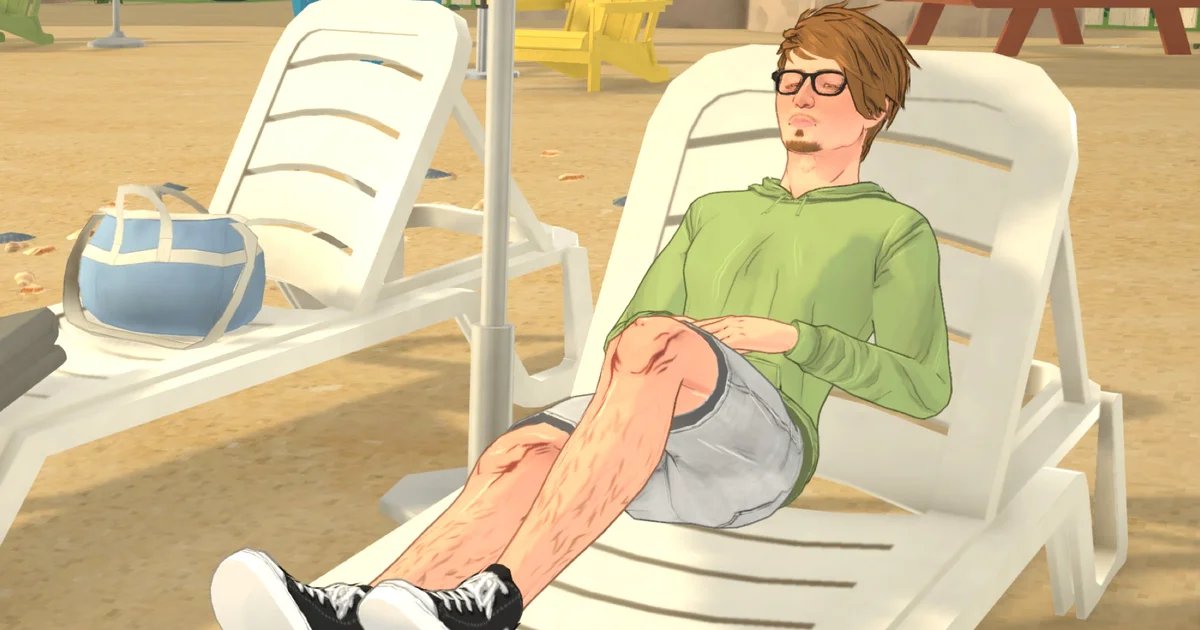
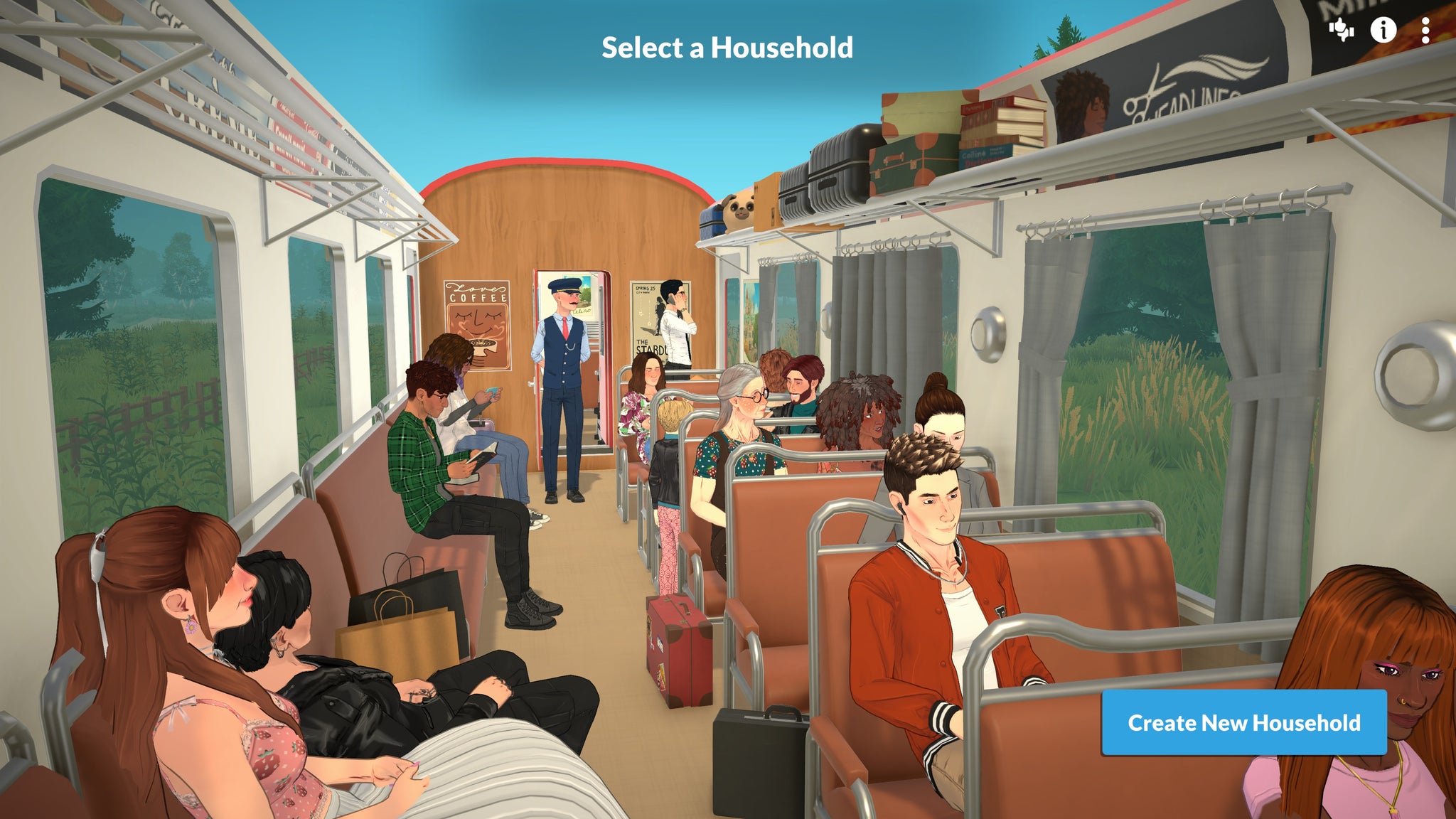
Paralives gets off to a lovely start. We fade up to see the camera tracking a moving train as it winds serenely across a bucolic landscape. Slowly it moves in for an aerial view and the roof pops off, revealing the guard inside. And this is your movement tutorial; you’ll guide the little fella into the next carriage, where a cluster of passengers leisurely watch the world go by. One handsome man slumps blissfully against his girlfriend; a group of friends laugh together across the aisle. Another man gazes dreamily into space, nodding along to something on his headphones, while a dad nearby keeps a watchful eye on his son. This household selection screen – which tells you so much about each group’s dynamic just by looking at them – feels emblematic of a Sims-like full of warm little touches and distinctive ideas.
Paralives, of course, is highly anticipated and then some. It first popped onto my radar years ago, when someone shared an animated gif of some extremely impressive building tools. And since then, equally dazzled life sim fans have contributed over $2.5m toward its development. All of which brings us to the present, and Paralives’ long-awaited early access release. And while it arrives in a state that feels very early access – just last night I watched my character successfully level up 2,911 times during a single work shift – it’s an enormously encouraging start all the same.
I might be getting ahead of myself, though. At its core, Paralives is unmistakably riffing on The Sims. You start by creating a household – unsuspecting slaves to your omniscient storytelling whims – either selecting from one of those pre-made offering, or diving right into its robust character creator. It’s not quite as intuitive as The Sims 4’s Create-a-Sim, but it’s close – you manipulate a representation of your character’s body parts rather than their body parts directly (I assume there’s some EA patent at work here). And it’s capable of producing a wide variety of Parafolk as you tweak height, shape, musculature, facial features, hair, and so on – before styling them up with accessories, layered clothing, to create different outfits for different occasions.
From there, it’s time to choose a house, again either starting from scratch or purchasing one of the many characterful pre-built homes on Paralives’ map. I should say I’ve only dabbled a bit with Paralives’ building tools so far but I’m already impressed; its gridless system is enormously flexible, and it includes other welcome tricks like curved walls. Furthermore, many objects features bespoke, and often surprising, customisation options. Grain can be adjusted independently of colour on wood floors, for instance, and you can even tweak the mount thickness in picture frames. Furniture, meanwhile, can often be resized on an individual axis while all the trimmings adjust to fit, turning a single bed into a double one or a seat into a sofa.
And once your semi-autonomous creations finally have a place to call home, Paralives quickly shifts toward the kind of social storytelling sandbox that Sims fans have been exerting their ruthless fancies in for over a quarter of a century. You’ll shape your digital charges’ relationships, make money through rabbit-hole jobs, mold their personalities by expanding their skills, and, of course, look after their everyday needs. But it’s the way developer Paralives Studio builds on these familiar foundations that makes the game, even in early access, feel worthy of further investigation. And that (as unhelpfully vague as this is) starts with a vibe.
Even in its quieter moments, The Sims feels like it’s perpetually teetering on the brink of chaos; its systems, its exaggerated speed, and even its cartoonishly expressive animations, maximising the sense of soap-opera-style dramatics. It’s breakneck, it’s slapstick, and I wouldn’t have it any other way. But Paralives takes a different tack; opting for a sort of cosy-game-adjacent level of lower-stress, lower-stakes tranquility. It’s an ambience reflected in its aesthetic, as Paralives Studio adopts a muted, sketchbook-watercolour artstyle that’s just inherently more chilled; it’s in the laidback soundtrack, and in the design of the relatively expansive open(ish)-world map too.
Melino, as this sole early access map is known, is a picturesque, pleasingly vertiginous thing. At its heart lies the old town, where characterful buildings cluster around cramped cobblestone alleyways, all leading to a central plaza of string lights and market stalls. Quaint cafes, boutique shops, tumbledown ruins, even a palatial museum, crowd the surrounding border. Further afield, hills sweep down toward a sandy beach with postcard-perfect ocean views, and up into rugged hills on the other. Trainlines crisscross over tarmac, cutting through more modern, urban quarters. And further out still lies forest, farmland, and more. The world is big enough, and the pace slow enough, that getting around on foot requires a decent chunk of time. And while there’s talk of bikes to come, bus stops currently provide a nicely themed bit of fast-travel.
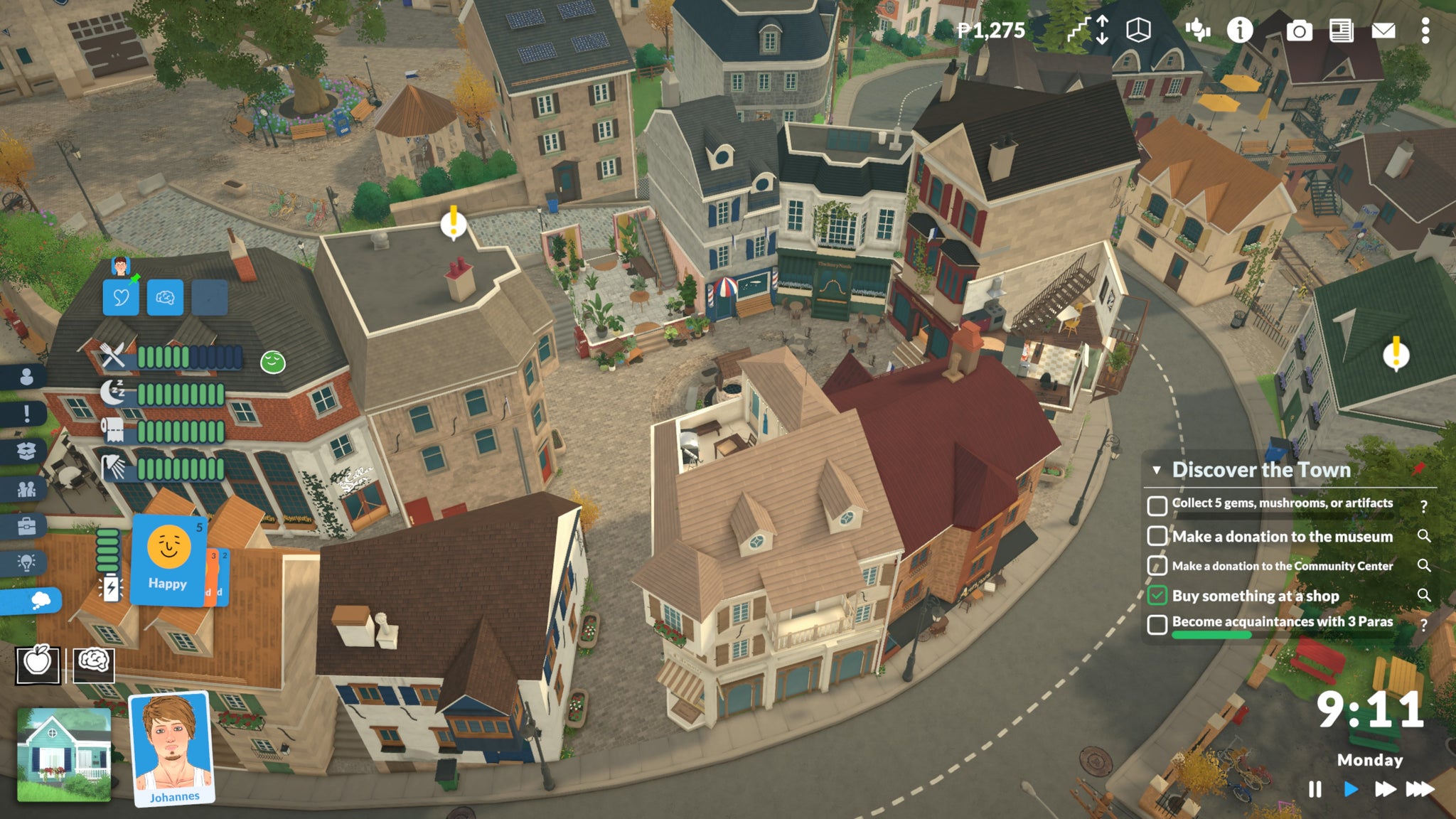
It’s a lovely bit of design, then, full of lived-in character. And even the interiors have distinctive personalities of their own. Over in the museum, you’ll find an enormous gift shop, tables piled high with local mementoes you can browse and buy. Downtown, you can watch the world go by in cosy coffee shops with comfy couch windows seats; you can spend a few hours in a fancy restaurant with a huge basement cocktail bar. There are boutique stores selling vintage clothes; a gym, and more. And the pre-build homes all feel unique too. My Paraperson lives in a cramped split-level apartment overlooking the plaza; its rustic balcony, meanwhile, offering distant beach views (currently, only one lot interior and household residence can be loaded in at the same time, so it’s not an entirely seamless open-world – but interiors are at least populated in situ, rather than whisking you away to a loading screen). All this makes for an Instagram-ready rendition of life that feels about as far removed from the chaos of the Sims as you can get.
Which isn’t to say it’s devoid of momentum. Locals take to the streets and go about their daily routines, and their character designs – while perhaps leaning a little too consistently toward model-perfect beautiful – are distinctive enough that you’ll soon recognise passing faces, lending the world a cosy neighbourhood vibe. And there’s a rotating calendar of events that make spaces feel functional. The plaza holds treasure hunts and market days, and if you hang around long enough at the weekend, up goes an open-air movie screen. Parafolk assemble high in the mountains for evening yoga retreats, or participate in regularly scheduled activities on the hiking trails. And there are optional daily neighbourhood requests pinned to noticeboards too.
Paralives’ languid pace also carries across to its familiar life sim beats. That’s perhaps most notable in its more measured relationship system. Unlike The Sims, you can’t just, say, speedrun a bed-and-wedding by furious spamming the flirt option. Instead, relationship development is built around conversation opportunities that only arise intermittently during character interactions. And only a few possible dialogue options, sometimes requiring the equivalent of a skillcheck, are presented at a time. These are determined by a complex interplay of character perks, boons, and bonuses stemming from things like skills, mood, needs, recent experiences, and personality (in turn determined early on by assigning points to physique, mind, creativity, and charisma, as well as a chosen social perk, talent, and “vibe”. And these elements only grow more complex as you start levelling up different aspects of a Parafolk’s life, unlocking yet more perks and modifiers from there.
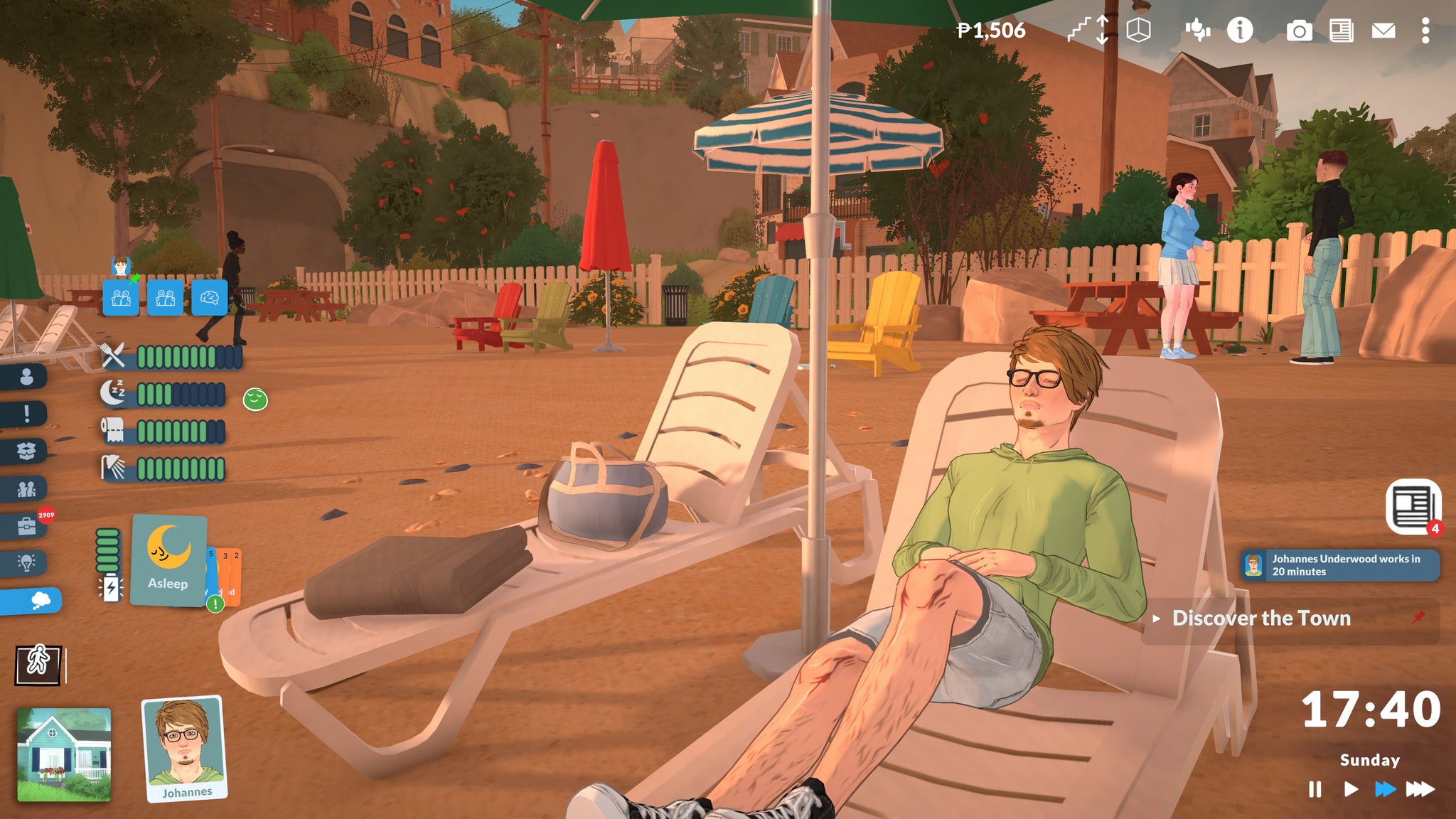
It feels like there’s a lot going on under the hood in Paralives (some personality types, for instance, even have their own unique needs bars, such as an Energy Surplus for energetic Parafolk), to the point I’ve sometimes found it a little hard to wrap my head around and keep track of things. But, even so, the upshot is it feels like your choices have more weight and meaning, given the greater considerations required to shape your characters into the people you want them to be. Will this slower, more deliberate pace be to everyone’s taste? Probably not, but it makes for a game where situations can percolate, where everything has texture, and that, in turns, feels a little more involved.
I should, however, probably reiterate my earlier warning: Paralives – by its developer’s own admission – still has a long road ahead as it enters early access. And you should absolutely expect many, many bugs and glitches. The camera is often wonky; pop-up windows routinely get stuck over the action, or Parafolk become caught in an infinite loop and cease to function. Expect animation weirdness too; Parafolk don’t look at each during conversations, usually preferring to stand so close their face is embedded in their target’s bosom or so far apart it barely constitutes a social interaction. And on one memorable occasion, I was forced to watch my character set fire to his apartment while making a jam sandwich, then slowly burn to death while the fire brigade spammed my screen with endless ‘we’re on our ways’.
But rough edges are to be expected in early access, and this remains an incredibly promising start: a characterful (certainly more so than Krafton’s bland, AI-riddled early access effort, InZoi) take on the Sims-like formula that has fresh ideas, and a mood and pace all of its own. It’s a different beast to The Sims, then – a counterpoint to the chaos I still very much adore – so perhaps best to think of it less as a replacement for EA’s life sim juggernaut and more as a complementary addition to the genre’s pantheon. Admittedly, I’ve not really played enough to get a clear sense of how much there actually is to do right now and how long the early access nicely is likely to last. But there is a robust roadmap on the way and based on this initial taste, I’m excited to see where we go from here.