dailynewsnblog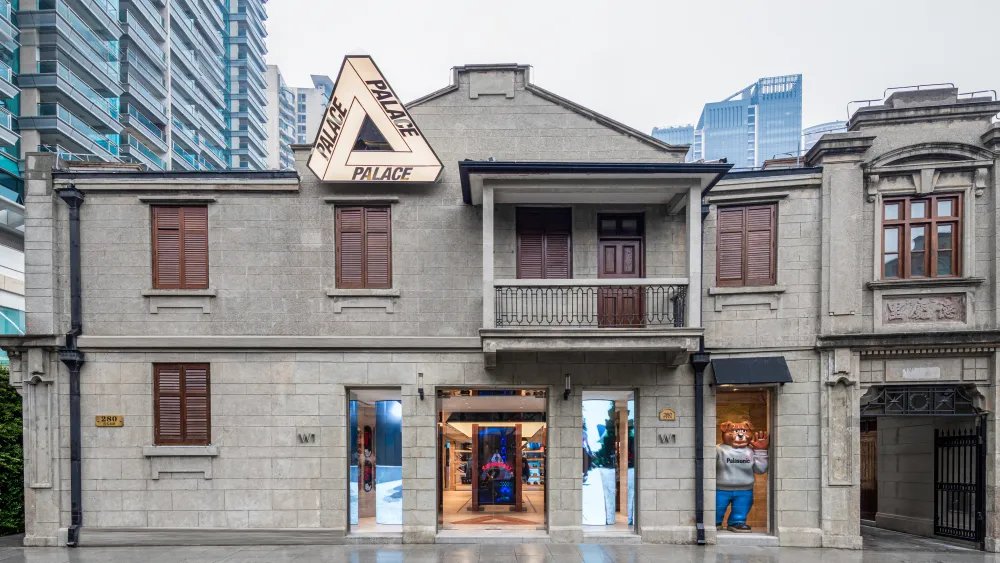
LONDON — Cult streetwear brand Palace is deepening its push into Greater China with its first standalone store in mainland China.
It is located in Shanghai’s historical Shikumen compound Zhangyuan, which in recent years has undergone a major revitalization effort, hosting pop-ups for top luxury and lifestyle players.
Opening to the public on Friday via a partnership with the Hong Kong-based fashion retailer I.T., the store is designed as a tribute to Yuyuan Garden, one of the city’s best-known historic sites, reinterpreting traditional garden elements such as ponds, pavilions, and meandering walkways through a contemporary lens.
Zhangyuan’s historic facade has been preserved, with Palace’s presence signaled through a three-dimensional mirrored logo, angled downward above the entrance.

Palace store in Shanghai
joe
Inside, LED columns frame the entrance and draw shoppers into the space, culminating in a pavilion-inspired structure at the center of the store that echoes classical garden architecture.
To mark the launch, Palace is releasing a Shanghai-exclusive drop, including a biker jacket, sports jersey, hoodies, T-shirts, and accessories adorned with “Shang-Hi” branding and a waving hand motif, as well as a collaboration with Lai Lai Xiao Long, a soup dumplings specialist that got a Bib Gourmand recognition in this year’s Michelin guide.
The Shanghai opening follows Palace’s first Hong Kong store in Causeway Bay, which took cues from Tai Kwun and the city’s neon legacy.
That location’s design language — mixing local history, British roots and Palace’s skate DNA — signaled the brand’s intent to anchor itself in Asia’s key capitals, complementing distribution in Japan, South Korea, and on Tmall and WeChat in China.

Palace store in Shanghai
joe
The physical rollout also aligns with Palace’s expanding direct-to-business and territorial distribution deals.
According to the latest Companies House filings, while overall turnover rose a modest 3 percent for the year ended Jan. 31, 2025, the brand’s direct-to-business sales jumped 92 percent, driven primarily by its South Korean distribution agreement and underscoring the strategic importance of Asia for future growth.