dailynewsnblog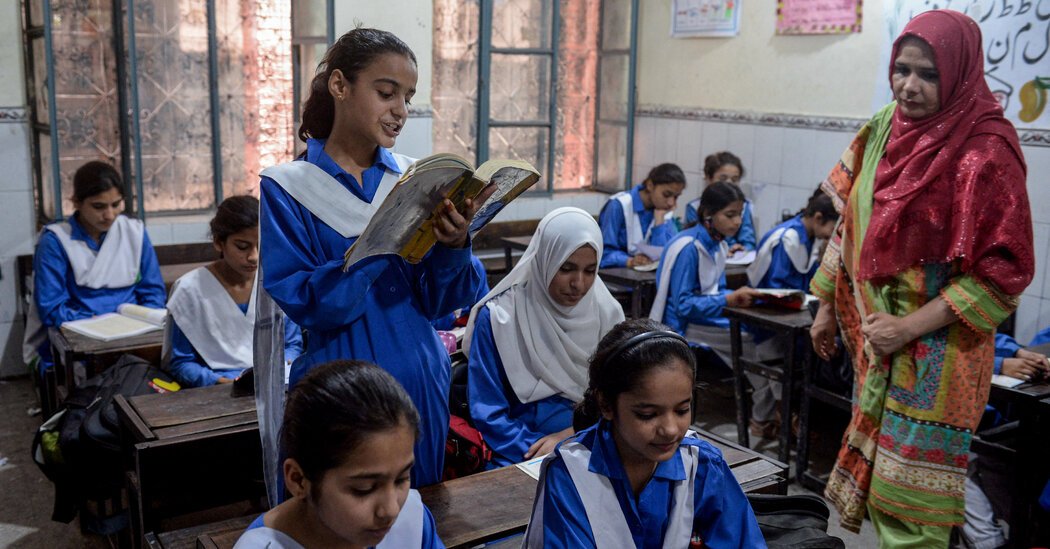
Pakistan wants to abolish a sales tax on menstrual pads and tampons starting in July, a move that is aimed at making the products more affordable in a country where access to and knowledge about menstrual hygiene remains low.
Pakistan’s finance minister, Muhammad Aurangzeb, announced a plan to remove the 18 percent sales tax this month, saying that pads and tampons were “indispensable for women’s health, dignity and full participation in social activities.”
Women and rights activists have hailed the plan as a win for menstrual health rights. It follows a nationwide discussion that started last year after an activist took Pakistan’s government to court to challenge taxes imposed on sanitary pads and tampons.
In Pakistan, the world’s fifth-most-populous country, only about 12 percent of menstruating girls and women use commercially made sanitary pads, according to UNICEF, a United Nations agency for children, while in neighboring India it is 36 percent.
But activists say more needs to be done to help girls and women obtain menstrual products and to eliminate the stigma around menstruation. In rural areas and among conservative families, well-worn rags and unhygienic pieces of cloth are often the only options. One out of five Pakistani girls misses school because of her menstrual cycle, according to UNICEF estimates.
“There is a period poverty crisis in Pakistan,” said Mahnoor Omer, 25, an activist and lawyer who set off the discussion last year when she filed a petition in a Pakistani high court to have sanitary pads and tampons declared essential, like certain food items. (The court is expected to rule in the final quarter of the year.) She was recognized as one of Time magazine’s “women of the year” for her campaigning.
In a telephone interview, Ms. Omer described elimination of the sales tax as positive but said the government should remove other taxes on sanitary products, which account for about 40 percent of the total price, according to estimates by UNICEF.
Hira Amjad, the founder and executive director of DASTAK Foundation, a Pakistani nonprofit that organizes workshops on menstrual health in communities, said the tax cut was a “much-needed first step.”
But she said that while the tax cut would help people with more resources and better access to pads and tampons in cities, it was unclear how it would benefit poorer families, who “often have to choose between having food on the table or access to menstrual products.”
Abeera Mujeeb, an undergraduate I.T. student in Quetta, in western Pakistan, said that pads and tampons were often unaffordable even for middle-class women like her. “So the women who are below us, how expensive it must be for them,” Ms. Mujeeb, 19, said on Thursday as she was shopping with her mother.
Rabia, a mother of three daughters from Balochistan Province who goes only by her first name, said she struggled to cover the household’s monthly expense of around $40 on pads. Pakistan’s average monthly salary is around $140.
Despite the wider discussion about menstrual health, taboos remain widespread.
Ms. Mujeeb, the I.T. student, said a teacher had once scolded her for not hiding a pad she was carrying.
“You feel embarrassment when buying them,” said Areeba Khan, 22, an undergraduate computer-science student in the western city of Mastung, adding, “When you go to the shop, you wait for everyone to leave” before asking for the products.
Ms. Amjad, at DASTAK foundation, said that the workshops she and her teams organized had highlighted that Pakistani men felt as embarrassed to talk about menstruation as women but that increasingly, younger men and teenage boys were asking how they could support their female relatives.
That step was critical, Ms. Amjad added, because “it’s mostly men who decide where and what the income is spent on. Women often do not even have the power to decide whether they should buy menstrual products at the market or rely on cotton.”
Ms. Omer, the activist, said she would use the description of sanitary products as “indispensable” by the finance minister, Mr. Aurangzeb, in future legal arguments for better access to reproductive and menstrual health.
“The finance minister — a man — said that menstrual products are a necessity,” said Ms. Omer. “We can now use that statement as a steppingstone for future cases on improved access to clean and accessible bathrooms and sex education.”