dailynewsnblog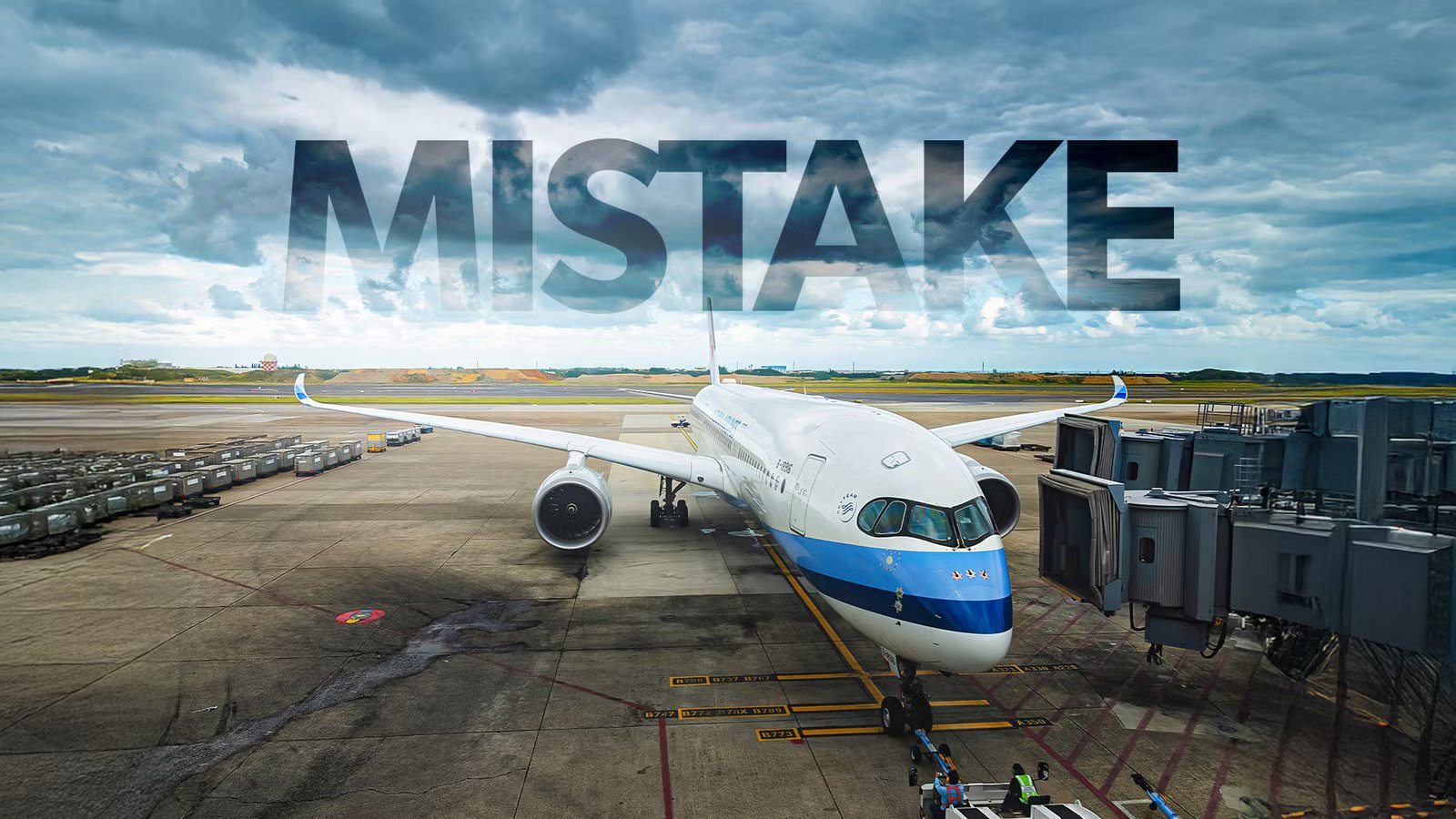
In commercial aviation, some of the most expensive incidents do not happen at cruising altitude but are a result of ground damage, often in plain sight of passengers and airport personnel. Aircraft parked at the gate are surrounded by a carefully choreographed environment of jetbridges, service vehicles, baggage equipment, and ground crew, all working within tight schedules that leave little room for error. While these operations are routine, they are also inherently complex, and even a minor lapse in coordination can trigger consequences that far exceed initial expectations.
Among the most dramatic examples of ground handling gone wrong are the rare cases where an aircraft door is ripped off by a jetbridge. Although such incidents are rare, they are significant enough to capture industry attention, not only because of the visual damage but also because of the immense financial and operational impact that follows. What may begin as a simple misstep can quickly evolve into a repair bill exceeding $800,000, accompanied by days or even weeks of disruption.
The Melbourne Airbus A350 Incident

A recent incident involving a China Airlines Airbus A350 at Melbourne Airport (MEL) provides a clear illustration of how quickly routine procedures can break down. After completing a long-haul flight from Taipei Taoyuan International Airport (TPE), the aircraft was parked at the gate with its forward door open and the jetbridge connected, allowing passengers to disembark in what should have been a standard post-arrival sequence.
At some point during ground operations, the aircraft reportedly rolled backward while still attached to the jetbridge. This unexpected movement caused the door to press against the rigid structure of the bridge, leading to significant structural stress and ultimately resulting in the door being partially torn from the fuselage. The damage was immediately apparent, and the aircraft was taken out of service for inspection and repair.
Preliminary information suggested that the aircraft may not have been properly secured with wheel chocks, a fundamental safety measure designed to prevent unintended movement while parked. Whether this was due to human error, miscommunication, or a procedural lapse, the result was a costly incident that underscores how even basic steps in ground handling cannot be overlooked.
What makes this case particularly notable is that it involved a modern widebody aircraft, the Airbus A350-900, equipped with advanced systems and operated within a highly regulated environment. Despite these safeguards, the incident still occurred, reinforcing the idea that ground operations remain one of the most vulnerable phases of flight. The A350 is no stranger to Melbourne Airport, with many international carriers operating the aircraft to and from their respective hubs, including  Delta Air Lines and
  Singapore Airlines.

$100K Mistake: Delta Flight Attendant Accidentally Deploys Airbus A220 Emergency Slide
The incident occurred on the morning of October 26, 2025.
Why Aircraft Doors Are So Critical

An aircraft door is far more than a simple entry point; it is a precision-engineered component that plays a critical role in maintaining the structural integrity of the aircraft. On aircraft such as the Airbus A350, doors are designed to withstand repeated pressurization cycles, high aerodynamic loads, and the demanding requirements of emergency evacuation scenarios.
Each door must fit perfectly within the fuselage, forming an airtight seal that allows the cabin to be pressurized at altitude. Even the slightest misalignment can compromise this seal, making it impossible for the aircraft to operate safely until the issue is resolved. This level of precision means that any impact, particularly one involving a rigid structure like a jetbridge, can have serious consequences.
When a door is damaged or torn away, the effects often extend beyond the visible area, and the surrounding fuselage structure, including frames, stringers, and skin panels, may also experience stress or deformation. This can necessitate a far more extensive repair process than simply replacing the door itself, as engineers must ensure that the aircraft’s structural integrity is fully restored.
The complexity of these components also contributes to their cost. Aircraft doors are not interchangeable in a simple sense; they are designed for specific aircraft types and configurations, and replacing one can involve sourcing specialized parts, coordinating with manufacturers, and conducting detailed installation procedures.
The True Cost Of Ground Damage

While headlines often focus on repair costs, the financial impact of ground damage incidents extends far beyond the physical damage to the aircraft. Direct repair expenses can be substantial, particularly for widebody aircraft, where components are expensive and labor-intensive to install. However, these costs are only one part of a much larger financial picture.
When an aircraft is grounded, airlines must contend with immediate operational disruptions. Flights may be delayed or canceled, requiring passengers to be rebooked on alternative services. This can lead to compensation payments, particularly in regions with strict passenger rights regulations, as well as additional costs associated with accommodating affected travelers.
Crew scheduling is another factor, as pilots and cabin crew assigned to the grounded aircraft may need to be reassigned or may exceed their allowable duty hours, further complicating operations. In some cases, airlines may need to deploy replacement aircraft, which may not always be readily available, especially during peak travel periods.
There is also the issue of lost revenue. A long-haul aircraft like the Airbus A350 is a significant income-generating asset, and every day it remains out of service represents a missed opportunity. Over the course of a prolonged repair period, these losses can accumulate quickly, pushing the total cost of the incident well beyond initial estimates. Industry analyses have shown that severe ground damage incidents can easily exceed $1 million when all factors are considered, making them among the most financially significant non-flight-related events in aviation operations.

T’way Air 737 Wheel Failure Triggers Airport Chaos As Three Flights Declare Fuel Emergencies
The incident created an operational nightmare.
A Similar Incident In Dublin

The incident at Melbourne Airport is not an isolated occurrence, as a similar incident took place at  Dublin Airport (DUB) involving an
  American Airlines Boeing 787, where a jetbridge interaction resulted in significant damage to one of the aircraft’s doors. Although the exact sequence of events differed, the outcome was remarkably similar – a grounded aircraft, extensive inspections, and a costly repair process.
In the Dublin incident, the interaction between the jetbridge and the aircraft created forces that exceeded the structural limits of the door assembly. Whether caused by misalignment, unexpected movement, or equipment malfunction, the incident demonstrated how sensitive the interface between aircraft and ground infrastructure can be.
These types of events highlight a broader issue within aviation operations, as while much attention is understandably focused on in-flight safety, ground handling presents its own set of challenges, many of which involve the coordination of multiple systems and personnel. The Dublin incident serves as a reminder that even well-established procedures can fail under certain conditions.
It also illustrates that no aircraft type is immune – from advanced composite aircraft like the Boeing 787 to modern designs such as the A350. The fundamental vulnerabilities remain the same when external forces are applied in ways the structure was not designed to withstand.
Human Factors Behind The Damage

In many cases, the root causes of ground damage incidents can be traced back to human factors rather than mechanical failures. Ground operations involve a complex network of personnel, including ramp agents, engineers, dispatchers, and flight crews, all of whom must work together seamlessly to ensure safe and efficient operations.
Time pressure is a constant presence, as airlines strive to minimize turnaround times and keep schedules on track. In such an environment, even a small lapse in attention or a breakdown in communication can have immediate consequences. A missed confirmation, an assumption about aircraft status, or a delayed action can set the stage for an incident.
The suspected failure to properly secure the aircraft in Melbourne is a clear example of how basic procedures can have critical importance. Wheel chocks, which are simple devices placed against the aircraft’s wheels, are a primary means of preventing unintended movement. If they are not correctly positioned, the aircraft can shift, particularly if external forces such as wind or slight gradients are present.
Jetbridge operation also requires precision and awareness. Operators must carefully align the bridge with the aircraft door, taking into account the aircraft’s height, position, and any potential movement. When combined with the possibility of aircraft movement, even minor misjudgments can lead to significant structural stress. Training and standard operating procedures are designed to mitigate these risks, but they rely on consistent execution, although incidents like those in Melbourne and Dublin demonstrate that even well-trained teams can encounter situations where multiple small factors combine to produce a major outcome.

Worst Boeing 747 Landing Ever? Why Some People Think So
Cathay Pacific Cargo flight CX97 performed a hard landing in Guadalajara on March 7.
The Long Road To Repair

Once an aircraft door has been damaged or torn away, the process of returning the aircraft to service is both time-consuming and highly technical. The first step is a comprehensive inspection to determine the full extent of the damage, including any hidden structural issues that may not be immediately visible. Engineers use a range of techniques, from visual inspections to advanced non-destructive testing methods, to assess the condition of the fuselage and surrounding components. This stage is critical, as any overlooked damage could have serious safety implications if the aircraft were returned to service prematurely.
If the damage is confined to the door assembly, repairs may be relatively straightforward, although still costly. However, if the surrounding fuselage structure has been affected, the repair process becomes significantly more complex. This can involve removing and replacing sections of the aircraft’s skin, reinforcing structural elements, and ensuring that all components meet strict design specifications. Parts availability can also influence the timeline, as specialized components for modern aircraft are not always readily available at every location, and sourcing them may require coordination with manufacturers or other maintenance facilities. This can add days or even weeks to the repair process.
Once repairs are completed, the aircraft must undergo a series of tests and inspections to verify that it meets all regulatory requirements. This may include pressure testing the cabin to ensure that the door and surrounding structure can withstand normal operating conditions. Only after these steps are successfully completed can the aircraft be cleared to return to service. The combination of technical complexity, regulatory oversight, and logistical challenges means that incidents involving aircraft doors are among the most disruptive forms of ground damage. Even when the visible damage appears localized, the underlying impact can be extensive, requiring significant time and resources to resolve.