dailynewsnblog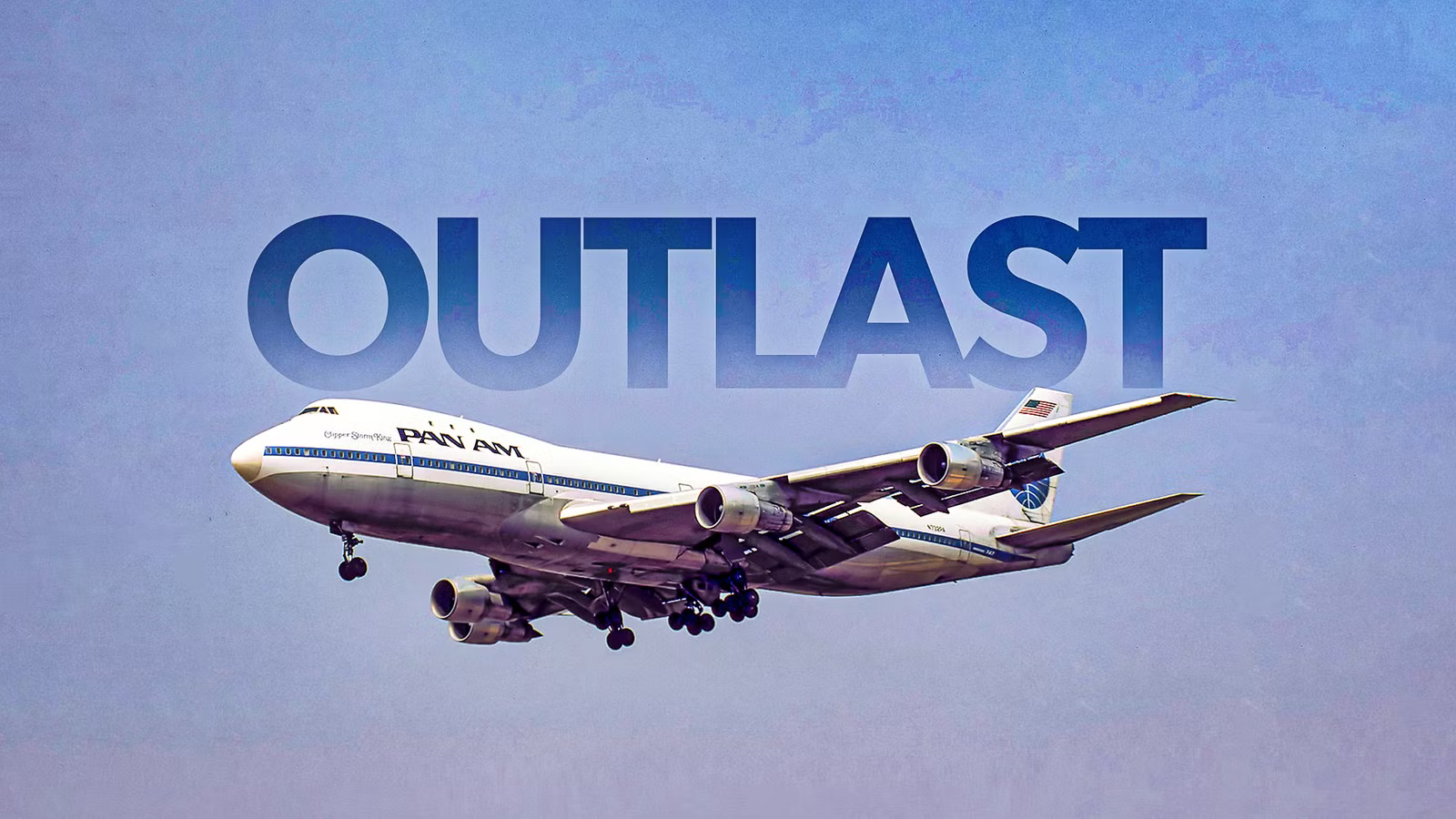
It’s not the only airliner to have been called a jumbo jet: essentially every widebody airliner has been called either a jumbo jet (like early tri-jet widebodies), a mini-jumbo (like the Boeing 767 early in its day or the Boeing 777 more recently), or a superjumbo in the case of the Airbus A380. However, the Boeing 747 remains the aircraft that is most commonly known as a jumbo jet because it was the first widebody airliner ever, and it remains one of the largest ever. Even more notably, it was built for a staggering 55 years.
Boeing began assembling the first 747-100 in 1968, and the aircraft took its first flight in February 1969, while it entered service in January 1970 with Pan American World Airways. The aircraft isn’t widely used in passenger service anymore, and even cargo airlines are now starting to order 747 replacements, but Boeing produced the jumbo jet continuously until 2023. This is the longest production life for any widebody in history, and it’s not even close: the runner-up is the Boeing 767, at 45 years. Here’s how the 747 had such a long production life.
What Made The 747 Appealing In The First Place

The 747 was first requested by Juan Trippe, president of Pan American World Airways, who asked Boeing to develop an aircraft two-and-a-half times the size of any airliner before it for a 30% reduction in costs per available seat mile (CASM). In addition, although the original 747-100 had unremarkable range, Boeing increased the 747’s maximum takeoff weight (MTOW) multiple times while engine suppliers added thrust and reduced fuel burn. In their heyday, the 747-200, 747SP, and 747-400 had the longest range of any airliner in the world.
The 747 is famous for revolutionizing air travel through its massive capacity, as its twin-aisle design meant that airlines could install up to ten seats per row in economy. This allowed airlines to charge much lower fares, opening up air travel to the masses. However, it was the aircraft’s range that was truly appealing to airlines, as the 747 could be used to launch new long-haul routes that were previously impossible. The 747-200 essentially became the default long-range airliner for many years as Boeing continued to improve this variant’s range in particular.
The 747 was quite popular with airlines, but customers became dissatisfied with Boeing’s approach of making small incremental improvements to the 747, which worsened fleet commonality. Airlines instead wanted one new variant that incorporated all of the latest improvements possible, which led  Boeing to develop the 747-400.
Launched in 1985, the 747-400 could carry more payload than the 747-200, could fly farther than the 747SP, had the same stretched upper deck as the 747-300, and was the most advanced as well as the most efficient 747 variant yet. The 747-400 entered service in 1989 and remains the best-selling 747 variant of all time, having received 694 of the program’s 1,573 orders, or about 44%.
Owning Its Market Segment

In the late 1960s, some carriers were concerned about their ability to fill the massive 747, which led McDonnell Douglas and Lockheed to develop aircraft that were smaller than the 747, yet still using a widebody design to offer low per-seat costs. The DC-10 and L-1011 TriStar both used a three-engine layout to cut fuel burn, yet had enough range for transcontinental flights in the US, while later models could cross oceans. However, while the demand for smaller widebodies existed, there wasn’t demand for two of them.
Only 386 DC-10s were ever sold to civilian buyers, while Lockheed delivered 250 L-1011s, and neither program was profitable. The 747 was the only aircraft available for airlines needing a large airliner, and the 747-200/747SP could fly much farther than the long-range variants of either the DC-10 or the L-1011. To further worsen prospects for the trijets, Airbus released the twin-engined A300 in 1974, which outsold the less economical DC-10 and TriStar, while the smaller A310 and Boeing’s own 767 diluted the market even more.
The market for smaller widebodies was always much larger than demand for the 747, but the Queen of the Skies owned its space. By the early 1980s, there were two similarly sized small widebodies competing against each other (the A310 and the 767) as well as three mid-sized widebodies (the A300, DC-10, and TriStar). The 747, meanwhile, was uncontested. In addition, none of these aircraft types could fly anywhere near as far as the most capable 747 models, and the plane’s capabilities continued to be an advantage going into the 21st century.
Range And Payload Capability

The 1990s saw three aircraft types debut with range that exceeded the classic 747s: the McDonnell Douglas MD-11, the Airbus A340-300, and the Boeing 777-200ER. The MD-11 was first, and it debuted the year after the 747-400, but it couldn’t meet its original payload/range promises. Meanwhile, the A340-300, which came out in 1993, did prove to be a compelling aircraft, and the 777-200ER was even more so, but the 747-400’s advantage over both was its raw payload capacity.
Operating costs are tremendously important to airlines, especially on long-haul missions, but it’s the passengers and cargo that pay the bills. Not only is the 747-400 a much larger aircraft than the A340 and 777-200ER, but it has more range than either, meaning that it starts becoming payload-restricted later than the A340 or 777. For some airlines, the ability to carry more payload across greater distances was more important than the operating cost delta, and so the passenger 747-400 narrowly outsold the 777-200ER, which itself outsold the A340-300 by double.
Of course, the 747 was also designed to be an excellent freighter from the get-go, and a significant number of the 747’s sales were to cargo airlines; Boeing sold 166 747-400 freighters and 61 of the combi variant. Here, too, the 747 had no competition, with the MD-11F being the next-largest aircraft in the cargo market during the 1990s. In both industries, the 747 retained a size, range, and payload advantage all wrapped into one package, and it was essentially uncontested in all three areas.
What Killed The 747?

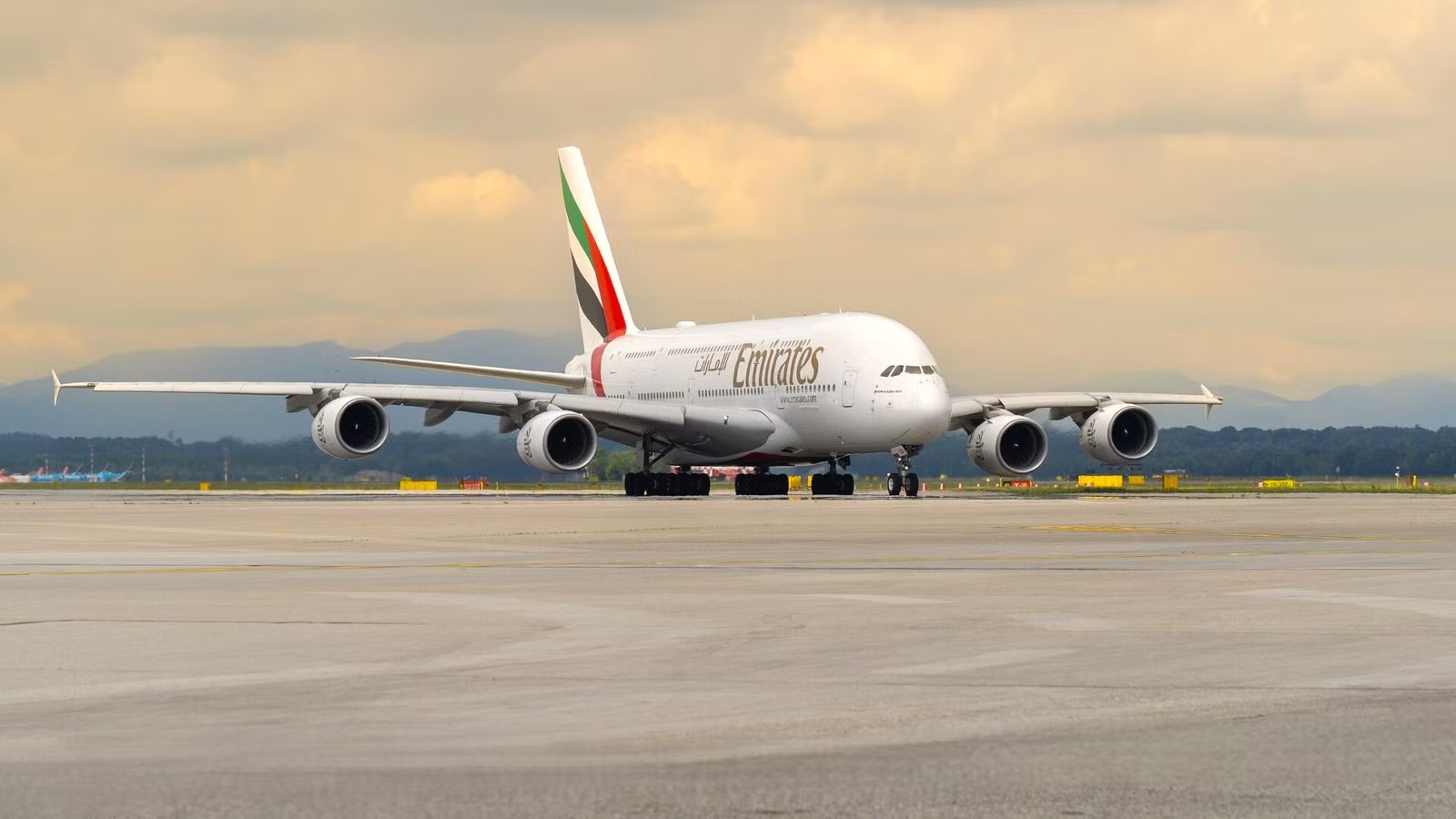
Airbus developed the A380 in the late 1990s and 2000s to challenge the 747 for the first time. Debuting in 2007, the A380 was an upsized and better 747 in all ways: the A380 carries more passengers and has a much higher payload capacity, while its per-seat costs are lower, and the plane flies much farther as well. In addition, the updated 747-8 was ineffective at combating the A380 because it still had higher per-seat costs. However, the problem for both was the Boeing 777-300ER.
Aimed largely at the 747-200 replacement market, the 777-300ER offered more range than the 777-200ER, had much lower fuel burn than a quadjet, and could seat nearly as many passengers as a 747. On top of that, the 777-300ER beat initial fuel burn projections, making it even more lucrative for airlines. Whereas the A380 was an upsized 747 in terms of its selling proposition and attributes, the 777-300ER offered slightly less than the 747 but was much cheaper to operate, and this killed demand for both the A380 and the 747.
Aircraft | Entry Into Service | Orders (Passenger Only) |
|---|---|---|
Boeing 747-400 | 1989 | 467 (plus 61 combis) |
Airbus A340-600 | 2003 | 97 |
Boeing 777-300ER | 2004 | 833 |
Airbus A380-800 | 2007 | 251 |
Boeing 747-8 | 2011 (passenger) | 48 |
Boeing launched the 747-8 in 2005 and received 46 combined orders for the 747 that year, while receiving 53 orders the following year. After that, however, sales were tepid, and Boeing never even cleared 20 per year. The passenger 747-8 was a massive flop, while the freighter didn’t sell nearly enough units to justify the 747’s continued production. Boeing delivered the final passenger 747 to Korean Air in 2017, while production of the 747 finally ended in 2023, marking the program’s 55th year of production.
The 747’s Final Years Of Production

In the late 1960s, it was believed that supersonic transports would succeed subsonic jets in the 1970s, and given how much money Boeing invested in the 747 program, it made sure to develop the aircraft to be an excellent freighter, ensuring continuous sales once passengers went supersonic. This, of course, didn’t happen, and most 747 sales were for the passenger models. But following the 777-300ER’s introduction in 2004 and even more efficient widebodies afterwards, it was the cargo models that earned nearly all orders as passenger orders dropped off.
With the final variant, Boeing only sold 48 passenger 747-8s, while it sold 107 747-8Fs. Whereas the 747-8 was squeezed from above by the A380 and especially from below by the 777-300ER, neither model was offered as a freighter. The 747-8, however, was still the only large long-range freighter available on the market, and its high payload capacity relative to its size actually made it more compelling as a cargo plane than a hypothetical A380 or 777-300ER freighter would have been.
Boeing was already delivering the 777F by the time the 747-8F entered service, but it’s a significantly smaller aircraft based on the 777-200LR. It’s only today with the Airbus A350F and Boeing 777-8F that freighters are now available that can truly replicate the 747’s capabilities, and even those aircraft can’t fully replace the 747-8 (which is stretched with a higher payload capacity compared to prior models).