dailynewsnblog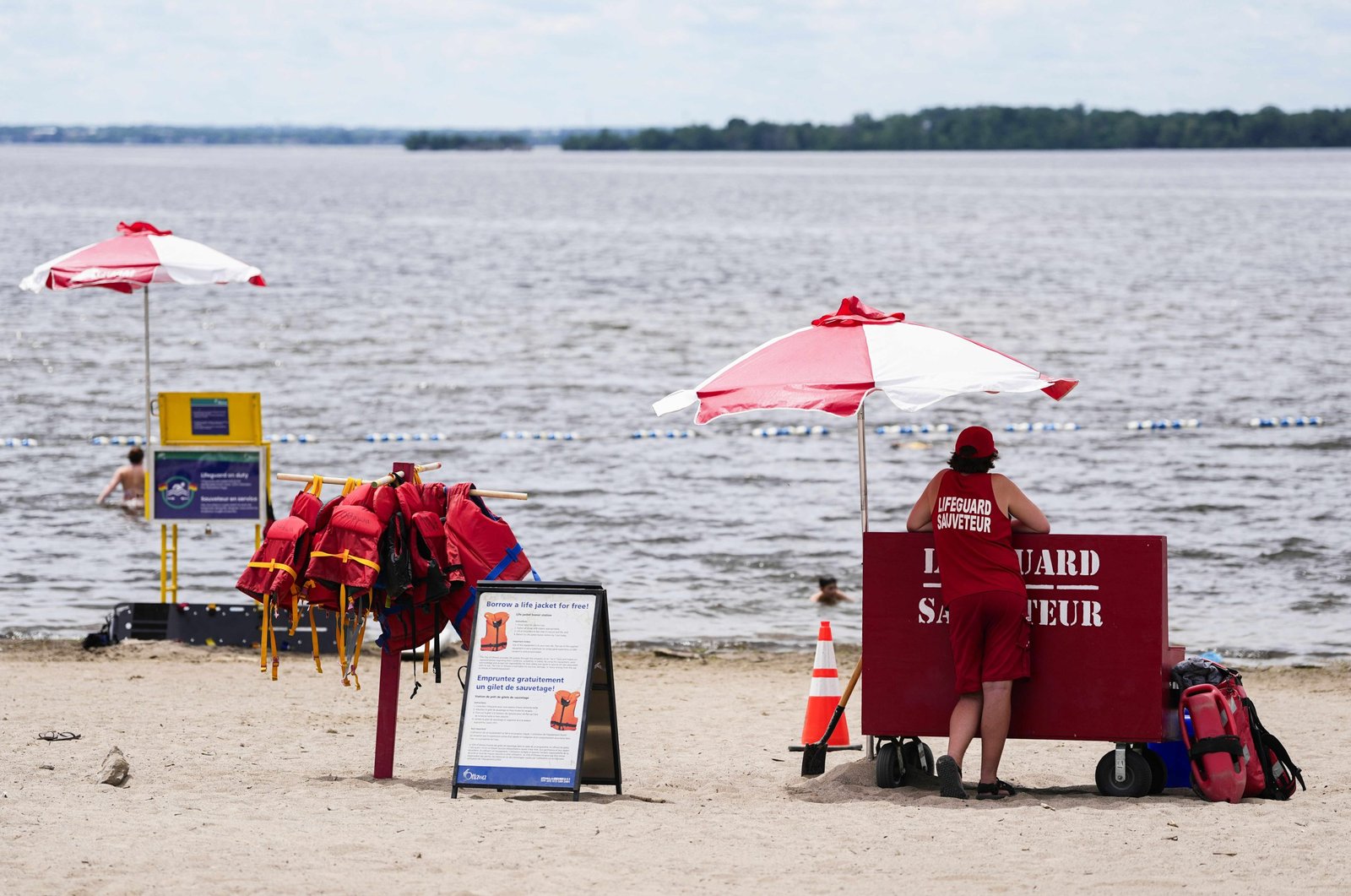
As Ottawa’s beaches fill with swimmers this summer, a debate is brewing over whether a once-a-week water testing gives residents enough information to judge when it’s safe to get in.
As the temperature warms, Ottawans are ready to dip their toes in the urban beaches the city has to offer. But when residents check beach water test results before heading for a swim, they may not be looking at information that was ever intended to tell them whether it’s safe to get in.
That’s the heart of a growing disagreement between Ottawa Public Health and Ottawa Riverkeeper over the city’s once-a-week beach water testing program.
“You have a huge part of the population that doesn’t think the water is safe enough and perceives the river as contaminated,” Laura Reinsborough of Ottawa Riverkeeper said in an interview with iPolitics.
Ottawa Public Health tests beach water for E. coli, a type of bacteria that signals water has been contaminated by fecal matter from sources such as wildlife, pets, stormwater runoff or sewage. Under Ontario guidelines, a geometric mean of five water samples exceeding 200 E. coli per 100 millilitres triggers a swimming advisory.
Last year, OPH reduced its beach water testing from daily to once a week after concluding many residents were mistakenly treating laboratory E. coli results as real-time indicators of water quality.
In a statement sent to iPolitics, OPH said the revised program is intended to monitor “longer-term” water quality trends rather than provide “real-time information on beach water quality.” Since laboratory testing takes 18 to 24 hours, officials say results already reflect the previous day’s conditions, allowing residents to make swimming decisions on real-time factors.
While the revised approach aligns with Ontario Public Health Standards and Health Canada’s recommendation of at least weekly monitoring, Ottawa Riverkeeper argues the change has instead left swimmers with less timely information about conditions at beaches that can fluctuate rapidly.
In its September report to the Board of Health, OPH found daily sampling correctly reflected beach conditions about 80 per cent of the time, compared with roughly 79 per cent for weekly sampling. The agency concluded the additional testing offered little improvement in predicting current water quality because environmental conditions can change rapidly.
Reinsborough, whose team also administers supplementary water testing at city supervised beaches, said results could still fluctuate dramatically from day to day.
She argues that relying on a single weekly sample can paint an unrepresentative picture of a beach’s water quality if testing happens after a rainfall or before the event, as bacteria levels temporarily.
“It could be deterring people on a day when it’s actually quite safe to go in, and to tell you that it’s safe on a day when actually it’s not,” Reinsborough said. “That’s the issue we’re coming up against with the Canada Day storm this year.”
After heavy rainfall, OPH advises residents to wait 48 hours before heading to the waters.
However, Reinsborough added that recommendation doesn’t always reflect what subsequent testing finds. She pointed to Petrie Island Beach, where right after Canada Day’s storm, the water had three times the allowable limit of E. coli two days after the storm.
“After 48 hours, the beaches were almost 700 coliform units… for those people who are in the water, they are at risk,” she said.

While swallowing water contaminated with elevated E. coli levels does not guarantee that someone will become ill, it can increase the risk of gastrointestinal infection, particularly if contaminated water is swallowed.
Dr. Lawrence Hookey, Division Chair of Gastroenterology at Kingston Health Science Centres and Queen’s University, said most people who become infected after ingesting contaminated water experience diarrhea that resolves on its own within a few days though some strains can cause more serious illness.
Young children and people with weakened immune systems are generally at greater risk because they are more susceptible to dehydration and complications from infection, Hookey added.
Limitations
Carleton University professor and Jarislowsky Chair in Water and Health, Banu Ormeci said neither side is wrong that laboratory testing has limitations.
She explained that because E. coli samples must be incubated, results always reflect the previous day’s water conditions rather than what swimmers encounter in real time. However, she argued that reducing testing further places responsibility on the public to interpret complex water quality data without the expertise to judge whether conditions are safe.
“Some beaches have great water quality, but some beaches continuously measure very high E. coli numbers,” Ormeci said in an interview with iPolitics, noting that elevated E. coli levels are typically confined to specific beaches rather than the waterways as a whole.
Last year, Ormeci and her research team tested water quality along the Rideau River and at Mooney’s Bay, finding the river itself was suitable for recreational use. Beaches that consistently record higher E. coli levels, she said, are often affected by local conditions such as shallow water, poor circulation and heavy rainfall.
Mooney’s Bay, an artificial bay created during the construction of the Rideau Canal, also consists of relatively stagnant water, which when combined with heavy use, wildlife, warmer temperature and stormwater runoff, could all contribute to elevated bacteria levels, Ormeci said.
Faster results
While OPH and Ottawa Riverkeeper disagree over how often beaches should be sampled, one Ottawa councillor says the debate may overlook a bigger opportunity.
Matt Luloff, whose Orléans East-Cumberland ward includes Petrie Island, said he understands why OPH shifted to weekly testing, noting that even daily laboratory results are already about a day old by the time they’re posted.
“Rather than debating whether yesterday’s lab result should be available every day or every week, I’d much rather see Ottawa become a leader in adopting technology that tells us what’s happening today,” Luloff wrote in a statement to iPolitics.
Luloff proposed pilot projects like ColiMinder could provide “automated microbiological water quality readings, rather than waiting 18 to 24 hours for traditional laboratory results.