dailynewsnblog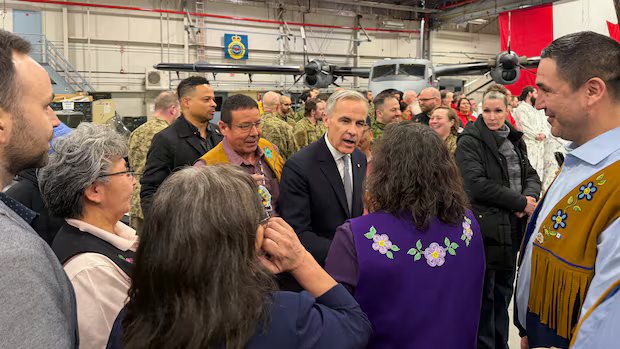

Listen to this article
Estimated 4 minutes
The audio version of this article is generated by AI-based technology. Mispronunciations can occur. We are working with our partners to continually review and improve the results.
Wildfires in the Northwest Territories are so out of control, it’s stopping construction on a major infrastructure project from starting — at least according to the federal government.
“As communities across the North respond to the impacts of wildfires, the safety and security of Canadians remain the top priority. Work will not begin until wildfire conditions are under control and it is safe to proceed,” reads a prepared statement from the office of the federal minister of transport.
The Mackenzie Valley Highway is a proposed all-season gravel road that would stretch from Wrigley to Inuvik, connecting the territory’s remote communities.
It’s a project that has been talked about for decades, touted as a means of lowering the cost of living in the territory and, amid renewed interest in Arctic defense, to exert sovereignty in the North.
In March, Prime Minister Mark Carney said construction on the highway would start this summer, after decades of “false starts and endless assessments.”
The project was referred to the federal Major Projects Office and considered for fast-tracking. But the N.W.T.’s severe wildfire season — forcing evacuations at the highway’s starting point in Fort Simpson — appears to have caused delay, again.

Speaking in Yellowknife, Prime Minister Mark Carney said construction will start this summer on the first phase of an all-season highway stretching more than 800 kilometres in the Northwest Territories.
As of Friday, there are currently 265 wildfires in the Northwest Territories. The territorial government considers 205 of them “out of control.”
So what is the state of the highway currently?
CBC News reached out to the Major Projects Office for more information. Spokesperson Pierre-Alain Bujold reiterated that work won’t start until wildfires are under control, but also provided some status updates.
The southern section of the project, between Wrigley and Norman Wells, is under environmental assessment — construction won’t start until that’s complete.
The northern section, between Norman Wells and the Dempster Highway, south of Inuvik, still doesn’t have a final route.
“For both sections, environmental assessment, regulatory approvals, permitting requirements, and funding decisions still need to be done, and the project’s ultimate timing is dependent of the completion of those important steps,” said Bujold, adding that construction is slated for late 2027.
Other smaller sections, however, can move along faster. Bujold says upgrades to the existing Highway 1 (a part of the the Mackenzie Valley Highway that connects to Wrigley) already has the necessary permits and are funded in part by Transport Canada’s National Trade Corridors Fund.
Other areas still need funding, but do have an assessment and a permit, like the Great Bear River Bridge (near Tulita) and Prohibition Creek Access Road (south of Norman Wells). Bujold says the plan is to begin construction next summer.
Ottawa has committed a little more than $100 million to the project through Transport Canada’s National Trade Corridors Fund, Bujold said.
“As project plans develop, and opportunities for efficiencies are identified, further information on project costs and required capital will be made available,” he said.
Preparations underway: N.W.T. premier
Local officials say the project is, in some sense, already underway.
In an interview with CBC’s The Trailbreaker earlier this week, N.W.T. Premier R.J. Simpson said breaking ground on the “main stretch” of the highway is “still on track for next summer.”
Asked about an update on any funding agreement, Simpson says he has nothing to announce, but he has asked Carney to say something.
“I was encouraging the prime minister to make some public announcements or some public commitments to funding sooner than later, just because that really helps galvanize things and helps give businesses that assurance to know that, ‘okay, this is happening,’” Simpson said.
“I don’t have anything to announce. But as I’ve always been saying, the federal government, and the prime minister especially, understand where we get our funds from. And this is a priority of his and the Government of Canada.”