dailynewsnblog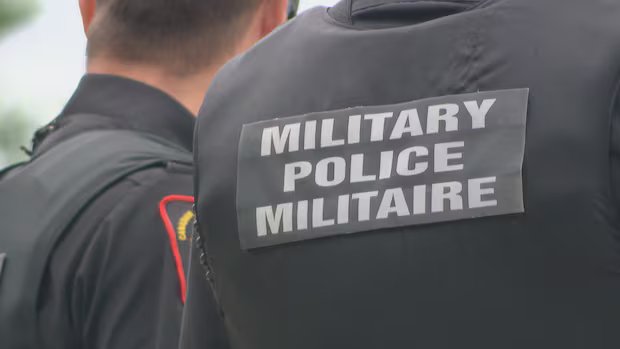
Military police failed to transfer almost 70 per cent of sexual offence cases over the past five years to civilian police, despite the government committing to doing so as it worked to pass a permanent change into law.
New data shows military police held on to 595 out of 879 of these cases since 2021.
“I find that disturbing to say the least,” said retired colonel Michel Drapeau, a lawyer who represented victims.
“I’m surprised and disappointed.”
Anita Anand, the defence minister at the time, stood in the House of Commons in late 2021 and said the government accepted retired Supreme Court justice Louise Arbour’s recommendation for the cases to be transferred to civilians on an interim basis until the government changed the law to strip the military of this power.
The government had hired Arbour, who is now Governor General, to review the military’s sexual misconduct crisis that saw high-profile military leaders facing allegations.

A week into her new job, Defence Minister Anita Anand has made a major move on the sexual misconduct crisis in the Canadian Armed Forces by moving the investigation and prosecution of military sexual cases into the civilian justice system.
In her final report, Arbour found the military’s judicial system faced “major challenges” over the decades handling sexual offence cases which became “insurmountable” and eroded public trust.
Her key recommendation was recently passed in Bill C-11.
Anand sent a letter to Arbour in November 2021 confirming the military justice system was working on a way to refer these alleged crimes perpetrated by serving and former military to civilian police and courts.
But since then, only 284 sexual offence investigations were referred to civilian police, according to data the Canadian Forces Provost Marshal provided to CBC News.
Defence Minister David McGuinty’s office said the government had agreed to Arbour’s recommendation “in full,” but out of respect for the military’s independence didn’t issue a directive ordering the Forces to act.
Instead, officials with the military’s judicial system issued their own directive for military police and prosecutors in response to Arbour’s recommendation.
The office said the passage of C-11 now provides “unequivocal clarity to victims and military and civilian law enforcement authorities” that the military’s justice system no longer has jurisdiction.
But Drapeau calls it misleading that military police in the interim ended up holding on to the majority of sexual offence cases.
“They were determined and they were actually convinced that they possess the authority to continue without having to bend or submit to any other external influence,” said Drapeau.

Documents obtained by CBC News reveal details of military investigations into two separate, alleged sexual misconduct incidents, giving a rare look into Canada’s military justice system and how that system could be failing victims of sexual assault.
The military left prosecuting these cases to civilian courts. But the Canadian Forces Provost Marshal Brig.-Gen. Vanessa Hanrahan, the head of the military police, told senators earlier this month that her office “did not stop investigating.”
“The bulk of our files were not actually transferred” because military police took a “victim-centred, trauma-informed approach,” she testified on June 8 in the Senate.
“We looked at the victim’s preference. We looked at public safety concerns. We looked at the investigation as it unfolded. We allowed the military police to retain them.”
Hanrahan said over the past few years, military police saw an increase in the number of alleged victims asking for their investigators to hold on to their files.
But the data shows only 38 per cent of cases military police retained were based on the victim’s preference.
In another 15 per cent of the retained cases, alleged victims decided they didn’t want to go ahead with any kind police investigation, according to the data.
Megan MacKenzie, an expert in military culture, said having to choose who should investigate puts victims in a difficult position.
“All that’s available, all that has been known to them, has been the military system,” said MacKenzie, the Simons Chair in Peace, Disarmament and Human Security.
“So in some ways, it makes sense for victims to choose the military system.”
Arbour said victims shouldn’t choose who investigates their file because it puts them in an untenable position where they may regret that choice if there’s an acquittal.
The provost marshal’s office also pointed to other reasons sexual offence investigations weren’t transferred to civilians:
- 181 files involved investigations that were wrapping up when the interim recommendation came out or people involved in the case died.
- 70 files involved allegations that happened outside Canada.
- 34 files were found lacking an acceptable transfer process.
Hanrahan told CBC News in a statement that the transfer of cases “was done in a deliberate and principled way to minimize the impact on both victims and the administration of justice.”
Out of the 284 cases transferred to civilians, 69 were declined by civilian police. The military police ended up investigating some of those files, the data shows.
MacKenzie said military police probably had “positive intentions,” but it’s important to remember Arbour made this recommendation because the military system for years failed to show victims they can hold perpetrators accountable.
She said the law needed to change because otherwise military police would continue to find ways to hold on to cases.

In a new report, former Supreme Court justice Louise Arbour says the Canadian military should permanently move sexual offence investigations into civilian criminal courts, citing past mismanagement of sexual misconduct allegations and an overall resistance to change.
“There’s no reason for the military to want to cede power on any issue, especially when it comes to prosecuting its own service members,” said MacKenzie.
Arbour also warned a parliamentary committee in 2022 that unless the law passed, the “evidence so far” showed the military would continue to consider itself the primary investigators and “surprisingly, civilian authorities seem very happy to decline to exercise their own jurisdiction.”
Hanrahan told senators that effective June 15, as a “preparatory measure” all military police would stop accepting any new sexual assault or sexual offence complaints.
Col. Dylan Kerr, director of military prosecutions, told prosecutors to stop handling these cases in 2021, except for the 37 cases already underway after they spoke to the alleged victims, he confirmed to CBC News.
Two military sexual assault cases were stayed in civilian courts in 2023 because of unreasonable delays. In both cases, the judges said the military contributed to some delays.
The new law requires the defence minister to launch an external review in three years and provide data to decide if the law is effective or should be repealed.
The law will go into effect in mid August.