dailynewsnblog
Canada’s double standard on Operation Epic Fury isn’t a diplomatic nuance. It’s a choice — and British Columbians are living with the economic fallout.
Guest post by Hassan El Biali | June 2026 | megam226.substack.com
Hassan Elbiali is a London-based political analyst and commentator specializing in international relations, geopolitics, and the relationship between law and power. His work examines contemporary global affairs, with a particular focus on how shifting power dynamics influence international institutions, legal norms, and foreign policy. A regular commentator on Middle Eastern politics, Western foreign policy, and the changing international order, he offers analysis of the forces shaping today’s geopolitical landscape.
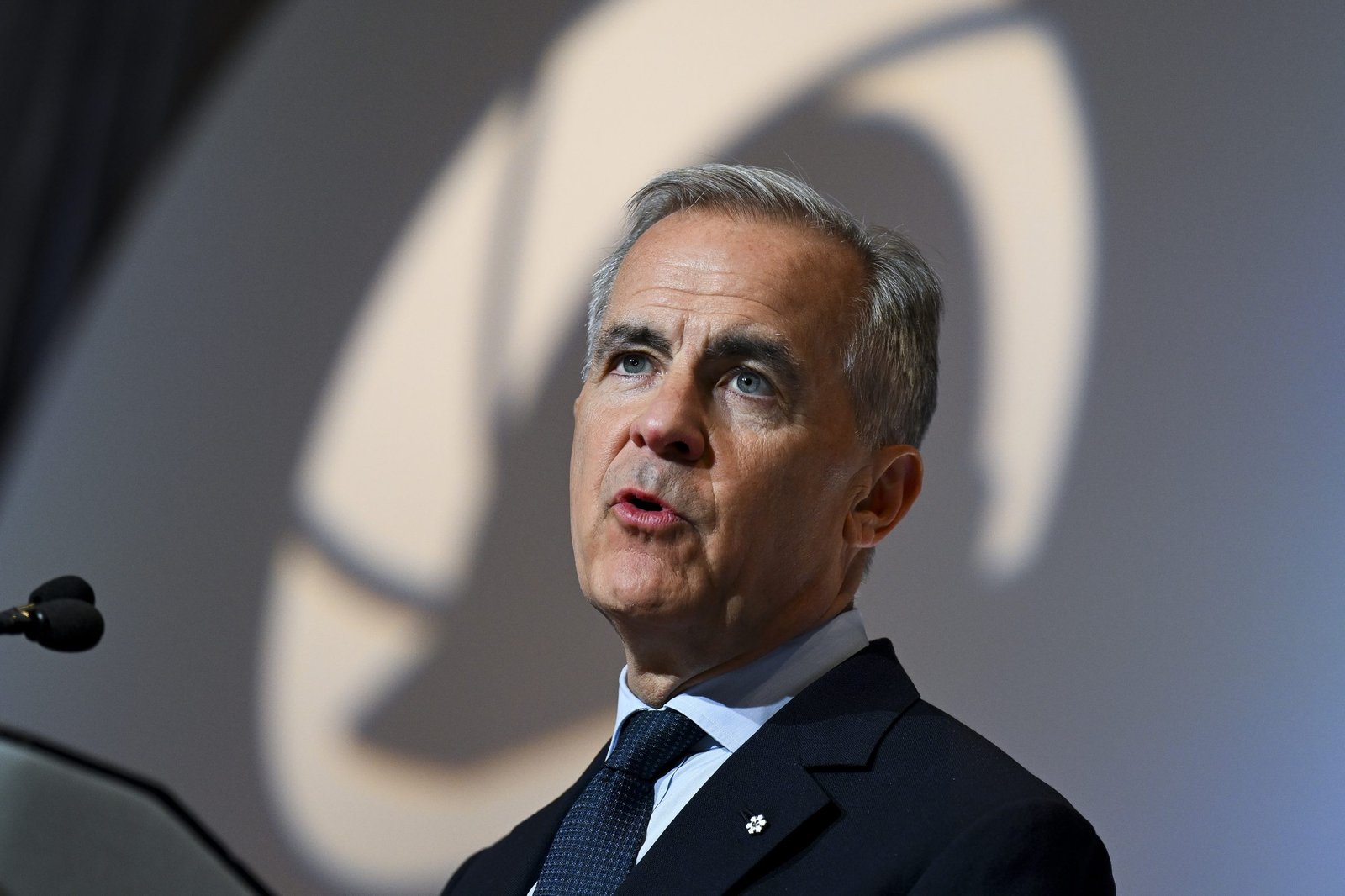
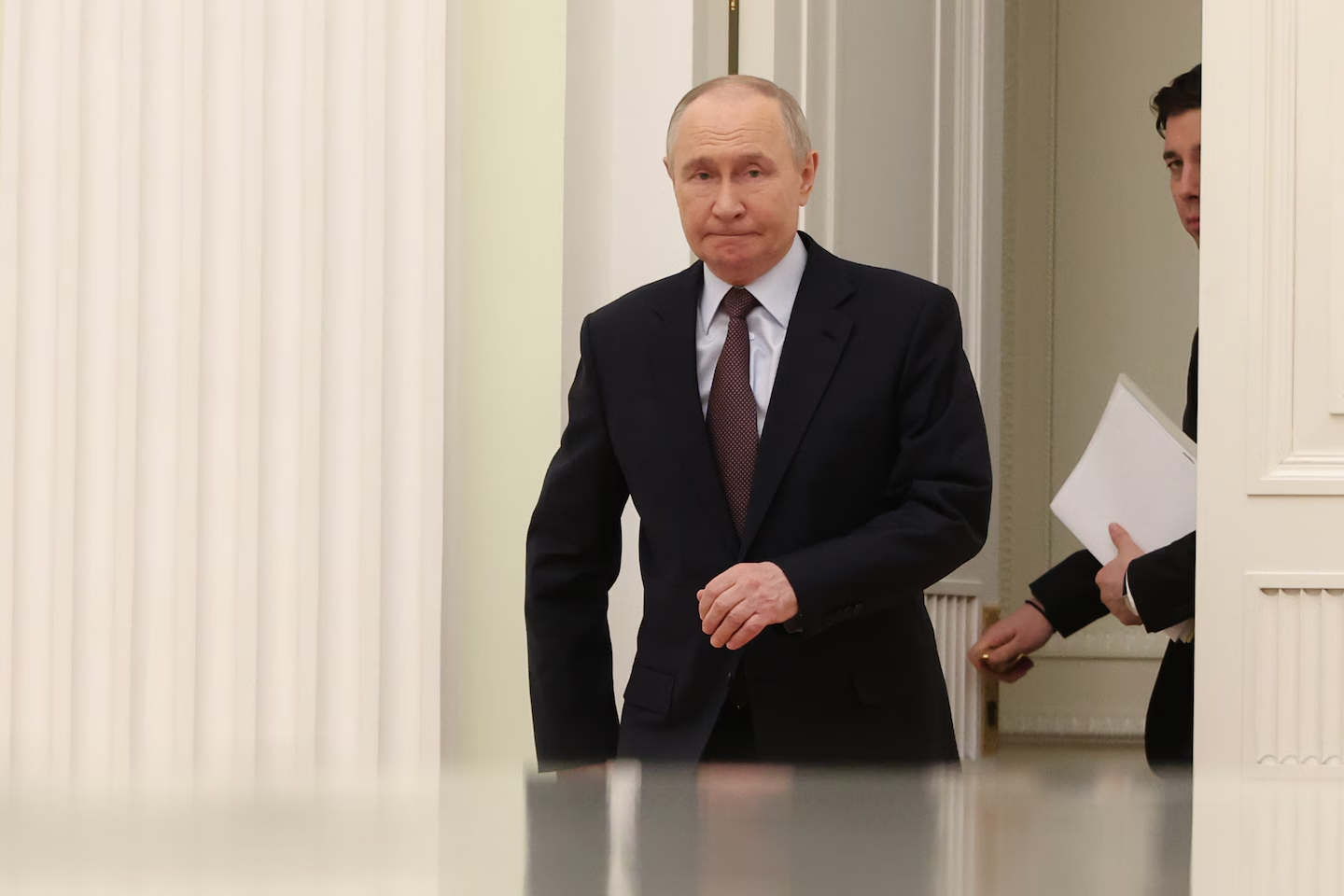
On February 24, 2026 — four years to the day since Russia’s full-scale invasion of Ukraine — Mark Carney issued a statement dripping with moral clarity. Putin’s regime had “bombed Ukraine’s churches, schools, and hospitals.” Russia had launched an “unjustifiable” invasion. Canada, Carney reminded the world, had been Ukraine’s steadfast defender since 1991. The language was precise, purposeful, and legally grounded.
Four days later, the United States and Israel launched Operation Epic Fury — nearly 900 strikes on Iranian territory in the first twelve hours alone, without a UN mandate, without consulting allies, and without triggering the Security Council until it was already too late. Canada’s response? Carney initially backed the goal of preventing Iran from obtaining a nuclear weapon. Then, days later in Sydney, he quietly acknowledged the strikes appeared “inconsistent with international law.” Then came the silence.
When Russia bombs Ukraine, Ottawa calls it unjustifiable aggression. When
Washington and Tel Aviv bomb Iran, Ottawa calls it complicated.
That is not a position. That is a double standard. And for a country that has spent four years staking its international identity on rules-based order, it is a revealing one.
The Sequence Matters
Let’s be precise about what happened. Carney told reporters on day one that Canada supported the United States “acting to prevent Iran from obtaining a nuclear weapon.” That is an endorsement of the operation’s stated objective—and, by implication, of the strikes themselves. Only later, after international outcry and pressure from legal experts, did he walk that back to a hedged, lawyerly “prima facie inconsistent with international law.”
Even that formulation—”It’s a judgment for others to make; I’m not a lawyer“—is a studied abdication. Canada has never needed lawyers to call out Russian aggression. Carney’s own February 24 statement used the word “unjustifiable” with total confidence. Yet when Washington acts without a UN mandate, bombing a country with which Canada was not at war, Ottawa suddenly discovers epistemic humility.
The International Bar Association noted this pattern with uncomfortable precision: Canada “initially backed the war” before adding the belated qualification. The sequencing is not incidental. It tells you where Canada’s instincts actually lie.
The Charter Vocabulary That Disappeared
Norm Farrell wrote in April about the contrast: for four years, Canadian officials called Russia’s invasion of Ukraine “unprovoked,” “unjustifiable,” and “illegal.” On Epic Fury, that entire vocabulary vanished. No invocation of UN Charter Article 2(4). No call for an emergency General Assembly session. No sanctions. No language about sovereignty violations. Just a throat-clearing about international law being “for others to judge.”
This is not subtle. The same legal architecture—territorial integrity, prohibition on the use of force, and the requirement of Security Council authorization or Article 51 self-defense—applies whether the bombs fall on Kyiv or Tehran. Washington and Tel Aviv acted, in the words of Carney himself, “without engaging the United Nations or consulting with allies, including Canada.” That is the precise complaint Canada has lodged against Russia for four years.
The rules-based order, it turns out, is rules-based when Russia breaks the rules and interest-based when Washington does. Carney acknowledged as much—obliquely—at Davos in January 2026, warning that the US-led global system had always applied international law “with varying rigour depending on the identity of the accused.” He said that. Then, one month later, he demonstrated it.
The Price British Columbians Are Paying
This is not an abstract legal debate. It has a price tag—and British Columbians are paying part of it.
The Strait of Hormuz, through which roughly 20 percent of the world’s oil passes, has been effectively closed since Iranian forces declared it shut on March 4. According to the International Energy Agency, cumulative supply losses from Gulf producers have already exceeded one billion barrels, with more than 14 million barrels per day currently shut in—described by IEA Executive Director Fatih Birol as “the largest supply disruption in the history of the global oil market.”
The price of Brent crude has swung from $144 per barrel to below $100 and back again as diplomatic signals have whipsawed markets. Canadian oil—landlocked Alberta crude—faces its own structural constraints: pipeline capacity limits how quickly additional exports can capitalize on elevated global prices. Meanwhile, every British Columbian filling a tank or heating a home is absorbing the volatility that flows from a conflict Canada chose not to clearly oppose.
Beyond energy, the Strait disruption is hitting the industrial inputs—methanol, fertilizer feedstock, and aluminum—that flow through BC’s port economy. The World Economic Forum has catalogued nine commodity categories beyond oil now caught in the crisis. This is not a Middle East problem. It is a supply-chain problem with a Pacific port in the middle of it.
The Sovereignty Argument Carney Won’t Make
There is an argument Carney could make—and won’t. Canada spent much of early 2026 pushing back against Donald Trump’s annexation threats, defending Canadian sovereignty with genuine force. The logic of that position demands consistency: sovereignty is not divisible. If it matters when Washington threatens Ottawa, it matters when Washington bombs Tehran without a UN mandate and without telling its allies.
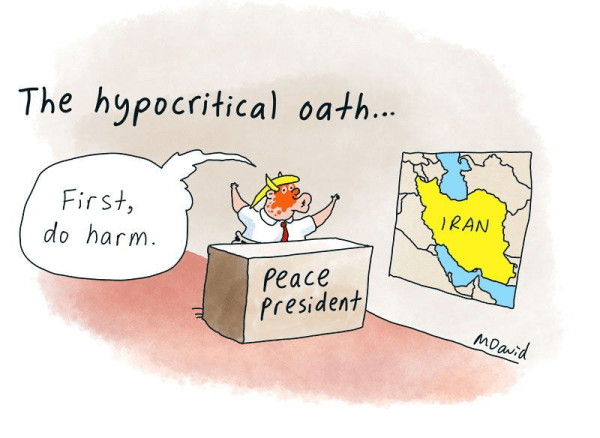
The United States and Israel did not consult Canada. They did not seek a coalition. They acted unilaterally, in the precise way Canada has condemned Russia for acting. Canada’s response — first endorsement, then partial critique, then silence — signals that sovereignty arguments are tactical tools, deployed when Canada is the target and shelved when Washington is the actor.
That signal does not go unnoticed. It is read in capitals across the Global South. It is read in Beijing. It is read in Moscow. Every time a middle power like Canada subordinates legal principle to alliance management, the case for international law as a genuine constraint rather than a rhetorical device gets weaker.
What Canada Should Have Said
There was a different path. France, Spain, Italy, and Switzerland opposed the operation on legal grounds from the outset. The UN Secretary General condemned the use of force. The European Commission called for restraint and respect for international law without equivocating. None of these states are hostile to the West. None abandoned their alliances. They simply applied the rules consistently.
Canada could have said, “We share the goal of preventing Iranian nuclear weapons; we have been clear about Iran’s destabilizing role in the region; and we also hold that unilateral military action without UN authorization or demonstrated Article 51 necessity is illegal—full stop.” That position would have been coherent, principled, and consistent with everything Ottawa claimed to stand for on Ukraine.
Instead, Canada hedged, sequenced its criticism to minimize political cost with Washington, and eventually went quiet. That is not leadership. It is not even followership. It is equivocation dressed as diplomacy.
The Honest Question
Norm Farrell has spent nearly two decades on this blog asking British Columbians an uncomfortable question: who does the government actually serve, and whose rules does it actually apply? It is a question usually aimed at Victoria. It applies just as sharply to Ottawa.
Canada’s self-image is that of a multilateralist middle power—an honest broker, a rule-of-law champion, and a defender of the international order. That image has real value. It opens doors, builds coalitions, and gives Canada a voice disproportionate to its material weight. Every time Ottawa abandons it for alliance convenience, that capital depletes.
The war in Iran is not over. The Strait remains a flashpoint. The legal and institutional damage to the international order is still accumulating. Canada still has time to speak clearly.
But the window is narrowing. And so far, Ottawa’s record on Epic Fury tells Canadians exactly what they need to know about whose rules apply—and to whom.
Writing by political analyst Hassan El Biali has appeared in Independent Australia and Counterfire. He publishes at megam226.substack.com.