dailynewsnblog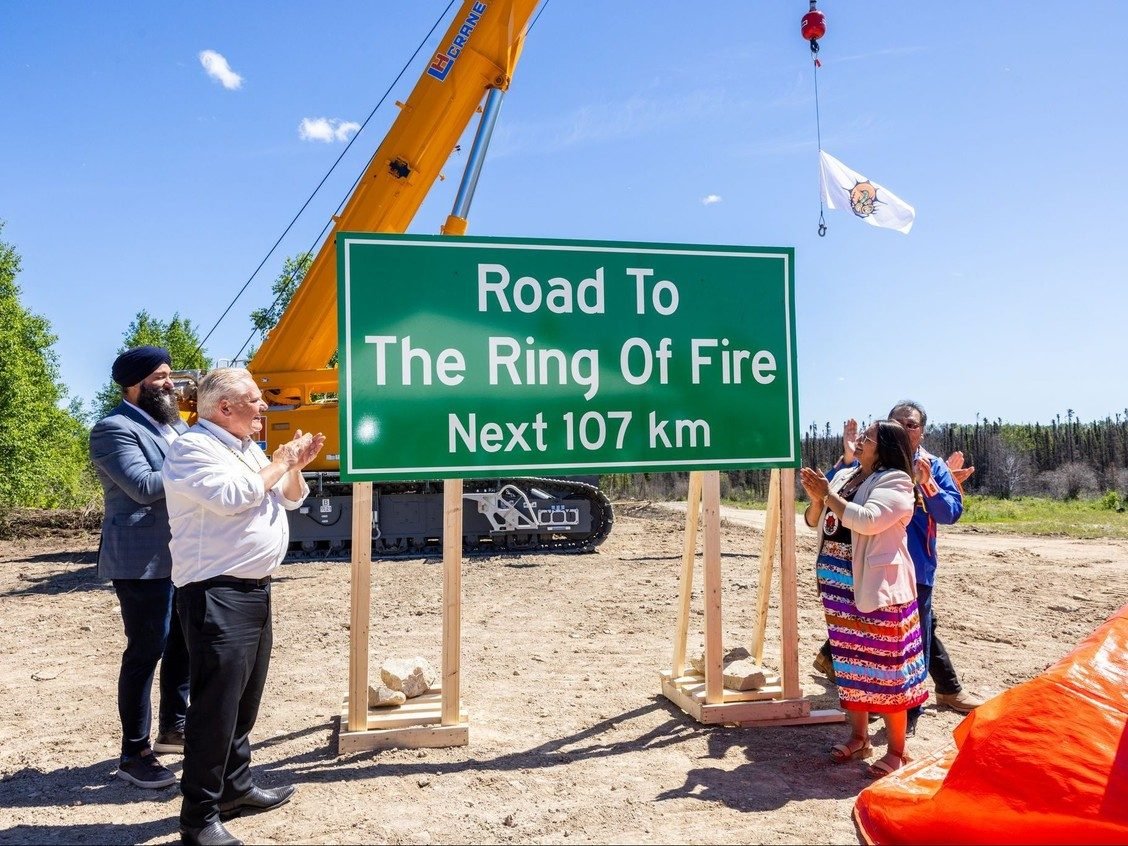
Environment Minister Julie Dabrusin released the decision Monday as the Ford government broke ground on the Marten Falls Community Access Road, the longest leg of a network that could open the area to mining.
The federal government has signed off on the 230-kilometre Marten Falls Community Access Road, which would help link Ontario’s provincial road network to the promising Ring of Fire mineral deposit.
The road, which runs north from Nakina to Marten Falls First Nation, is the longest stretch of a network Ontario has spent years trying to build. The province broke ground in June on the other community access road, this one serving Webequie First Nation.
In a decision published Monday, federal Environment Minister Julie Dabrusin ruled the Marten Falls Community Access road “is likely to cause adverse effects within federal jurisdiction that are, to some extent, significant” but that these are “justified in the public interest.”
Impact Assessment Agency reports point to environmental effects such as caribou and wolverine habitat changes, and fish habitat losses that may not be offset locally.
Several species at risk, including lake sturgeon and several migratory birds, are also likely to experience adverse effects.
READ MORE: Ring of Fire mine prioritizing First Nation partners over regulatory fast track
Dabrusin’s decision also states that the effects on Indigenous people are set to be mixed, with increased employment opportunities and connectivity to the provincial road network, but potential strains on social infrastructure and the transmission of Indigenous knowledge.
“The cumulative effects are likely to be significant to a moderate extent from regional pressures affecting community well-being, cultural continuity, safety, and social cohesion that would be experienced by multiple Indigenous groups,” reads the decision.
READ MORE: Most advanced Ring of Fire mine to proceed without impact assessment
But Dabrusin writes that the project is an opportunity for economic reconciliation and self-determination for Marten Falls First Nation, which is the proponent behind the road.
She says the project will create employment opportunities, while acknowledging those may be unevenly distributed across different Indigenous groups.
The federal approval comes with 59 legally binding conditions, including measures to protect fish habitat, migratory birds and species at risk, and to prevent gender-based violence in construction camps.

The Ford government hopes to finish the road network by 2031, and Wyloo Metals, developer of the Ring of Fire’s most advanced mine project, says it could be producing 18 months later.
That timeline depends on a stretch of road that is far less advanced.
The northern road link, which would connect the two community access roads, has a preliminary route but no final corridor. That is still being settled through an environmental assessment expected to run several more months, with separate federal and provincial approvals still to come.
Ontario and Ottawa have a co-operation agreement in place for project assessments in a bid to speed up the regulatory process.
The province has committed up to $1 billion to build the road network reaching the Ring of Fire, and has repeatedly called on Ottawa to match it. The federal government maintains that roads are a provincial responsibility.
Mining companies in Ontario’s far north have typically borne the cost of reaching their deposits. De Beers’ Victor diamond mine, west of Attawapiskat, was supplied by air and winter road for its entire operating life.