dailynewsnblog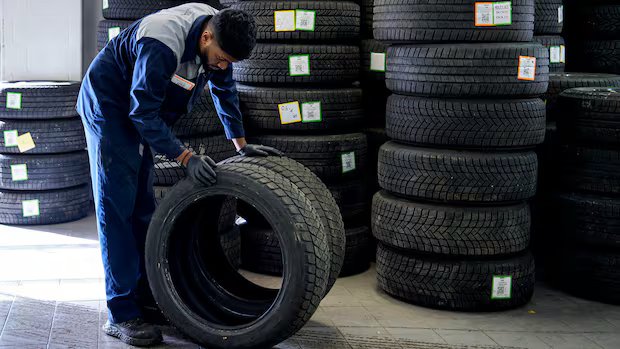

Listen to this article
Estimated 5 minutes
The audio version of this article is generated by AI-based technology. Mispronunciations can occur. We are working with our partners to continually review and improve the results.
As Ontarians begin putting on their summer tires, the Ford government wants to change the rules about how used tires are recycled, and critics are already sounding the alarm.
The proposed changes would ensure third-party companies contracted by tire producers to manage their recycling, known as producer responsibility organizations (PROs), collect tires from any site that asks for pickup and has more than 50 tires. The PROs would also have to guarantee a response time, according to Ontario’s Ministry of the Environment.
The province says the changes are meant to prevent old tires from piling up after hundreds of thousands of tires accumulated at two sites in Ontario last fall.
But Peter Tabuns, the provincial NDP critic for the ministry, said the proposed amendments fall short.
“They don’t deal with the fundamental problem. This government rolled back the percentage of tires that should be recycled, from 85 to 65, and it isn’t correcting that. And that is going to continue to drive the problems we face now with tires not being collected,” Tabuns said.
Tabuns said the ministry needs to restore tire recycling targets to what they were before changes took effect in January 2025.

Province wants to avoid stockpiles of tires, ministry says
Gary Wheeler, spokesperson for the Environment Ministry, said the proposed amendments are an attempt to avoid stockpiles of tires and disruptions in tire collection.
“Our government expects producers and producer responsibility organizations (PROs) to collect and manage all end-of-life tires as they become available, and we are proposing new requirements to ensure all tires are collected and managed in a reasonable time period,” Wheeler said.
PROs would have to collect the tires within a month of the request during peak tire change seasons, October to December and April to May, and within two months during the rest of the year, the ministry said.
Under Ontario’s Resource Recovery and Circular Economy Act, 2016, tire producers, such as tire and vehicle manufacturers, are responsible for the collection and end-of-life management of tires they supply into the Ontario market.
Wheeler said the amendments would require PROs to collect tires from any tire collection site regardless of whether or not the site is part of their collection network, and either recycle, retread or repurpose them.
The ministry also wants to beef up enforcement by the Resource Productivity and Recovery Authority by removing the $1-million cap on administrative penalties. The aim is to create “stronger deterrents against non-compliance,” Wheeler said.
Association concerned about scrap tire numbers
Tire stockpiles pose environmental, health, safety and fire risks, according to Adam Moffatt, executive director of the Ontario Tire Dealers Association (OTDA).
Moffatt said tire dealers, auto shops and collection sites have noted an increase in number of scrap tires as the spring changeover season begins, and there have been reports of collection delays.
“We are concerned that if collection activity does not increase to meet seasonal demand, the system will begin to see a re-emergence of stockpiling conditions similar to those experienced last fall,” he said.

Since 2019, tire producers in Ontario have been individually responsible for recycling, but can outsource their responsibility for recycling quotas to PROs. These companies in turn can contract haulers and recyclers to collect and process tires.
In January 2025, the Ontario government reduced collection targets for used tires. Tire producers are now required to recycle only 65 per cent of used tires collected by weight, rather than 85 per cent. The government also reduced the required number of collection sites in the province.
The changes led a reduction in the number of tires collected for recycling, processing and disposal, according to Tabuns.
Karen Wirsig, senior manager for plastics at the advocacy group Environmental Defence, said two major stockpiles of tires appeared after the changes. She said any tire stockpile comes with risks.
“Tires are flammable and they release extremely toxic pollution when burned. They can also break down in the sun and leach toxic substances into groundwater and surface water in the area,” Wirsig said.
“We want to see tires collected and we want to see them processed safely into something useful.”
In February 1990, a tire fire erupted at the Tyre King Tire Recycling yard in Hagersville, Ont., 40 kilometres south of Hamilton. The fire burned 14 million scrap tires and billowed toxic smoke for 17 days.

Keep amendments simple, PRO president says
Maury Shnier, president of Mobius Pro Services in Toronto, said he would like to see simpler amendments “by increasing the performance targets for tire producers to where they were prior to 2025.”
Shnier said if the targets were higher, the market would take over to get the job done.
The province is seeking public feedback until May 2.