dailynewsnblog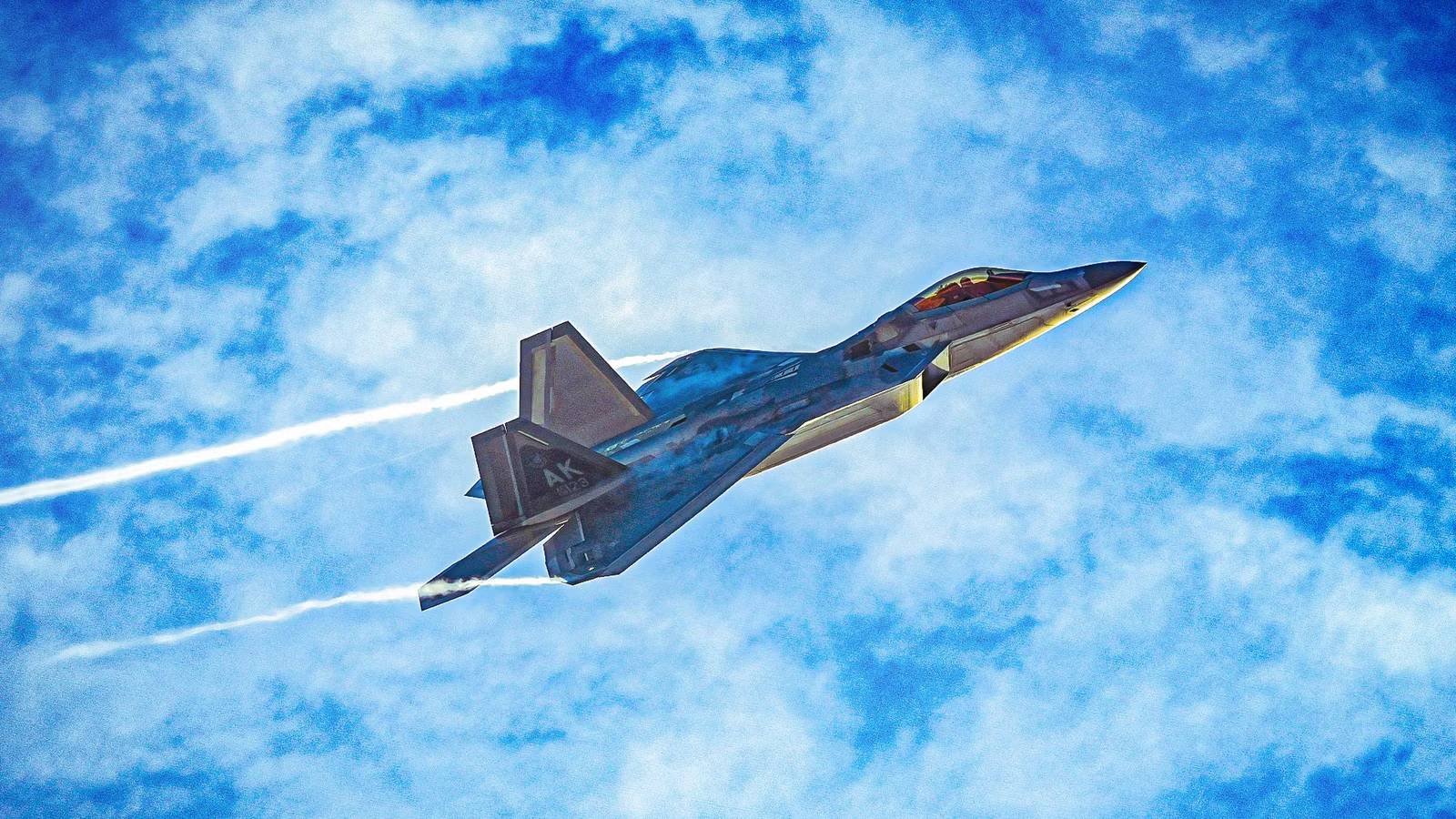
The United States Air Force F-22 Raptor, made by Lockheed Martin Skunk Works division, was the world’s first fifth-generation fighter and also the first operational military aircraft to have thrust vectoring jet engines. It can also supercruise at speeds of Mach 1.8+ without using afterburners, allowing it to dictate engagement speeds and conserve fuel, a capability other jets cannot match while fully armed.
Despite being decades older than its competition and suffering from the effects of its old age, the incredible stealth fighter from Skunk Works is still the gold standard in aerial combat. The Pratt & Whitney F119 engine is the fire-breathing, thrust vectoring heart of the F-22 Raptor. Its ability to perform post-stall maneuvers and outfly lighter and more agile fighters through sheer power is complemented by its incredible supercruise capability and other features unmatched by rivals to this day.
Why Super Cruise Matters On The Battlefield

Supercruise is the unique feat of flying at supersonic speed using only the raw power of the engine and not engaging the boost of an afterburner stage. This is special and highly valuable because the ability to fly at such a high rate of speed without the afterburner means that the aircraft can burn significantly less fuel and sustain that speed for far greater times.
This allows the world’s leading fighters to do incredible things, those fighters being the F-22 Raptor and the Eurofighter Typhoon. Let’s focus on how the F-22 Raptor delivers this incredible feat of speed through the awesome engineering in every detail of its design.
Supercruise is a major operational advantage for any air unit. Besides the obvious tactical advantages of speed and maneuverability that the Raptor brings to the fight, it can also redeploy over vast distances in record times – and it does so while invisible to radar. Another advantage is launching and transiting from the home field to the front line without using afterburner.
Traveling at supersonic speed means the F-22 can get there faster and stay there longer than virtually any other fighter jet. The relative economy of its fuel consumption, for what it is, means the Raptor can loiter on station for extended times, in any area of the battlespace to provide overwatch, escort, surveillance, or area denial.
More Is More: The Power Of The Raptor

The P&W F119 turbofan engine inside the F-22 produces approximately 35,000 pounds of thrust and was designed with significantly fewer parts than previous-generation engines like the F100, which increased its reliability and ease of maintenance. The F-22 Raptor’s super maneuverability gives it a distinct advantage in close-range aerial combat scenarios due to a unique combination of design features not found in competing stealth fighters like the F-35 and the J-20. This makes it superior in a dogfight.
Developing the F119’s revolutionary technology required immense research, testing, and engineering resources. The stringent performance demands for speed, agility, and stealth significantly drove up the complexity and cost of the F119’s design and materials. The engine had to be seamlessly integrated with the airframe’s advanced flight control and stealth systems, a major engineering challenge that added to the overall program complexity and cost.

Why The Pentagon Is Worried About International Stealth Fighter Development
The new 5th-generation arms race.
Heart On Fire: Pratt & Whitney F119

Pratt & Whitney not only made the first stealth fighter jet engines ever, but also the first production thrust vectoring as well. The F119 engines featured two-dimensional thrust-vectoring nozzles that could direct thrust 20 degrees up or down, providing the F-22 with unprecedented maneuverability. Even so, the total cost of developing this engine was far lower than the lifetime sustainment cost of the airframe.
The F119 allows the F-22 to sustain supersonic speeds, up to approximately Mach 1.8, without engaging the afterburners. This is a major tactical advantage, as afterburners consume a massive amount of fuel and create a large infrared signature. Most other fighters must use afterburners to achieve and maintain supersonic flight for only brief periods.
While other engines, like those on the Russian Su-35, use 3D thrust vectoring, the F119’s 2D system is optimized for stealth and aerodynamic efficiency. The rectangular nozzles and the integration of fuel injectors into curved vanes inside the afterburner prevent a direct line-of-sight to the hot turbine blades, reducing radar reflections.
The F-22 Raptor Can’t Fight Without GPS: Here’s How The Air Force Just Fixed It
The newest upgrade to America’s top fighter jet.
Not A Pound For Air-To-Ground

The F-22 is the direct successor to the McDonnell Douglas F-15 Eagle; the Raptor followed a similar philosophy during development to become a pure air superiority platform. The catchphrase that was coined during the development of the F-15, not a pound for air to ground, was also applied to the F-22 until the post-Cold War landscape of defense forced it to evolve. In the late stages of development, the USAF even briefly redesignated it F/A-22 to highlight its new multirole capability before opting to go with F-22A when it entered service in 2005.
Like the F-15 Eagle before it, the F-22 was born from the Advanced Tactical Fighter program to counter high-end Soviet threats like the Sukhoi Su-27 Flanker and Mikoyan-Gurevich MiG-29 Fulcrum. Yet, Raptor’s internal bays were found to be large enough to carry two 1,000-lb (454 kg) GBU-32 JDAMs or eight Small Diameter Bombs. The F-22’s combat debut in 2014 was not an air-to-air dogfight, but a strike mission against ISIS targets in Syria.
Some have referred to the Raptor as a holdover from the Cold War because its primary foe was eliminated with the collapse of the Soviet Union. The original manufacturing objective of 750 aircraft was lowered to just 187 operational units because of rising costs and a perceived lack of near-peer threats following the end of the Cold War. Because there are so few airframes built, the Air Force needs every one for its own operations.
The industrial infrastructure and specialized tools were either dismantled or used for other purposes once production stopped in 2011. Restarting the production line now would be prohibitively expensive and strategically impractical as the US shifts its focus to sixth-generation fighters.
5 Fighter Jets That Will Define Air Combat In The 2030s
The next era of air power is on the horizon.
The F-22 Fleet Soldiers On

The mission-capable rate of the F-22 decreased from 57.4% just two years earlier to 40.19% in fiscal year 2024. It has been established that crashes have claimed the lives of at least five Raptors. Only roughly 143 of the entire stockpile have combat codes. The remaining units are often Block 20 variants used primarily for training, which lack modern sensors and weapons.
Despite the Air Force’s efforts to divest planes to save $2.5 billion, Congress has blocked the retirement of 32 of these older, high-maintenance Block 20 aircraft until at least 2028. The aircraft’s low-observable, or stealth, coatings, which date back to the 1990s, are labor-intensive and quickly deteriorate. The total readiness average is essentially lowered by keeping these least-capable units in the fleet.
The F-22 is a tiny, out-of-production fleet that has ‘vanishing vendor syndrome,’ which is the loss of original parts producers. Despite these obstacles, the Air Force is investing up to $7.8 billion through 2029 to modernize the fleet’s combat-capable segment, guaranteeing that these aircraft will act as a bridge until the Next Generation Air Dominance fighter is delivered.
Making A Super Raptor

The new Super Raptor program is a multibillion-dollar effort to build on the qualities of the F-22 Raptor. Lockheed Martin’s goal is to make it into a data-centric command node for modern battlespaces. These upgrades are vital for the F-22 to stay relevant as the quarterback for Collaborative Combat Aircraft, or Loyal Wingman drones, and to integrate with the upcoming 6th-Gen Boeing F-47 stealth jet, the Next Generation Air Dominance fighter.
The Congressional Research Service report on the F-22 procurement cycle highlights modernization programs aimed at improving the F-22’s radar systems, avionics, and weapon integration. These upgrades seek to keep the aircraft relevant in the face of emerging threats from near-peer adversaries, like the J-20, and to make sure that the taxpayers get their money’s worth from the pricey fleet by keeping them in the air as long as possible.
In addition to a host of upgrades to its stealth, weapons, and sensor systems, the Raptor is finally getting the first helmet-mounted display system since it entered service. This is a key area where it has lagged behind other platforms, including the General Dynamics F-16 Fighting Falcon and Lockheed Martin F-35 Lightning II. The addition of the helmet-mounted display makes the F-22 cockpit a more lethal flight deck than ever before. Pilots can now cue the AIM-9X Sidewinder and the APG-77 radar just by looking at a target.

From 76 F-22 Raptors To 200 Next-Gen Fighters: How Much Larger America’s Air Superiority Fleet Could Get
A closer look at the future of air power in the US Armed Forces.
The Next Generation: Boeing F-47

Boeing was officially awarded a contract to develop the first sixth-generation fighter jet in early 2025 for the F-47 Next Generation Air Dominance. The prototype is expected to fly in two years. While the F-35 is struggling with disappointing software updates and the F-22 fleet is nearing the end of its service life, the NGAD will bring a new system of systems with artificial intelligence in the cockpit as well as on-board uncrewed drone platforms.
The lessons learned from three decades of Raptor ops in the US Air Force have informed the design of a new all-aspect stealth, or Stealth++, that will make the F-47 unlike anything that came before it. The new F-47 will raise the bar in Tactical Air Power across the board when it introduces a host of new bleeding-edge technology in stealth, propulsion, weapons, and smart combat systems.