dailynewsnblog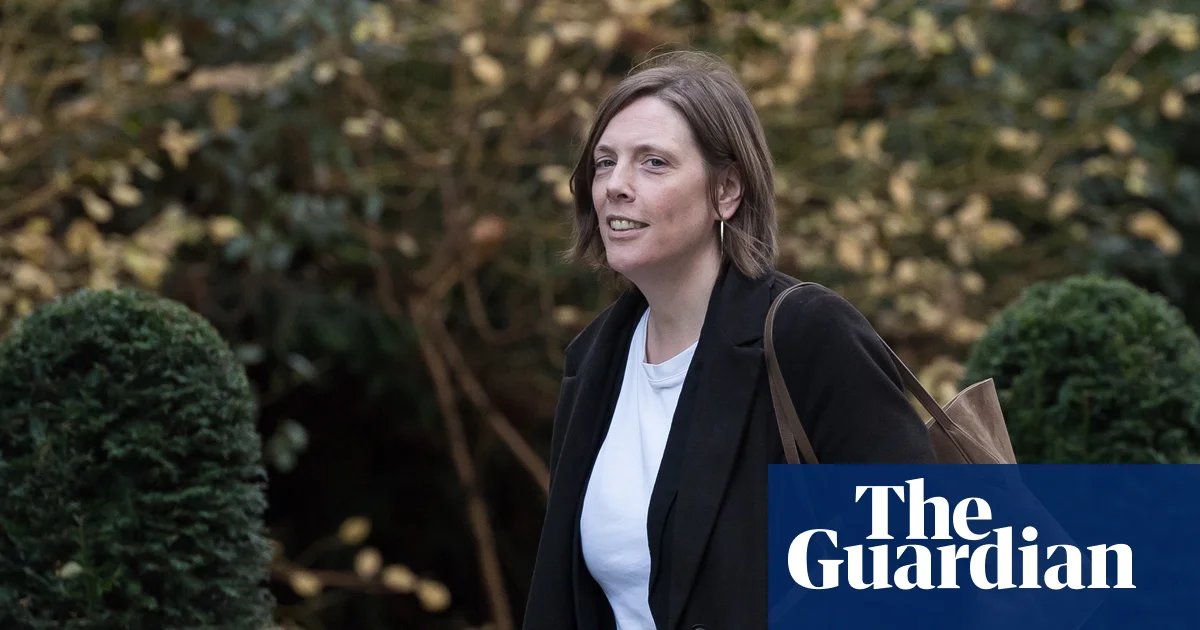
Internet safety and children’s rights campaigners say they have been frustrated for months by Keir Starmer’s lack of leadership on blocking child abuse images on children’s phones, speaking out after Jess Phillips resigned from the government saying she was tired of seeing “opportunities for progress stalled and delayed”.
The influential Labour politician was one of four ministers who quit on Tuesday and joined more than 80 MPs to have called for the prime minister to go.
In a coruscating letter she focused on a lack of urgency and boldness in tackling child abuse images, accusing Starmer of failing to take action to block children being able to take or send naked pictures.
“Over a year ago I presented solutions, long worked on by brilliant civil servants, that would end the ability for children in the UK to take naked images of themselves,” she said.
“We could stop this abuse. It has taken me a year to get you to agree to even threaten to legislate in this space. Not legislate, just threaten. This is the definition of incremental change. Nothing bold about it. The announcement was meant to be in March.”
Hannah Swirsky, head of policy and public affairs at Internet Watch Foundation (IWF), said campaigners had been pushing for the government to force tech companies to block the ability to send and receive naked images on devices belonging to children. “This technology exists, it can be implemented and it would be a big step in stopping the proliferation of child sexual abuse images because it would stop a significant number of them being produced at source,” she said.
Campaigners had hoped and expected that there would be a promise in the government’s violence against women and girls strategy, which was published in December, that the government would promise to legislate to force tech companies to make the image blocker a default feature on children’s phones, if they did not take action voluntarily. Instead, the strategy promised to “join forces with tech companies so we can work together to make [blocking images] a reality and better protect young people from grooming, extortion, bullying, harassment and sexual abuse.”
In 2024, 91% of the reports of child sexual abuse images received by the IWF that were found to be criminal contained “self-generated” imagery, according to the charity’s research. Police recorded 7,263 sexual communication with a child offences in the last year, almost double since the offence came into force in 2017-18.
“The government has been extremely slow, they have been too cautious and not gone as far as needed to tackle the issue of online child sexual abuse,” said Swirsky.
Sources who had pushed on the policy behind the scenes said measures had found support in the Home Office and the Department for Science, Innovation and Technology, but had encountered a wall of inertia in Downing Street. They said that despite “private assurances” from the prime minister that he would do more to keep children safe online, it had been sat on his desk “for months”.
“I think there are questions to be asked about the access and the proximity of tech companies to the government and whether No 10 has been prioritising trade deals and over online safety,” they said. “It felt like some of the people who were advising on this decision were too close to the tech companies.”
Others described a deep frustration at an “incremental” approach to change, saying an opportunity had been missed. “If we did this then the UK could be the world leader in tackling online child abuse, because other countries would have to follow – it’s just been painful to watch the complete lack of action.”
Andy Burrow, CEO of the Molly Rose Foundation, said campaigners were “deeply frustrated” at the “logjam” that proposals had faced at the top of government. “The frustrations that Jess has expressed publicly today are the same frustrations that have been swirling privately for quite some time, and deservedly so,” he said. “There is just this sense that it’s just been stuck in treacle in No 10.”
There had been hope that the measures could be included in Starmer’s king’s speech, which is expected tomorrow, he added. “We hoped there was a chance as of the end of last week that some of this would make its way in,” he said. “But quite where we are now, given the last 48 hours, is anybody’s guess.”