dailynewsnblog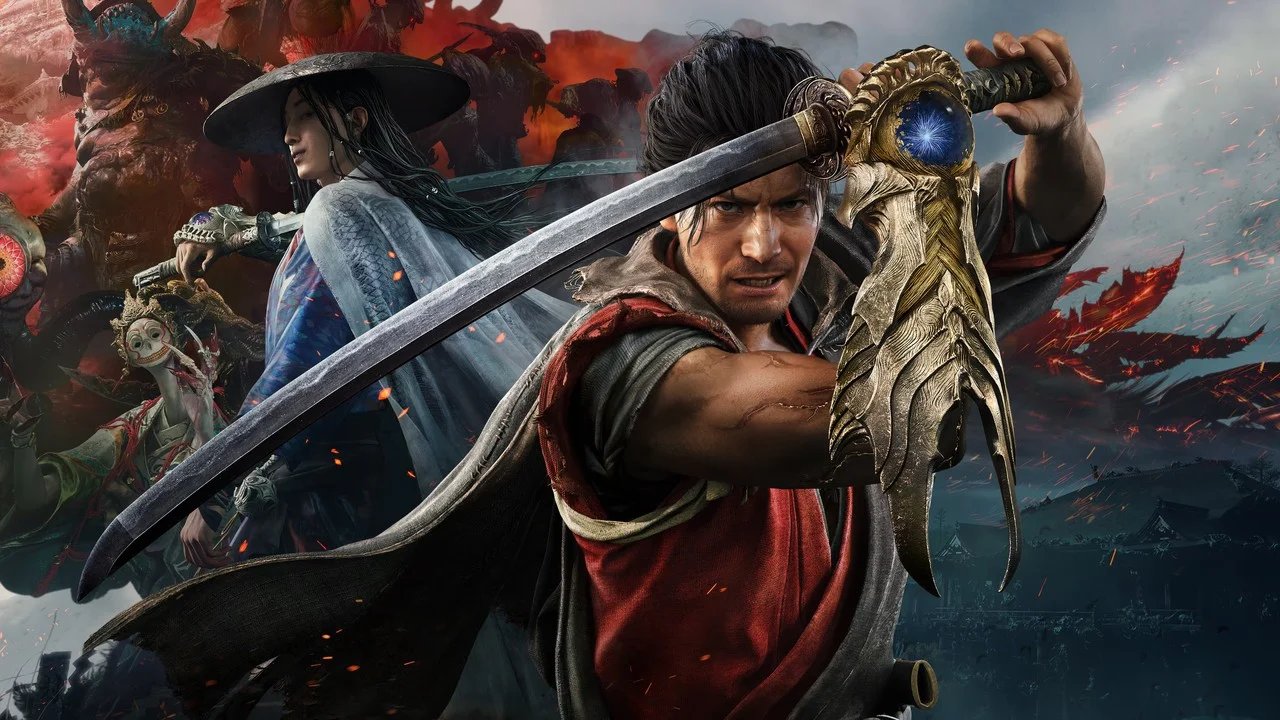
There’s a lot riding on Onimusha: Way of the Sword. Capcom has a few dormant franchises in its dusty closets just waiting to be revived, yet this one feels particularly significant. Despite never really taking off commercially, Onimusha commanded a passionate fanbase that continues to hold the series in the highest regard – right up there with the likes of Resident Evil and Devil May Cry.
So to bring back Onimusha with a brand-new mainline entry in 2026 — two decades after the last game — feels especially risky, but it’s one that I’m happy to report has largely paid off. I love Way of the Sword. It’s a wonderfully paced adventure that combines horror, action, exploration, and a surprising amount of comedy to great effect. Not everything works, but I feel confident that Onimusha has a thriving future ahead of it.
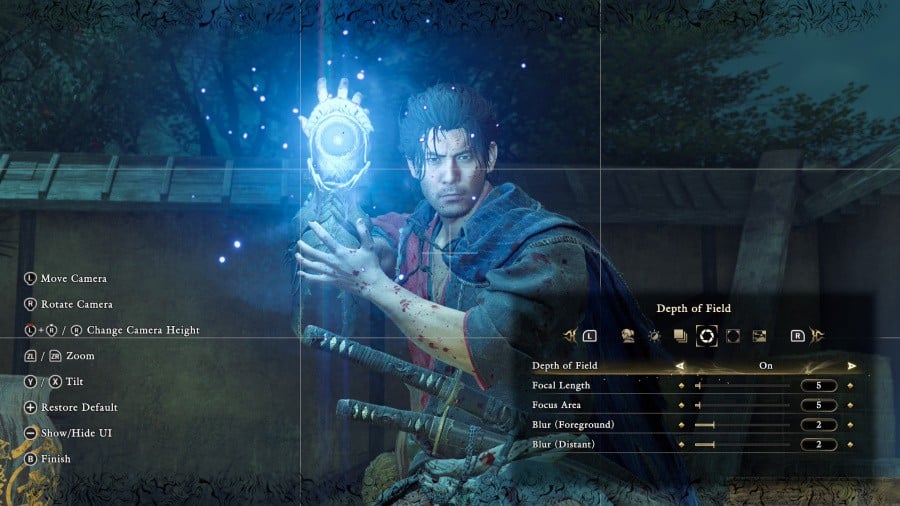
You take on the role of new protagonist (and historical figure) Miyamoto Musashi, who finds himself in possession of a sentient Oni Gauntlet with which to harvest the souls of his fallen Genma foes. Musashi himself is modelled after the legendary Toshiro Mifune (Seven Samurai, Yojimbo), and Capcom did a pretty great job with this. Not only does Musashi look like one of the greatest Japanese actors of all time, but he also embodies some of that carefree, joyous personality of Kikuchiyo, Mifune’s character in Seven Samurai.
I will say, however, that the English voiceover just doesn’t quite fit with the overall presentation. There’s nothing wrong with it necessarily — it’s certainly well-acted — but it’s a bit odd hearing Musashi speak with such a strong English accent when dealing with monsters. He even occasionally exclaims “P*** off!” when defeating an enemy, as if they’d barged into his local pub and downed his pint. I’d recommend changing the audio language to Japanese.
Aside from that, the narrative is engaging from start to finish, boasting a great supporting cast and a lineup of absolutely diabolical boss characters. They’ll have you giggling with delight before promptly slinking away with utter dread. The excellent soundtrack also elevates moments of tension very well with some suitably grand and rousing orchestral tracks.
If you’ve played the previous Onimusha games, then Way of the Sword will feel both familiar and refreshingly new. Overall, combat feels slower and more deliberate than before, and I’m absolutely certain that Capcom has been taking a few pointers from FromSoftware.
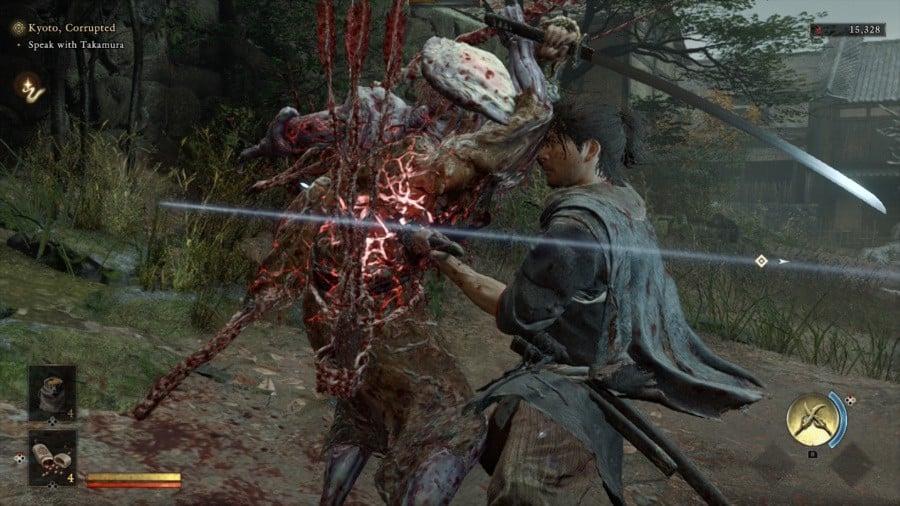
Although you can tap ‘X’ and ‘Y’ to swing your sword and slowly chip away at your enemies’ health, the big addition here comes in the form of a posture meter. By blocking, deflecting, or dodging your foes’ attacks, you can cut down their posture quickly, eventually putting them in a staggered state that allows you to instantly dismember them.
It’s a lot like Sekiro in that sense, then, but thankfully nowhere near as brutal. You still need to be accurate with your deflections, though, but this will soon come with time and practice. Overall, standard enemies will rarely present much of a threat, but it’s the boss fights that will wind up testing your skills the most. They demand constant focus to avoid taking substantial damage, and you’ll find them nigh-impossible if you’ve not suitably mastered how to deflect, which is easily the most effective way to affect their posture.
In addition to basic moves, you’ll also have access to special weapons called Oni Armaments that you can unleash once your relevant meter fills up. To do this, hold down ‘ZL’ to absorb any lingering souls from your fallen enemies. Red accumulates as currency to buy items and upgrades, yellow recharges your health, and blue fills up your Oni Armaments meter. Be careful, though: if you leave the souls for too long, other enemies and bosses may absorb them for themselves, gaining increased strength and new powers.
As for the Armaments, a quick tap of ‘R’ once your meter is filled will execute a special attack. This could be a barrage of quick attacks from The Two Celestials blades or a powerful blast from the Earth-Shakers hammer. There are six to collect throughout the game and it’s a genuine blast to experiment with them and see how they affect different enemy variants.
You obtain permanent upgrades through a combination of red souls and specific items found in the environment. You can independently upgrade your weapons, clothing, and Oni Gauntlet, while also unlocking abilities and perks as you obtain new Oni Armaments. This is mostly done via Spirit Mirrors dotted around Kyoto, and veteran fans will find their presence a comforting reminder of the earlier games.
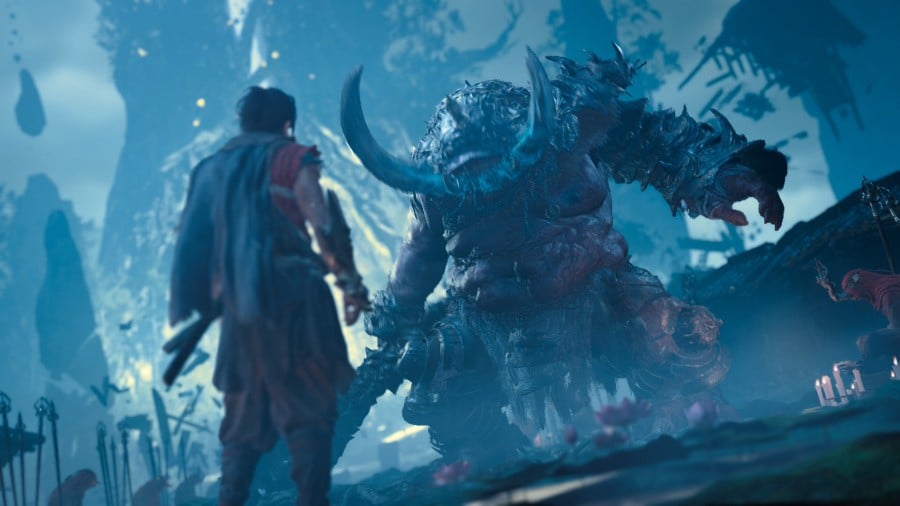
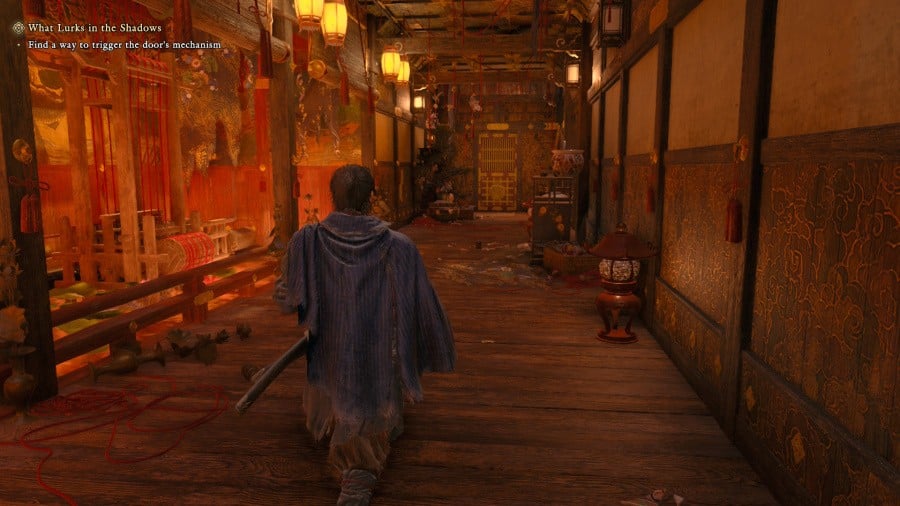
As for general exploration, the main hub area is surprisingly large, but you’ll have ample opportunity to venture out into new areas as you progress through the story. Some sections of the map may be blocked off by ‘Malice’, but it won’t be long until you learn how to vanquish this to open up new areas.
While most of the missions are immediately engaging and have you hunting down Genma enemies, the game does risk boredom by having you jump from one NPC to the next multiple times. “Go to Person A, now Person B, okay now back to Person A, now Person C”, all without encountering enemies. It’s very rare, but it definitely threatens to damage what is otherwise an exceptionally-paced campaign.
There’s lot of stuff to keep you invested throughout the 15 to 20-hour experience, though. You can change Musashi’s clothing, save minor NPCs from Genma attacks, replay boss fights, view character models, and more. And when you’re finished, you’ll also be granted new goodies to play around with. I won’t spoil what they are here, but you’ll be well-incentivised to go through the campaign again.
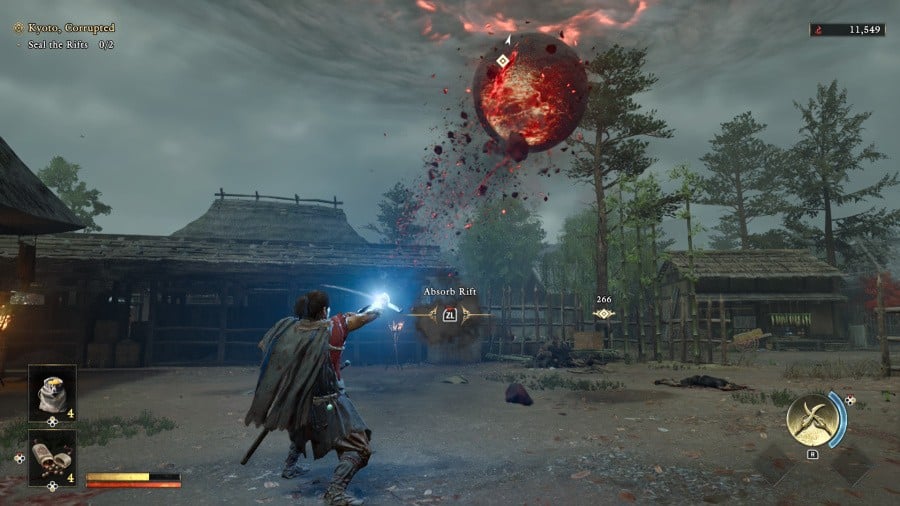
As for how Way of the Sword runs on Switch 2, Capcom has once again proven its mastery of Nintendo’s console. Resolution looks comparable to Resident Evil Requiem in that there’s a noticeable dip in handheld mode, but it’s still a handsome game regardless. In terms of frame rate, it’s locked to 30fps by default, but you can unlock it if you wish. This results in more variable performance as it pushes for 60fps, but I found it to be incredibly smooth for the most part with minimal dips.
Conclusion
Onimusha: Way of the Sword is a successful revival of Capcom’s samurai franchise that pushes its gameplay in an exciting new direction while still retaining its core identity. The slower, more deliberate combat feels great, especially when you manage several deflections in quick succession before slicing your foe in half. Glorious.
Not everything works. The English voiceover doesn’t quite fit with the overall presentation, while occasional jaunts to and from multiple NPCs threaten to derail the otherwise excellent pacing. These are minor gripes, though; Onimusha is back, baby, and it’s better than ever.