dailynewsnblog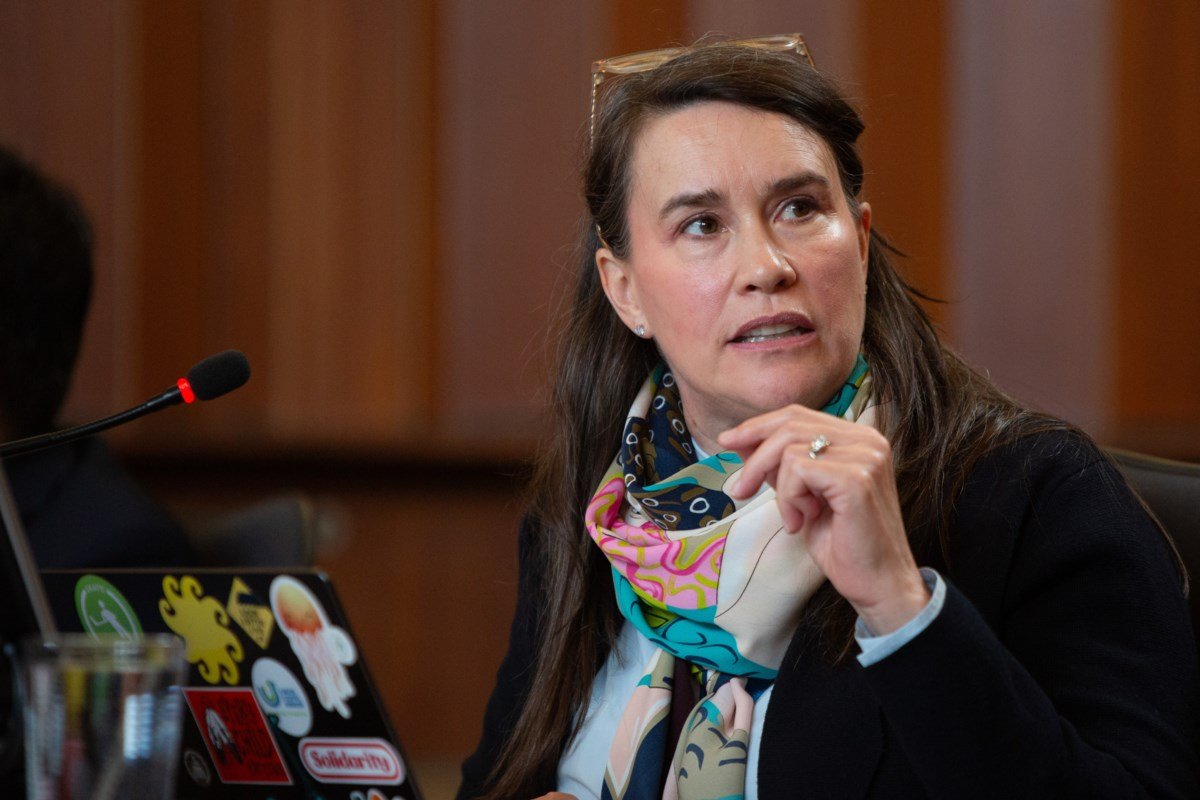

Mayor cites work of business growth task force, says meeting not “necessary at this time”
City councillor Lucy Maloney is pushing Mayor Ken Sim to hold a special council meeting to consider her motion to have city staff take “urgent measures” to support Vancouver businesses and individuals affected by the recent escalation in U.S. tariffs.
“I think that the voters of Vancouver would be very impressed by us all coming together and tackling this in a timely way,” Maloney said. “It is kind of a shame with the timing that it’s so close to the election. But council’s work keeps going, even though we’re six weeks out from an election.”
Maloney said she circulated an email Monday asking the mayor and councillors to agree to the meeting but had not heard back from Sim as of Thursday morning. However, she believes her email is what triggered a public statement Tuesday from the mayor regarding tariffs.
“On tariffs, we recognize this is an evolving, national-level matter and respect the federal government’s authority,” Sim said. “Prime Minister Mark Carney and his team are best placed to lead us through this, and we are supporting these efforts without adding unnecessary noise to the process.”
Business in Vancouver contacted the mayor’s office to seek clarity on his position regarding a possible special council meeting. On Friday, his office said via email that Sim didn’t feel that a meeting “was necessary at this time.”
In February 2025, council was unanimous in directing city staff to explore a series of measures—including potential property tax deferral for commercial properties—to help business owners fight back against an expected economic blow coming from tariffs imposed by U.S. President Donald Trump.
The motion also directed the city’s Business and Economy Office to work with local business and community economic development organizations to explore opportunities to initiate and promote a new, targeted buy-local-buy-Canadian campaign in response to tariffs.
Maloney wasn’t on council at the time, having been elected in April 2025 in a byelection.
‘Challenges facing local businesses’
Sim’s office referred to the February 2025 council direction in his response, noting the establishment of the Vancouver Business Growth Task Force.
His office said the task force brought together leaders from across Vancouver’s business community to identify practical ways the city could reduce costs, cut red tape and make it easier to do business in Vancouver.
“A number of those measures have since been implemented or are underway,” the mayor’s office said.
“This includes eliminating fees for storefront seating, reducing development permit fees for larger patios, streamlining business and liquor licensing, aligning certain permit renewal dates, expanding online permitting services and improving direct support for small businesses navigating city processes.”
Staff are also continuing work on simplified permitting, plain-language business toolkits and improving access to city procurement opportunities for local businesses, his office said.
“Engagement with Vancouver’s business community also continues through the city’s Business and Economy Office to ensure the city remains responsive to the challenges facing local businesses,” his office said. “We are anticipating a further update from staff this fall on the progress of this work.”
In her motion, Maloney referred to the council direction in February 2025 but said there was more council could do to assist business operators and individuals affected by the increased tariffs.
“My key message here is that there’s nothing stopping the mayor from taking this motion and altering it and moving it himself, if he wants,” she said. “That would be a great outcome for me.”
Maloney said the provincial and federal support for businesses affected by the tariffs is welcome, but that investment “is going to be less effective if a business has nowhere to actually set up and build and grow, or move to or expand to Vancouver.”
‘Not throwing bricks’
Maloney summarized her motion into the following requests:
• Identify additional measures that could be taken or accelerated to support businesses, workers and individuals affected by the increased tariffs, including specified actions.
• Identify ways of supporting the federal government, provincial governments, local and regional governments and government agencies in responding to the increased tariffs “and pivoting of business and trade realities.”
• Consult directly and proactively with affected businesses, workers and individuals to identify the most effective ways of assisting and supporting them.
• Report back to the new council as quickly as practicable after the Oct. 17 election.
• Interpret the above directions in a way that is consistent with the conventions of the election “quiet period” and does not presume the voting intentions of the new council.
Maloney said she was “still hopeful” a meeting would be called.
“I’m not throwing bricks at ABC, I’m asking them to either talk to me or don’t talk to me and just move a motion themselves,” she said of the mayor’s party, which holds a majority at city hall.
“I don’t think that it’s good for Vancouver, and Vancouver’s businesses, and workers and residents to wait for two months. Because that’s the reality of what it’s going to be—I’ll move this motion in two months’ time, if I’m re-elected.”
Meanwhile, Carney and the Trump administration continue to blame each other for the breakdown in negotiations regarding trade. The consequence has been new 50 per cent U.S. tariffs on $28 billion worth of Canadian goods. Canada is expected to impose counter-tariffs next week.
[email protected]
X/@Howellings
BIV’s free newsletters cover daily business, real estate, B.C. politics and more. Sign up here for B.C.’s most important business news delivered directly to your inbox.