dailynewsnblog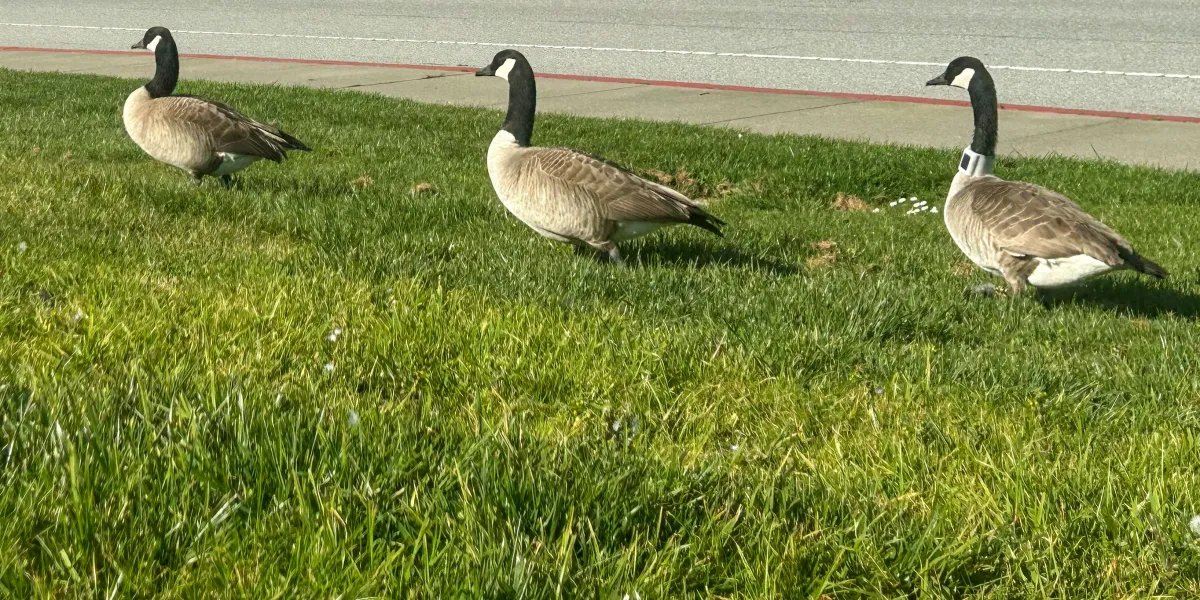
The need for such conflict resolution is on the rise as land development collides with changes in animal behavior. Though overpopulation of Canada geese is a national nuisance in the US, such tensions also surface with other species in this country and elsewhere, including grizzlies on the Montana prairies, coyotes on San Francisco streets, and savanna elephants in Tanzania parks.
So the people whose job it is to deal with recalcitrant critters are bringing on the gadgets.
Back in Foster City, I spot a black camera mounted to a tree trunk at Gull Park by the lagoon. They’re in seven parks around town, programmed to snap photos every 15 minutes and transmit them back to Wildlife Innovations HQ. If they detect geese, a biologist immediately drives over to disperse the birds. One team member uses devices like lasers or drones; another brings along a goose-hating border collie named Rocky.

ANNIKA HOM
As a special measure, staff deploy the “Goosinator,” a small, remote-controlled neon-orange pontoon boat with a fearsome dog-like mouth painted on its bow, meant to evoke geese’s fear of coyotes and bright colors. It comes with attachable wheels and can zoom around on land or water to chase birds away. Biteman tells me the company is thinking about mounting speakers on trees and flying drones that will screech the calls of goose predators like red-tailed hawks or golden eagles.
The company received federal permits required by the Migratory Bird Treaty Act to stick GPS trackers on 10 geese, too. This way, staff can surveil the geese and research their behavior and movements.
At local goose hangouts, signs that look like “Wanted” posters alert the public to the new plan. As I watch some culprits graze (and defecate) on a church lawn, I think to myself: Enjoy it while it lasts.
Annika Hom is an award-winning independent journalist. She’s written for National Geographic, Wired, and more.