dailynewsnblog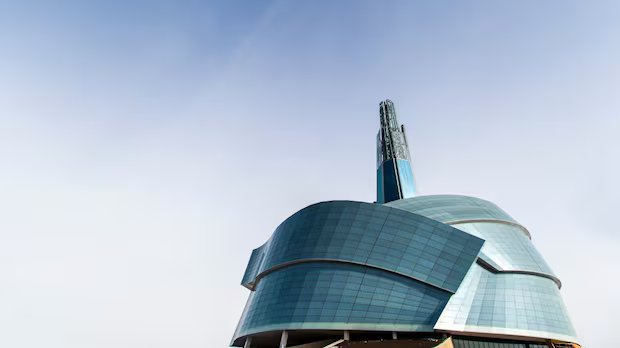

Listen to this article
Estimated 5 minutes
The audio version of this article is generated by AI-based technology. Mispronunciations can occur. We are working with our partners to continually review and improve the results.
A trustee for the Canadian Museum for Human Rights says he has resigned from the Winnipeg facility’s board over an upcoming exhibit about displaced Palestinians.
Marc Berlin submitted his resignation in a letter to federal Heritage Minister Marc Miller and the museum’s board chair. In it, Berlin accuses the museum of putting forth “ideology” instead of an accurate history.
“Telling the story with a one-sided perspective chosen by the museum serves to deepen division and contributes to further hostility toward Jews in Canada,” Berlin wrote in his letter, shared with media outlets.
“Presenting the Palestinian displacement of 1948 without its proper historical and political context offers a narrow, one-sided argument of history that can only deepen the distrust and animosity that currently exists between Jews and Muslims in this country.”
Berlin, a professor at McGill University’s international development institute with a background in human rights law, argued the exhibit fails to explain that Arab states fought those who ultimately established the State of Israel in 1948 and then expelled Jews to Israel.
The exhibit, set to open Saturday, focuses on people affected by the forced displacement of about 750,000 Palestinians during the 1948 Palestine war — an event known as the Nakba, Arabic for catastrophe.
Berlin criticized the exhibit for not acknowledging the estimated 850,000 Jewish people who were forced to flee Arab countries in the years after the establishment of Israel.
He said the exhibit does not adequately portray the fact Arab nations rejected a United Nations plan to establish the countries of Palestine and Israel and took up arms in the conflict, with the resulting fighting causing the mass displacement of Palestinians.
He wrote that the museum’s plans for a later exhibit touching on Jewish displacement is not sufficient as “the stories are not severable — they occurred at the same historical moment.”
Berlin argued the museum isn’t fulfilling its mandate to unite Canadians and argues there is “institutional antizionism” at play.
“The museum has a statutory and moral obligation to tell the full truth, not to sacrifice it at the altar of politics,” he wrote, suggesting the exhibit was “politically motivated.”
In a statement, Miller’s office thanked Berlin for his contributions and said he would be replaced.
“Like all Canadians, we expect the board of trustees to continue its important work in fulfilling the mission of the Canadian Museum for Human Rights and to remain representative of the diversity of Canadian voices, as the vacancy is filled in the coming months,” spokeswoman Alisson Levesque wrote.
Board ‘remains committed’ to exhibit opening
Palestinians displaced in the late 1940s to Jordan, Lebanon and the territories that Israel occupies are defined as refugees by the United Nations, as are their offspring. The Israeli government has repeatedly criticized that designation.
The exhibit has become another flashpoint between Canadian groups who support Israelis and Palestinians, and between federal Liberals and Conservatives.
Jewish groups have said the exhibit lacks context and wasn’t created with sufficient consultation and transparency. Arab and Muslim groups have hailed the exhibit as an attempt to look at hard truths that have shaped the current violence in the Middle East.
The Winnipeg museum has said the exhibit is about an important topic and isn’t meant to tell the entire history of the region. It has pointed out that it has created programming and exhibits about antisemitism over the past two years.

In a statement on Monday, museum CEO Issa Khan said the exhibit is meant to focus on the lived experiences of Palestinian Canadians and the human rights impact of forced displacement across generations.
The exhibit is not a commentary on Zionism or antizionism, and it’s also not a challenge to Israel’s legitimacy as a state, she said.
Khan also said Berlin’s letter presents the opinions and perspectives of the Jewish community “as a monolith.” The museum understands Berlin’s concerns, but Khan says it has gotten criticism and support from Jewish Canadians over the exhibit.
She said the museum welcomes feedback but will always exercise curatorial independence.
Board chair Benjie Nycum said in a statement that he was saddened by Berlin’s resignation, but the board “remains committed” to the exhibit’s opening on Saturday.
The Canadian Press was unable to see the exhibit as it was still being installed last week, though the exhibit takes up about 12 metres of an existing gallery and involves video testimony, photographs, art, artifacts and writing.
Rosemary McCarney, one of Canada’s former secondary ambassadors to the United Nations, is among those supporting the Nakba exhibit.
“Congratulations to the museum for adhering to the principles on which it was created,” she wrote on the platform X.
“This exhibit is long overdue and has been a major gap in our magnificent human rights museum’s treatment of the history of mass displacement and genocide in the world.”
Miller recently said it’s not his place to dictate museum policy and it’s not up to the government to make curatorial decisions.
The exhibit has been in the works for four years. Palestinian Canadians have been calling for their stories to be told at the Winnipeg museum since it opened in 2014.