dailynewsnblog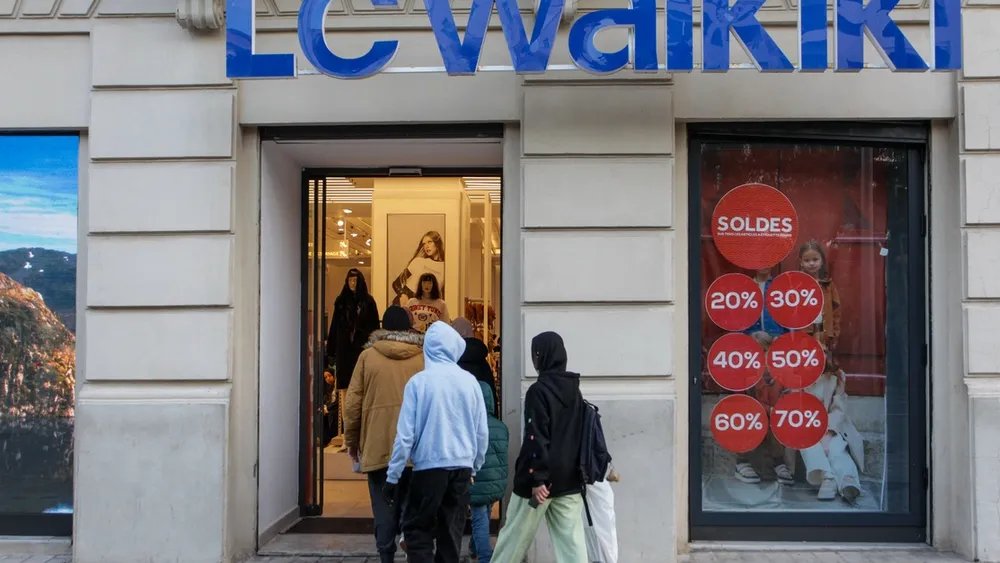
On the Line is a weekly roundup of sourcing and labor quick hits in the apparel and footwear industry, from worker protests to boardroom maneuvering, tracking the developments shaping conditions on the factory floor and beyond.
Syria bound
LC Waikiki, a Turkish ready-to-wear clothing brand, quietly launched production at its new manufacturing facility in Aleppo in June, Turkish media reported last week, potentially marking a major economic and political turning point for post-war Syria.
The factory in Al-Rai Industrial City, according to Türkiye Today, already employs 150 workers, with plans to hire up to 1,000 in three years.
But far from an isolated move, other Turkish firms are following closely with their own cross-border expansion. The apparel manufacturer İsparko, for instance, is reportedly looking at opportunities to establish a factory in partnership with Syrian investors. Mikrotx, an Istanbul-based machinery supplier, is said to be exploring new spinning mills. And Mersan & Tümkalıp, another machinery purveyor, is reputedly negotiating assistance deals to retroactively modernize damaged production lines that idled during the war years.
Syria received 234 textile and ready-to-wear investment applications in the first half of 2026, according to its media, covering new facilities, upgrades and renewed production lines. Other signs point to a broader revival: In July, NasTex held its 2026 textile exhibition in Damascus, bringing together hundreds of companies from dozens of countries to reconnect Syrian producers with foreign markets.
Work in process
New Zealand is inching closer to passing its Modern Slavery Bill after the Education and Workforce Select Committee voted by majority on Aug. 31 to recommend it pass into law. It’s now heading toward a second reading in Parliament, with proponents aiming for final passage ahead of the general election on Nov. 7.
But even if greenlit, the bill would remain a transparency and reporting regime rather than a substantive compliance one, since mandatory due diligence isn’t being recommended at this time. And while entities must disclose what due diligence actions they’ve taken, the law won’t prescribe what those actions must be, allowing businesses the flexibility to choose whether or not to address flagged risks.
The Select Committee’s report also introduced key changes to ease the compliance burden for businesses, such as allowing New Zealand entities to submit existing Australian statements to satisfy local law and prevent double reporting. Similarly, it authorized corporate groups to file a single consolidated statement and extended the filing deadline to six months following the end of the financial year.
It would require firms making more than 100 million New Zealand dollars ($59 million) annually to report on supply chains and operations, among other measures, or risk civil penalties of up to $600,000. Additionally, directors and senior managers could be held personally liable for material breaches or for failing to take reasonable steps to prevent modern slavery in their operations.
While the bill would bring New Zealand in line with Australia and the United Kingdom, which have similar reporting regimes, Rebekah Armstrong, head of advocacy and justice at World Vision New Zealand, argued that given the direction of global regulation and growing calls for mandatory due diligence in Australia, New Zealand should “act proactively rather than reactively.”
Still, the bill includes statutory reviews scheduled for three and five years post-enactment to evaluate whether New Zealand should adopt stricter requirements.
Wage talks
As Cambodia begins negotiations over the 2027 minimum wage, workers and their representatives are calling for a larger increase to cope with mounting food, fuel and living costs.
The current minimum wage for workers in the Southeast Asian nation’s textile, garment, footwear, travel goods and bag manufacturing sectors is $210 per month, which they say is insufficient. A 2024 survey by the Asia Floor Wage Alliance found that workers spent roughly $408 on food and non-food items, or double their average income.
Labor Minister Heng Sour told local media that the first wage meeting allowed all stakeholders’ views to be heard while reviewing data and ministry-compiled criteria. More meetings are scheduled for Sept. 14, 18, 28 and 30.
“During these tripartite meetings, each party can also hold bilateral discussions,” he said. “We therefore hope this period will provide sufficient time for each party to conduct its internal discussions.”
The minimum has slowly climbed from $40 in 1997 to $145 in 2015 before hitting $200 in 2023 and $204 in 2024. Sour told CamboJA News it was still too early to say what the next increase would be. Even so, Yang Sophorn, president of Cambodian Alliance of Trade Unions, said workers’ living costs should be a central consideration, along with inflation and other factors.
“We cannot yet disclose the figure that we plan to propose because we still need to discuss it,” she told the outlet. “But we have to ask whether workers can survive when inflation continues to rise while the minimum wage is only $210.”