dailynewsnblog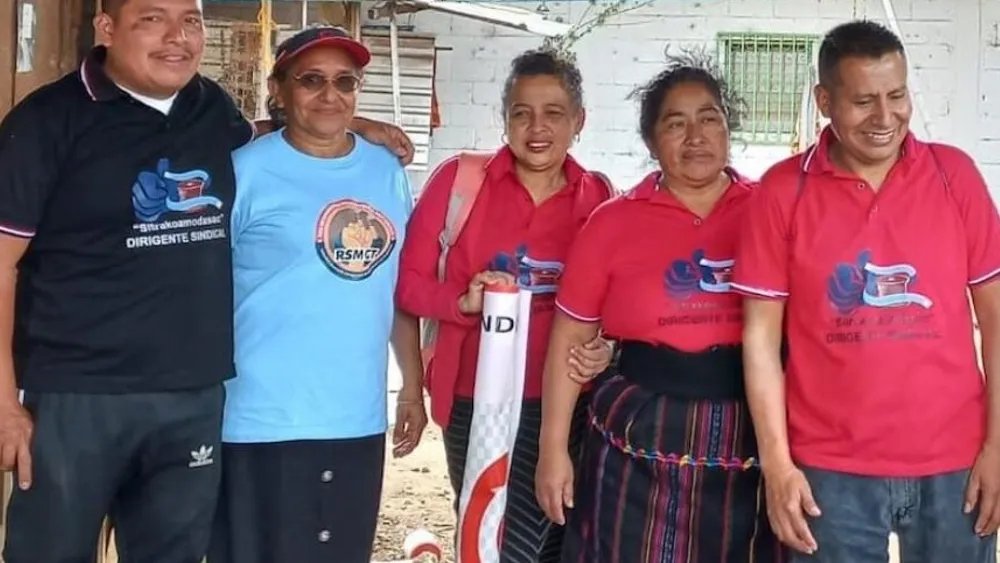
On the Line is a weekly roundup of sourcing and labor quick hits in the apparel and footwear industry, from worker protests to boardroom maneuvering, tracking the developments shaping conditions on the factory floor and beyond.
Wage-theft win
More than 750 workers who made Target clothing in Guatemala have received nearly $6 million in owed wages and severance, a year and a half after their factory abruptly shut down.
Funded by Sae-A Global Trading, which sourced from Koa Modas on behalf of the big-box retailer, the back pay is the largest amount secured for garment workers at a single factory in Central America, according to the Worker Rights Consortium.
Although the Washington watchdog had secured the supplier’s commitment to repay the lost wages following a 2024 investigation, the supplier later reneged, prompting Sae-A to agree to honor the payment. The situation grew more complex after factory owner Sabrina Chang shut down the plant in 2025, pushing the original $460,000 in unpaid wages up by another $5 million in legally mandated severance, resulting in another protracted round of discussions.
The amount Sae-A eventually agreed to pay covers 95 percent of what workers are owed. The remaining 5 percent is being sought through the sale of Koa Modas’s inventory and equipment. Target sourced from the factory as far back as 2015 and continued to do so until its closure, in its final years through Sae-A, the WRC said.
“The WRC recognizes SAE-A’s positive action to restore the rights of the KOA Modas workers and uphold SAE-A’s and Target’s labor standards,” WRC said in a statement. “In doing so, SAE-A has joined other leading apparel companies like American Eagle Outfitters, Gildan and PVH, that have responded to violations documented by the WRC in their supply chains by using their own resources to pay workers money they were legally owed.”
It appeared to suggest, however, that Target could have done more. The company did not respond to a request for comment.
“Sabrina Chang, the owner of KOA Modas, had a track record that long preceded the factory’s closure of stealing not only its workers’ wages, but also the social security contributions it deducted from their paychecks,” the organization said. “Target was well aware of the factory owner’s theft of workers’ social security contributions and of its implications for their pensions.”
South African solidarity
Hundreds of South African garment workers have staged walkouts to protest the mass firing of co-workers from neighboring countries like Malawi, Mozambique and Zimbabwe, warning that rising anti-immigrant sentiment could jeopardize the livelihoods of both locals and migrants.
The demonstrations follow weeks of violent xenophobic attacks and growing pressure on businesses to hire only South Africans. Anti-immigration groups have given undocumented foreigners until June 30 to leave South Africa, without saying what will happen to those who fail to comply. Mozambique said five of its citizens were killed in outbreaks of violence at the end of May, and Ghana has arranged flights for hundreds of its citizens to exit South Africa.
But workers argue that removing experienced migrant employees has created critical skills gaps, leaving factories struggling to maintain production. The issue, protesters said, is less about nationalism than about protecting an industry that relies on specialized expertise honed over many years.
“We need the foreigners back,” one protestor told The Kenyan Diaspora Media. “We are losing our jobs too because they operate our companies and industries.”
South African President Cyril Ramaphosa has warned against scapegoating migrants for the country’s economic problems.
“Even as we recognize the challenge of illegal immigration—which we are taking decisive action to address—our problems are in the main our own problems,” he said at a National Youth Day commemoration in Johannesburg on Tuesday. “And which we have a responsibility to fix ourselves.”
Cambodian strike
Some 1,800 workers at AJ Textile in Cambodia’s Kampong Speu province went on strike Monday to demand better working conditions and the reinstatement of a dismissed unionist.
Chork Mealea, a supervisor at AJ Textile and a member of the Coalition of Cambodian Apparel Workers’ Democratic Union, told the Cambodian Journalists Alliance Association that she was dismissed Saturday without notice or explanation, in breach of local labor laws. She said her husband and brother are active in labor unions and that their involvement may have contributed to her termination, which AJ Textile denied.
“There is no discrimination against unions,” said Shun Yao, chairman of AJ Textile’s board of directors. “In China, we don’t have this kind of issue regarding unions, so I don’t think it is about the union. It was an HR decision that we had to let her go, or she may have caused more trouble for the company.”
But CCAWDU legal official Seang Yot said Mealea’s dismissal was discriminatory and part of broader anti-union sentiment in Cambodia. At least seven workers involved in union organizing at garment factories across the country have been dismissed in the past six months, he told the Cambodian Journalists Alliance Association.
Workers at AJ Textile also raised concerns over salary miscalculations and sick leave deductions.
Unpaid in Bangladesh
At least 100 workers from factories belonging to Nassa Group staged a two-hour blockade on a busy street in Dhaka, Bangladesh, on Tuesday to demand what they say are unpaid wages for May and other dues over the past year.
According to a leaflet obtained by New Age, employees from Nassa Knits, Nassa Apparels and Nassa Western Dresses—all part of Nassa Mainland Garments—participated in the protest, which caused severe traffic congestion in and around Tejgaon area.
Nazrul Islam Mazumder, Nassa Group’s founder and chairman, is currently in jail on a slew of charges, including money laundering, “illegal wealth” and attempted murder during the July movement. He is also accused of extorting money from banks where he held board positions, most notably Exim Bank.
The demonstrators said they are seeking not only unpaid wages, but also compensation for unused leave, back pay from missed raises, notice pay, four months’ compensation and the full benefits they are entitled to under labor law.
Nassa Group, one of Bangladesh’s leading garment manufacturers, owned about 34 plants at its peak but shuttered 16 factories last year due to financial issues. Nassa Mainland Garments resumed production in April under close state supervision to save remaining jobs. The state has also been selling off company assets to inject cash directly into the factories that are still running.
Contaminated water
In Gazipur, an hour’s drive north of Dhaka, more than 200 workers at Dressman Garments fell ill Thursday morning after drinking factory-supplied water, with symptoms including dizziness, vomiting, stomach pain and even loss of consciousness.
The workers were sent to the Kaliakair Upazila Health Complex and several clinics for emergency treatment.
“So many workers were brought to the hospital that we are struggling to accommodate them,” Sadia Tasnim Munmun, health and planning officer at Kaliakair Upazila Health Complex, told The Business Standard. “As patients continue to arrive one after another, our doctors are providing treatment to everyone with the utmost priority and within our capacity.”
It’s unclear what caused the illnesses. Factory authorities said water samples have been sent to a laboratory for testing and the cause is expected to be determined once results come in. Following the incident, Dressman Garments declared a one-day holiday and suspended operations as a precaution.